


From
StayCurrentMD
History Of Non Operative Management for Splenic Injury with Dr. Wesson
With Dr. David Wesson · hosted by Dr. Em Gootee
Chapter 1 of 6 · Fundamentals
Modern practice
Introduction: Modern non-operative management and historical context
Expert statements on this page
No expert statements were drawn from this page.
Host summaries · secondary, not cited in answers
Educational content from recorded physician discussions — not medical advice. Talk to your (or your child's) care team about your situation.
More about this diagnosis
Splenic injuryVideo
Abdominal Trauma with Dr. Richard Falcone
Published Jul 2022
Video
Guías APSA actualizadas para el tratamiento de lesiones contusas del hígado y del bazo
Published Nov 2023
Podcast
Trauma
56 min · Published May 2017
Video
7th Annual Pediatric Surgery Update Course 2019 - FULL SHOW
285 min · Published Jul 2020
Video
Intestinal Atresia Types Explained: Grossfeld Classification for Pediatric Surgery
1 min · Published Sep 2026
Video
Derivation and validation of the Pediatric Community-Acquired Pneumonia Severity (PedCAPS) score: A prospective cohort study
50 s · Published Sep 2026
Video
FETO for Late-Diagnosed Severe Congenital Diaphragmatic Hernia (CDH) at Cincinnati Children's with Dr. Beth Rymeski
4 min · Published Sep 2026
Video
Severe Congenital Diaphragmatic Hernia (CDH) Case: FETO Management & Unexpected Findings with Dr. Beth Rymeski
3 min · Published Sep 2026
Video
Fetoscopic Endoluminal Tracheal Occlusion (FETO) Procedure: Step-by-Step Guide with Dr. Beth Rymeski
4 min · Published Sep 2026
Video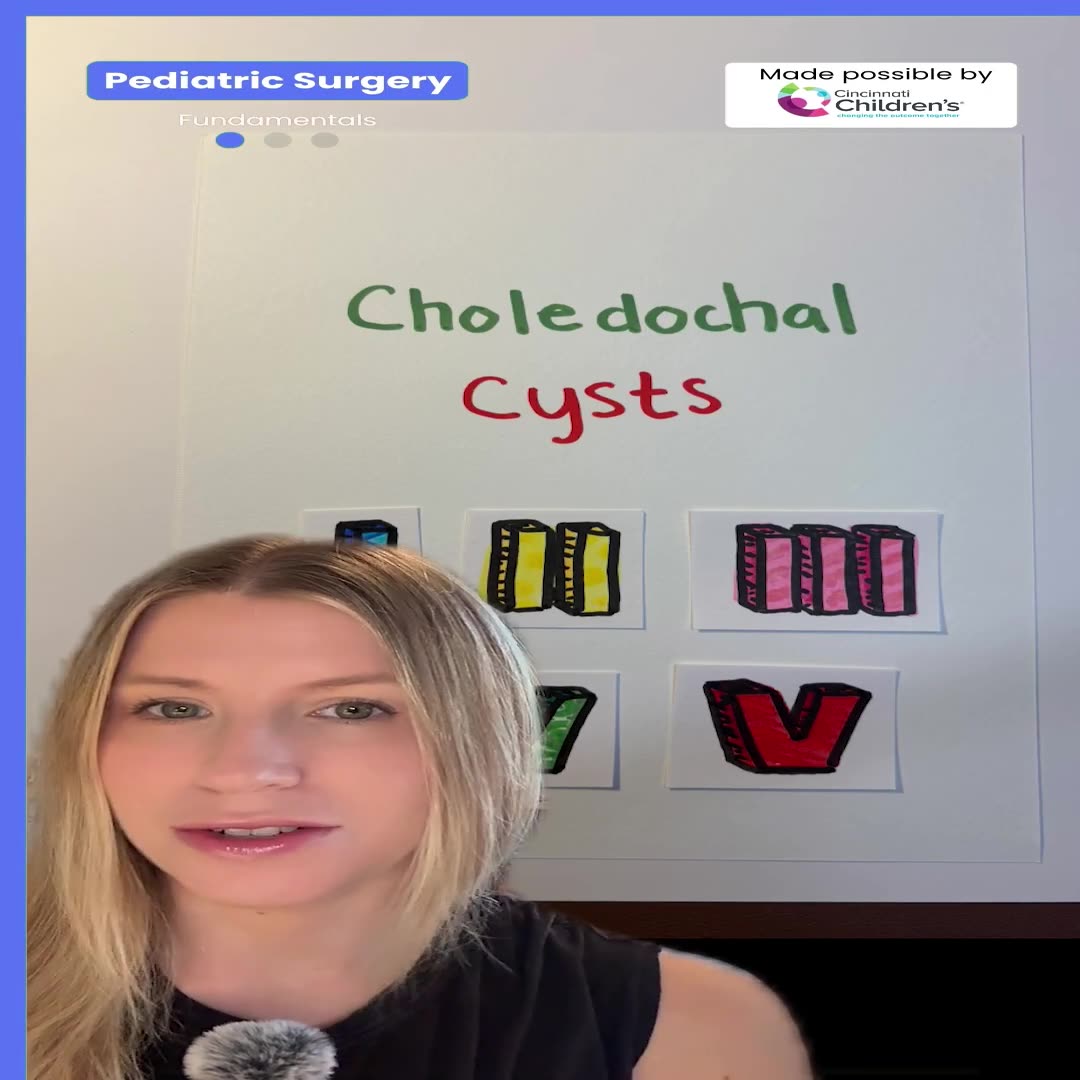
Choledochal Cyst Types Explained: Pediatric Surgery Fundamentals
1 min · Published Sep 2026
What the experts said
In 1980, Dr. Wesson presented a case series titled 'Ruptured Spleen, when to operate' at the American Academy of Pediatrics pediatric surgical section in Detroit, in which all patients had diagnostic imaging, the majority being radionuclide spleen scans.
Dr. Wesson's team performed follow-up radionuclide scans showing healing and resolution of the defect, which Dr. Wesson considered proof of traumatic injury.
Adult trauma surgeons thought non-operative management of splenic injuries was complete baloney, while pediatric surgeons were more open-minded to the practice change.
In the early 1900s, Dr. Coker wrote that if the spleen is injured, it should be removed, and that was the only treatment for it.
In 1909, there were no ICUs, no blood available, no way to maintain an IV, no monitored beds, no oxygen for delivery, and no imaging—surgeons only had clinical grounds to work with.
In the late 1940s, Tim Wandsworth at Toronto Sick Kids had a patient with an abdominal injury who recovered, went home, then died from another injury; at autopsy the spleen was found in two pieces that had healed, suggesting the spleen doesn't necessarily need to be removed and the patient won't exsanguinate.
Following Wandsworth's observation, general surgeons at Sick Kids throughout the 1950s and 1960s selectively would not operate on splenic injuries, but kept this practice secret because it went against common wisdom.
Dr. Jimmy Simpson published the first case series of non-operative management of splenic injuries around 1968 in what is now the Journal of American College of Surgeons, but it was only 50 patients with a small percentage managed non-operatively.
In the 1960s and 1970s there was no way to prove splenic injury because imaging technology available today did not exist, leading the surgical community to reject Simpson's series as unproven.
Critics of the 1980 series claimed the radionuclide scan findings were congenital anomalies rather than traumatic injuries.
Approximately 70% of patients in Dr. Wesson's 1980 study were managed non-operatively and did well.
At an American College of Surgeons meeting in Florida, Dr. William Blaisdell told Dr. Wesson that if you believe surgery aggravates bleeding, you shouldn't be in surgery, and that adult trauma surgeons have more experience managing kids than any pediatric surgeon will ever see.
In 1989, Dr. Wesson published a 5-year follow-up series in which almost all patients had CT scans documenting the injury, again showing good outcomes with non-operative management.
The combined 1980 and 1989 series created the first treatment algorithm for when to operate and when not to operate on a pediatric splenic injury.
Pediatric surgeons adopted non-operative management of splenic injuries relatively quickly after the initial presentations.
The discussion after the 1980 presentation focused on resource utilization and length of stay, with proponents arguing that non-operative management would lead to better outcomes.
Non-operative management of the spleen put pediatric surgery in the limelight, and adult trauma surgeons at adult trauma meetings have credited pediatric surgeons for starting this trend that is now the norm.
APSA created standardized guidelines for splenic injury management to allow uniform treatment and grouped outcome assessment across the country.
CT scans became more prevalent, leading to a grading system for splenic injuries and a treatment algorithm based on CT imaging grades.
In the last 10 years, practice has shifted away from CT-grade-based algorithms back to clinical assessment of the patient, with hemodynamic stability being the primary determinant of management.
According to ATOMAC guidelines, if a patient is hemodynamically stable they go to the floor, get a diet the next morning, a hemoglobin check, and can go home; if hemodynamically unstable they get fluids and blood and a decision is made about the OR, but admission to ICU is not determined solely by injury grade.
The updated APSA guidelines (an update from their 1990 blunt liver spleen injury guidelines) include criteria for admission (ICU vs ward), procedures (transfusion, angioembolization, OR), discharge criteria, and aftercare including activity restriction and follow-up imaging recommendations.
Dr. Wesson taught trainees to treat the patient, not the imaging.