
GERD - (GastroEsophageal) REFLUX (Disease) in Esophageal Atresia Patients: An ERNICA animation
Educational content from recorded physician discussions — not medical advice. Talk to your (or your child's) care team about your situation.
Video
Care and Nutrition in Esophageal Atresia: An ERNICA animation for parents and families
2 min · Published Nov 2023
Podcast
Journal of Pediatric Surgery Article Review: October 2023
12 min · Published Apr 2024
Video
STEPS-EA trial: Esophageal Atresia
3 min · Published Nov 2023
Video
Esophageal Dilation for children with Esophageal Atresia
3 min · Published Nov 2023
Video
BOB in Ped Surg 2023 - PAPSA Winner - Mohamad Mahmoud Qinawy, MD
16 min · Published Feb 2023
Video
Top Themes From The Stay Current App
Published Sep 2020
Video
What is Gastroschisis? An ERNICA animation for parents and families
2 min · Published Dec 2023
Video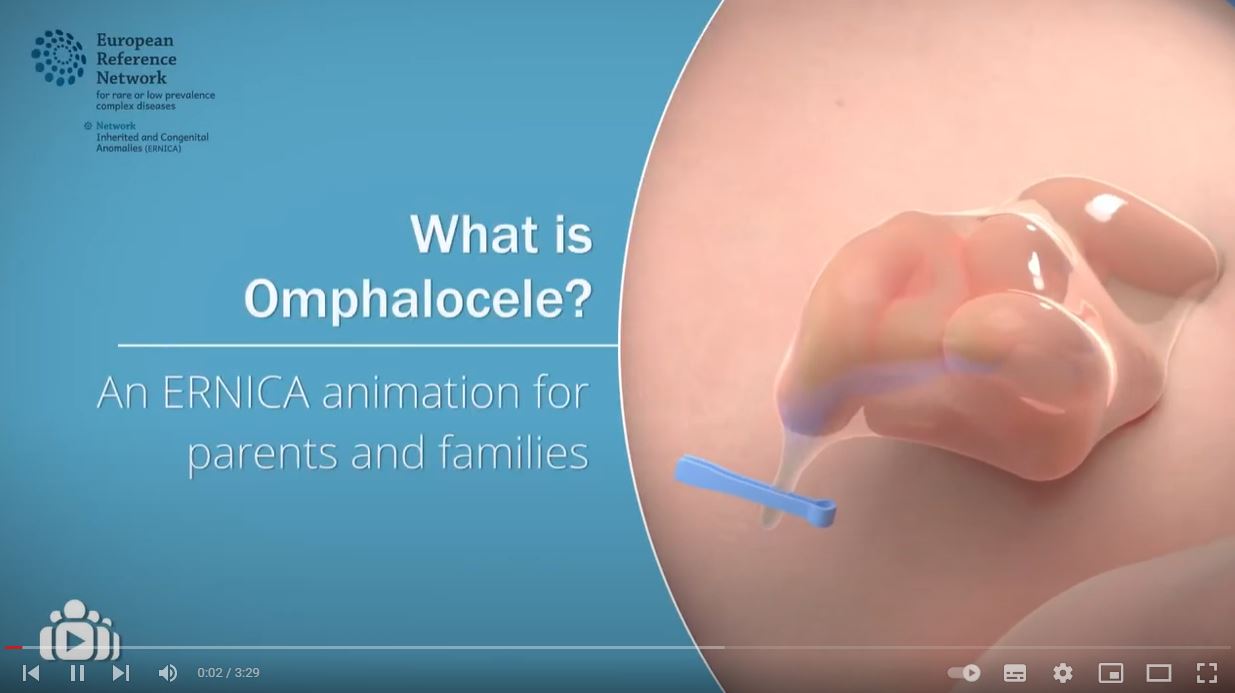
What is Omphalocele? An ERNICA animation for parents and families
3 min · Published Dec 2023
Video
What is Congenital Diaphragmatic Hernia (CDH)? An ERNICA animation for parents and families
3 min · Published Dec 2023
Video
What is small bowel atresia?: An ERNICA animation for parents and families
4 min · Published Dec 2023
Video
Hirschsprung-associated enterocolitis in children: An ERNICA animation for parents and families
3 min · Published Dec 2023
Video
Surgical treatment for Hirschsprung’s Disease: An ERNICA animation for parents and families
3 min · Published Dec 2023
What the experts said
Esophageal atresia is a rare birth defect where a part of the esophagus, the tube connecting the mouth to the stomach, is missing.
All patients born with esophageal atresia should be treated at a specialist center with a multidisciplinary team.
Patients with esophageal atresia may experience gastroesophageal reflux disease at points throughout their life after their esophagus has been surgically repaired.
Gastroesophageal reflux is a physiological condition common in infants where food and acid from the stomach flows back into the esophagus.
Gastroesophageal reflux becomes a disease when troublesome symptoms and or complications are experienced.
Reflux can accidentally enter the airway and the lungs, known as aspiration, and it can lead to irritation and lung infections.
Gastroesophageal reflux may irritate the inside wall of the esophagus, particularly the area where the esophagus was repaired during surgery.
In children with gastroesophageal reflux, milk or food comes back up into the mouth without effort after feeding.
Children with GERD may find it difficult to gain weight and have frequent lung infections.
For some children, the esophagus may narrow in the area where surgery was performed to repair it.
Some children with GERD show no external signs at all.
Follow up care for esophageal atresia patients should be both lifelong and structured.
Proton pump inhibitors work by blocking and reducing the production of stomach acid.
With PPI treatment, contents of the stomach still rise up to the mouth, but there is less stomach acid and therefore less irritation.
Fundoplication is a surgical procedure that aims to tighten the valve at the top of the stomach to stop stomach acid from rising up.
If PPI medication is reduced or stopped, this should be done under the guidance of the child's clinical team.
A 24 hour pH study measures the amount and strength of acid reflux in the esophagus over a 24 hour period using a thin tube inserted through the nostril into the esophagus.
An impedance study can be performed at the same time as pH study and measures non-acidic reflux in the esophagus.