


From
StayCurrentMD
Eating Disorders: Pediatric Obesity 2017
With Dr. Christine Wood · hosted by Dr. Em Gootee & Dr. Todd Ponsky
Chapter 1 of 6 · Fundamentals
DSM-5 updates
Introduction and DSM-5 Changes for Eating Disorders
Expert statements on this page
No expert statements were drawn from this page.
Host summaries · secondary, not cited in answers
Educational content from recorded physician discussions — not medical advice. Talk to your (or your child's) care team about your situation.
Video
Intestinal Atresia Types Explained: Grossfeld Classification for Pediatric Surgery
1 min · Published Sep 2026
Video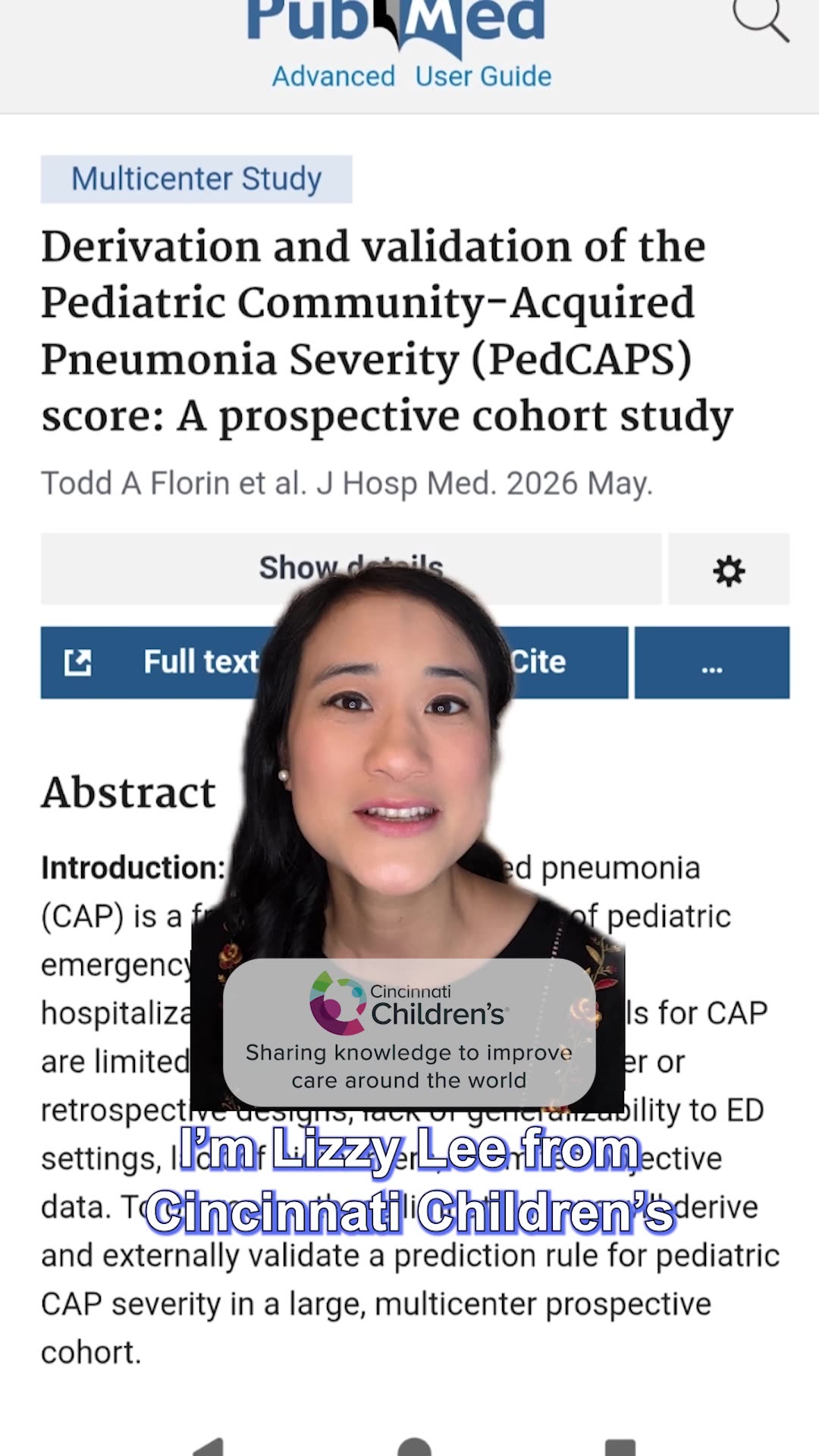
Derivation and validation of the Pediatric Community-Acquired Pneumonia Severity (PedCAPS) score: A prospective cohort study
50 s · Published Sep 2026
Video
FETO for Late-Diagnosed Severe Congenital Diaphragmatic Hernia (CDH) at Cincinnati Children's with Dr. Beth Rymeski
4 min · Published Sep 2026
Video
Severe Congenital Diaphragmatic Hernia (CDH) Case: FETO Management & Unexpected Findings with Dr. Beth Rymeski
3 min · Published Sep 2026
Video
Fetoscopic Endoluminal Tracheal Occlusion (FETO) Procedure: Step-by-Step Guide with Dr. Beth Rymeski
4 min · Published Sep 2026
Video
Choledochal Cyst Types Explained: Pediatric Surgery Fundamentals
1 min · Published Sep 2026
What the experts said
DSM-5 relaxed anorexia criteria by removing the specific ideal body weight requirement and made bulimia criteria less stringent regarding frequency of binging and compensatory behaviors.
Binge eating disorder was officially recognized in DSM-5 as recurrent binging at least once a week for 3 months without compensatory behaviors.
Avoidant restrictive food intake disorder (ARFID) is a new DSM-5 addition characterized by failure to gain weight, often seen in school-age children following triggering events like severe vomiting.
33% of US teens have an eating disorder but most don't get treatment.
Up to 16% of transgender college students have an eating disorder.
The mortality rate for females between 15 and 24 years with anorexia is 12 times higher than the death rate of all other causes of death, and 20% of deaths are by suicide.
There is increasing prevalence of eating disorders among males and minority groups, with Hispanics having a higher rate of bulimia.
There is a sharp increase in the number of eating disorders requiring hospitalization, with specialized medical behavioral units now having consistently full beds.
Most patients with eating disorders have comorbid conditions like anxiety, depression, OCD, or substance abuse, and treating these underlying comorbidities is necessary to treat the eating disorder.
The prevalence of obesity in US children has remained fairly stable at approximately 9% in younger children, 17.5% in school-age children, and 20% in teens.
The ACE study found that 9-year-olds exposed to stress (poverty, residential crowding, child separation, exposure to violence) had more difficulty self-regulating their diet and increased fat and sugar consumption.
Exposure to adverse childhood events leads to 4-12 fold increased risk of alcoholism, drug abuse, depression, and suicide, and 1.4-1.6 fold increase in physical inactivity and severe obesity.
In a study of elementary school children who read teen and celebrity magazines, 69% say pictures influence their concept of ideal body shape and 47% say pictures make them want to lose weight.
42% of 1st to 3rd graders want to be thinner, 81% of 10-year-olds are afraid of being fat, and 80% of American women are dissatisfied with their appearance.
A Pediatrics study of children aged 9-14 followed for 2 years found that dieting was associated with greater weight gain and increased rates of binge eating in both boys and girls.
Studies in both pediatric and adult literature show that dieting is generally a counterproductive effort in creating weight management.
Teens aged 14-15 who severely restricted energy intake and skipped meals were 18 times more likely to develop an eating disorder than those who did not diet.
Over one-third of girls who were not overweight reported that they had dieted.
Frequent family meals can lower the risk in teens of smoking, drinking, disordered eating, depression, and being overweight, and are associated with better grades and healthier eating.
A prospective study of 13,000 preteens and teens found that those who ate family meals on most or every day were protected against purging, binge eating, and frequent dieting.
For girls, family meals that were perceived as enjoyable protected them from extreme weight behaviors.
The average parent spends only 38.5 minutes per week in meaningful conversation with their child, making family meals an important opportunity for connection.
In overweight adolescents, weight teasing is quite common, and family weight teasing predicts overweight and binge eating.
Hurtful comments by family members and significant others are associated with unhealthy weight control behaviors.
Children and teens are teased and bullied about weight regardless of their actual weight status, including those who are average weight or underweight.
50% of teen girls and 25% of teen boys are dissatisfied with their bodies, with higher rates in overweight teens, creating risk factors for eating disorders and disordered eating.
Randomized control studies show that obesity prevention programs can reduce purging and decrease concerns about weight when they focus less on weight and more on healthy family-based lifestyle modification.
Effective outpatient eating disorder treatment requires a triad of a health professional, a psychologist or psychiatrist, and a dietitian.
Many eating disorders need intensive outpatient programs where patients attend every single day, 5 days a week, rather than standard outpatient care.
Weight is not a behavior and therefore is not a target for behavior change.