
Case Based Journal Review: Esophageal Atresia in 2022
With Dr. Jose Campos · hosted by Dr. Ellen Ancisco & Dr. Em Gootee & Dr. Rod Gerardo · StayCurrentMD
Educational content from recorded physician discussions — not medical advice. Talk to your (or your child's) care team about your situation.
Video
QUAD Conference Commercial
1 min · Published May 2022
Video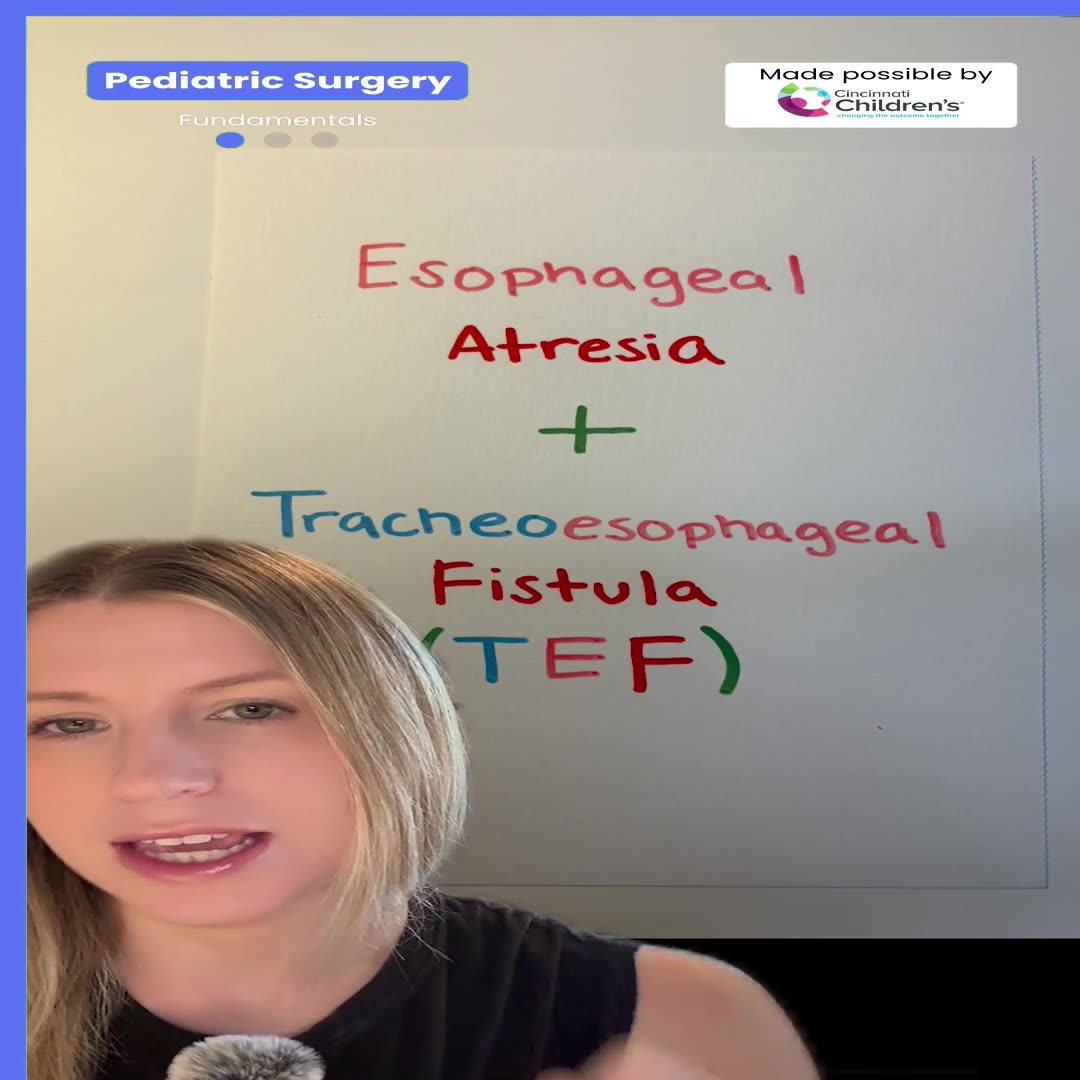
Esophageal Atresia & Tracheoesophageal Fistula (EA/TEF) Types Explained for Pediatric Surgery
2 min · Published Sep 2026
Video
Quick Literature Updates Ep 27
4 min · Published Feb 2026
Video
Tricks - Imperforate Anus and Rectourethral Fistula
45 min · Published Nov 2018
Podcast
Journal of Pediatric Surgery Article Review: 2nd Quarter (Apr-Jun) 2025
16 min · Published Aug 2025
Podcast
Journal of Pediatric Surgery Article Review: 1st Quarter (Jan-Mar) 2025
16 min · Published May 2025
Podcast
Case-Based Journal Review: Inguinal Hernia 2025
19 min · Published Apr 2025
Podcast
Case-Based Journal Review: Cholelithiasis 2024
18 min · Published Jul 2024
Video
Update Course 2022 - TOP PUBLICATIONS IN NON- PED SURG JOURNALS - Jose Campos
27 min · Published Sep 2022
Podcast
Case Based Journal Review - CPAM in 2022
12 min · Published Apr 2022
Podcast
Case-Based Journal Review- Intussusception in 2022
20 min · Published Feb 2022
Video
Pediatric Surgical Oncology Research Collaborative (PSORC): Studying Rare Pediatric Tumors
56 s · Published May 2026
Video
Update Course Rewind 2025: Hirschsprung + ARM: Rare but Real
1 min · Published May 2026
Video
Update Course Rewind 2025: Hirschsprung + ARM: Rare but Real
1 min · Published May 2026
Video
Pooling Patients to Study Rare Pediatric Tumors: An Introduction to PSORC
56 s · Published May 2026
Video
The fetal frontier: A review of current and emerging fetal therapies for genetic diseases
44 s · Published May 2026
Video
Indocyanine green assists with sentinel lymph node mapping in pediatric and adolescent patients
1 min · Published May 2026
What the experts said
The endpoint of chest infection in the azygous vein meta-analysis was not clearly defined across studies—some used 'chest infection,' some 'pneumonitis,' some 'pneumonia'—making it a non-homogeneous endpoint
Congenital esophageal stenosis is associated with esophageal atresia in 7% to 10% of cases and most are diagnosed really late, sometimes after the anastomosis fails
Passing a tube through the anastomosis to check for resistance can help identify distal esophageal stenosis intraoperatively
If a leak occurs, it doesn't always drain through the chest tube
A chest tube may injure, suck on, or increase the chance of disruption of the anastomosis
Chest tubes are painful for patients
Not giving antibiotics postoperatively helps detect complications early rather than having antibiotics cover a complication
Giving PPIs to neonates can increase pneumonia in different populations, but the risk is very minimal
In a meta-analysis of almost 700 neonates, preserving the azygous vein resulted in significantly lower postoperative pneumonitis compared to division
There was no significant difference in anastomotic leak rate or stricture rate between azygous vein preservation and division
The azygous vein drains the bronchi, trachea, and esophagus, and its division may lead to impaired function postoperatively and impaired clearance of mucus and debris from the tracheobronchial tree
In the Quebec study of 244 patients, the overall anastomotic stricture rate at one year was 30%
36% of patients with transanastomotic tubes developed strictures compared to 19% without tubes, a difference that remained significant after multivariable analysis
Patients with transanastomotic tubes had 2.72 times higher odds of developing a stricture compared to those without
The Quebec study adjusted for gestational age, leak, length of gap, and tension, and still found almost 3 times higher stricture rates with transanastomotic tubes
Patients with transanastomotic tubes started feeding on day 2 versus day 10 for those without tubes, but early feeding did not lead to less TPN—duration was 9 days in both groups
In a meta-analysis of about 500 newborns, there was no significant difference in leak occurrence, pneumothorax, or mortality based on whether a chest drain was placed
The group that received a chest drain had a significantly higher chance of returning to the operating room
Giving acid suppression to neonates increases the risk of necrotizing enterocolitis according to neonatologists' concerns
In the Midwest Pediatric Surgery Consortium study, antibiotics for more than 24 hours and acid suppression showed no difference in strictures or leaks