38 views 0 likes

Live Event Content

GCMD Space · View profile →

BOB Ped Surg 2023 - Andrew Fleming, AAP - Presentation

Video Published 2023-02-06 Updated 2026-08-01

Timestops (10)

Topic Overview

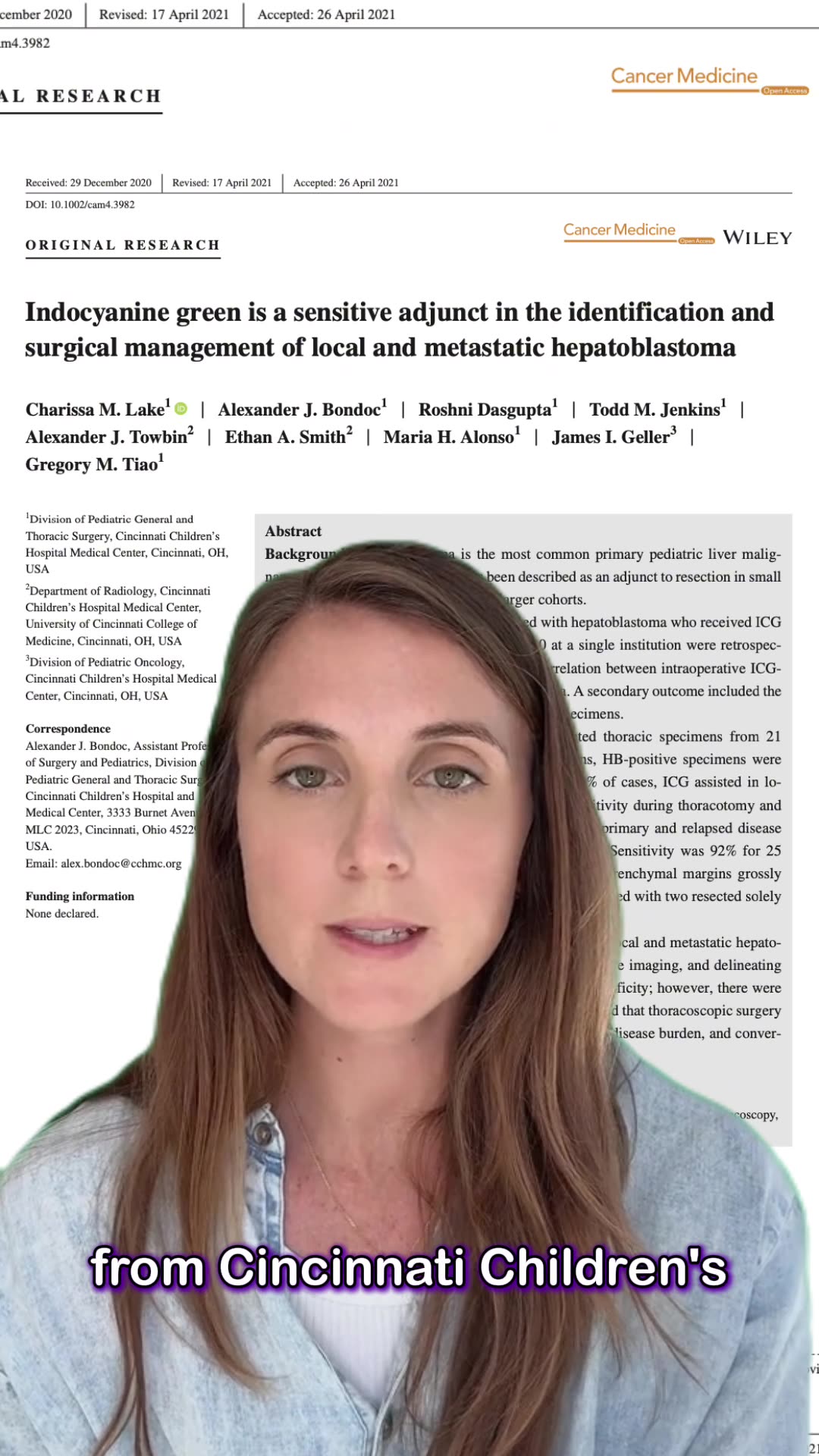
A retrospective single-institution study (2005-2021, n=50) examining the necessity of achieving no evidence of disease (NED) status in pediatric hepatoblastoma patients. The analysis found that NED status—defined as normal AFP and absence of radiographic disease—was the only factor significantly associated with decreased three-year mortality on logistic regression. Patients who could not be rendered NED had significantly lower overall and event-free survival, with none surviving past two years. The institution's aggressive approach to pulmonary metastasectomy (14 patients underwent 31 procedures, median 4 nodules resected per patient) showed high concordance between radiographic and pathologic disease, and even high-risk patients who relapsed could be successfully salvaged with repeat resections.

Key Takeaways

  • Achieving no evidence of disease (normal AFP + no radiographic disease) was the only factor significantly associated with decreased 3-year mortality (3:00)
  • Patients unable to achieve NED had significantly worse outcomes, with none surviving past 2 years vs high survival in NED cohort (6:30)
  • Aggressive pulmonary metastasectomy showed high concordance between imaging and pathology (median 4 nodules resected, 3 viable per patient) (4:30)
  • High-risk patients who relapsed after achieving NED could be successfully salvaged: 3 of 5 survived with repeat resection + chemotherapy (7:15)

Inside this episode

Kai, the Library's AI content creator, listened to this episode and mapped who's speaking, the chapters, key claims, and cases. Every item links to the exact moment in the recording.

AI-enriched

Who's speaking

  • Andrew Fleming — guest

Chapters

  • 0:00Introduction and Background on Hepatoblastoma — Speaker introduces hepatoblastoma as the most common pediatric liver cancer, describes PRETEXT staging and AHEAD 1531 risk stratification, and notes that complete surgical resection is necessary for survival while cisplatin-based chemotherapy has improved resectability.
  • 2:00Study Rationale and Methods — Speaker explains variable literature on pulmonary metastasectomy survival benefits, defines study aim to investigate utility of pursuing NED status, and describes retrospective single-institution study design (2005-2021) with inclusion/exclusion criteria and IRB approval.
  • 4:00Results: Patient Cohort and Pulmonary Metastasectomy — Speaker presents cohort of 50 patients (24 high-risk), notes 41 achieved NED status, describes aggressive pulmonary metastasectomy approach with 14 patients undergoing 31 procedures, and reports high concordance between radiographic and pathologic disease (median 3 viable nodules per patient).
  • 6:00Survival Analysis and Conclusions — Speaker presents logistic regression showing NED as only significant factor for decreased mortality, describes survival curves showing patients not achieving NED had no survival past two years, notes high-risk NED patients had similar overall survival to non-high-risk NED patients, and reports three of five high-risk relapses were successfully salvaged.

Key claims

  • 0:00Hepatoblastoma is the most common pediatric liver cancer — Andrew Fleming
  • 0:30The number of contiguous hepatic sections uninvolved by tumor can be used radiographically to determine the pre-treatment extent of disease, making the PRETEXT group — Andrew Fleming
  • 1:00PRETEXT group in combination with presence/absence of metastatic disease, alpha fetoprotein at diagnosis, PRETEXT modifiers, patient age and resectability at diagnosis can be used to risk stratify patients according to the AHEAD 1531 clinical trial — Andrew Fleming
  • 1:30Complete surgical resection has been determined to be necessary for patient survival — Andrew Fleming
  • 1:45Cisplatin based chemotherapies have improved rates of resectability and subsequently survival for hepatoblastoma patients — Andrew Fleming
  • 2:00The reported survival benefits of pulmonary metastasectomy for hepatoblastoma have varied in the literature — Andrew Fleming
  • 3:00No evidence of disease is defined as a normal AFP and the absence of detectable radiographic disease on interval surveillance imaging — Andrew Fleming
  • 4:00Among 50 patients included for analysis, 24 were determined to be high risk — Andrew Fleming
  • 4:15All patients received chemotherapy and 41 patients were successfully able to be rendered no evidence of disease status — Andrew Fleming
  • 4:3014 patients underwent a total of 31 pulmonary procedures, having a median of four nodules resected per patient — Andrew Fleming
  • 5:00Median of three nodules per patient contained pathologically confirmed viable hepatoblastoma, confirming a high degree of concordance between radiographic evidence of disease and pathological confirmation of disease — Andrew Fleming
  • 5:30On logistic regression for three-year mortality, only achieving no evidence of disease was associated with a significant decrease in patient mortality — Andrew Fleming
  • 6:00The overall survival of the entire cohort is quite high — Andrew Fleming
  • 6:15The event-free survival is lower than overall survival due to relapse events after achieving no evidence of disease — Andrew Fleming
  • 6:30The overall survival and event-free survival of the group in whom we were unable to render them no evidence of disease is significantly lower, with no patients in these cohorts surviving past two years — Andrew Fleming
  • 7:00The overall survival is similar between high risk and not high risk patients who were able to be rendered no evidence of disease status — Andrew Fleming
  • 7:15The event-free survival remains significantly lower for the high-risk no evidence of disease group due to five high-risk patients who relapsed — Andrew Fleming
  • 7:30Three of five high-risk patients who relapsed were successfully salvaged using a combination of chemotherapy and further pulmonary resections — Andrew Fleming
  • 7:45No evidence of disease status is necessary for survival in patients with hepatoblastoma — Andrew Fleming
  • 7:45Repeated pulmonary metastasectomy and/or complex local control strategies to obtain no evidence of disease benefit high risk patients — Andrew Fleming

Cases discussed

  • 1:30Patient example requiring pulmonary metastasectomy for local control
This episode was analyzed and enriched by Kai, the Library's AI content creator. Every item links to the moment it comes from — click a timestamp to listen in context.
Written for:

Aggressive Pulmonary Metastasectomy in High-Risk Hepatoblastoma: A Survival Imperative

The patient case from this episode, retold from presentation to outcome with the decisions made along the way. Written by Kai from the episode transcript and reviewed before publishing.

For the care team · Case narrative · AI-written, human-reviewed

The Clinical Reality

Hepatoblastoma is the most common pediatric liver cancer 0:00. Risk stratification follows the AHEAD 1531 trial framework: PRETEXT group — determined by the number of contiguous hepatic sections uninvolved by tumor — combined with metastatic disease status, alpha-fetoprotein at diagnosis, PRETEXT modifiers, patient age, and resectability at diagnosis 0:30 1:00. The fundamental principle is unambiguous: complete surgical resection has been determined to be necessary for patient survival 1:30. Cisplatin-based chemotherapies have improved rates of resectability and subsequently survival 1:45, but chemotherapy alone does not cure this disease.

The question this series addresses is what to do when the primary tumor is resectable but pulmonary metastases remain. The literature on pulmonary metastasectomy for hepatoblastoma has reported varied survival benefits 2:00. The decision point is whether to accept radiographic disease after chemotherapy and primary resection, or to pursue complete clearance through repeated thoracic operations.

The Approach

The St. Jude group analyzed 50 patients treated between 2005 and 2021, of whom 24 were classified as high-risk 4:00. All received chemotherapy 4:15. The institutional philosophy, as Fleming described it: the group takes a fairly aggressive approach to pulmonary metastasectomy for these patients, including bilateral reoperative pulmonary resections if necessary 4:30.

No evidence of disease was defined as a normal AFP and the absence of detectable radiographic disease on interval surveillance imaging 3:00. Forty-one patients were successfully rendered no evidence of disease status 4:15. Fourteen patients underwent a total of 31 pulmonary procedures, with a median of four nodules resected per patient 4:30. Pathology confirmed viable hepatoblastoma in a median of three nodules per patient, demonstrating high concordance between radiographic evidence of disease and pathological confirmation 5:00.

The reasoning was empirical rather than theoretical. If imaging showed disease and resection was technically feasible, the team operated. If disease recurred after initial clearance, they operated again. Three high-risk patients who relapsed after achieving no evidence of disease were successfully salvaged using a combination of chemotherapy and further pulmonary resections 7:30.

The Outcomes

On logistic regression for three-year mortality, only achieving no evidence of disease was associated with a significant decrease in patient mortality 5:30. The overall survival of the entire cohort was quite high 6:00, though event-free survival was lower due to relapse events after achieving no evidence of disease 6:15.

The starkest finding was the survival difference based on disease clearance. Among patients who could not be rendered no evidence of disease, overall survival and event-free survival were significantly lower, with no patients in these cohorts surviving past two years 6:30. This was not a matter of degree — it was binary. Residual disease was incompatible with long-term survival in this series.

Among patients who achieved no evidence of disease, overall survival was similar between high-risk and not-high-risk groups 7:00. Event-free survival remained significantly lower for the high-risk no evidence of disease group due to five high-risk patients who relapsed 7:15, but three of those five were salvaged 7:30. The high-risk designation predicted relapse, but not ultimate survival if the team could clear disease again.

What the Case Changes

The transferable judgment is this: no evidence of disease status is necessary for survival in patients with hepatoblastoma 7:45, and repeated pulmonary metastasectomy and complex local control strategies to obtain no evidence of disease benefit high-risk patients 7:45. The survival curves separate cleanly at the point of complete clearance, not at the point of risk stratification.

This is not a call for futile surgery. The series does not report outcomes for patients with unresectable disease, and the definition of resectability is itself a judgment. But within the bounds of technical feasibility, the data support persistence. A high-risk patient with recurrent pulmonary nodules after initial metastasectomy is not a candidate for palliation — they are a candidate for another operation, because three of five such patients in this series survived after salvage resection 7:30.

The outcome for patients who could not be rendered disease-free — none surviving past two years 6:30 — was not discussed in detail, but that absence is itself informative. The series does not claim that all patients can be cleared, only that clearing them is the only path to cure.

Takeaways from this story

  • Achieving no evidence of disease was the only factor associated with decreased three-year mortality on regression analysis.
  • Patients who could not be rendered disease-free had zero survival past two years, regardless of risk stratification.
  • High-risk patients who achieved disease clearance had similar overall survival to not-high-risk patients with clearance.
  • Three of five high-risk patients who relapsed after initial clearance were salvaged with repeat resection and chemotherapy.
  • Pathology confirmed viable tumor in a median of three of four resected nodules, validating aggressive radiographic targeting.

Keywords

Hashtags

Transcript

Comments

Loading comments…