
Bariatric Surgery in the Pediatric Patient
With Dr. Thomas Inge & Dr. Marc Harmon · hosted by Dr. Todd Ponsky · StayCurrentMD
Part of
Obesity 10 items
Educational content from recorded physician discussions — not medical advice. Talk to your (or your child's) care team about your situation.
Video
Update Course 2022 - TOP PUBLICATIONS IN NON- PED SURG JOURNALS - Jose Campos
27 min · Published Sep 2022
Video
Pediatric Obesity Is a Disease: Treatment, Medications, Surgery & Equity in Care with Dr. Justin Ryder
Lurie Children's Hospital · 6 min · Published Mar 2026
Video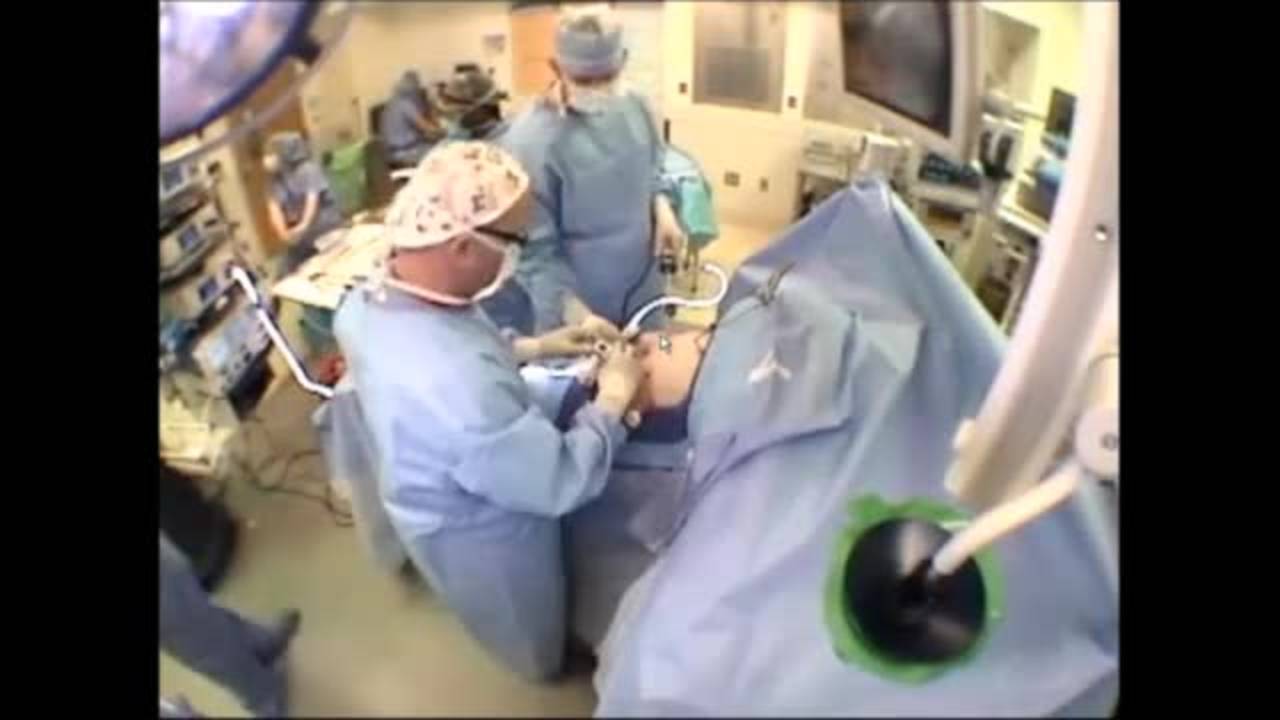
Bariatric Partial Gastrectomy Technique: Adolescent Obesity 2013
39 min · Published Jul 2017
Video
Rapid Fire and Conclusion: Pediatric Obesity 2017
23 min · Published Feb 2018
Video
PDC 2020 Practice Gaps
83 min · Published Sep 2020
Video
Clinical Research Facilitators, Barriers, and Preferences of Parents of Children With Overweight...
41 s · Published Aug 2026
Only a few other public items share this expert — go deeper there →
Video
Pediatric Surgical Oncology Research Collaborative (PSORC): Studying Rare Pediatric Tumors
56 s · Published May 2026
Video
Update Course Rewind 2025: Hirschsprung + ARM: Rare but Real
1 min · Published May 2026
Video
Update Course Rewind 2025: Hirschsprung + ARM: Rare but Real
1 min · Published May 2026
Video
Pooling Patients to Study Rare Pediatric Tumors: An Introduction to PSORC
56 s · Published May 2026
Video
The fetal frontier: A review of current and emerging fetal therapies for genetic diseases
44 s · Published May 2026
Video
Indocyanine green assists with sentinel lymph node mapping in pediatric and adolescent patients
1 min · Published May 2026
What the experts said
Type 2 diabetes, previously called adult-onset diabetes, is now seen in children and teenagers as a complication of obesity.
Obstructive sleep apnea, hypertension, dyslipidemias, and cardiovascular risk factors are comorbidities now appearing in obese children.
About half of teenagers presenting for bariatric surgery have had a parent who underwent weight loss surgery.
The success rate of non-operative weight loss falls dramatically and linearly from age 6 to 16; a severely obese teenager may have only a 1% chance of losing significant weight with lifestyle interventions.
Lifestyle management research defines success as 5–10% total body weight loss, whereas bariatric surgery in teens achieves about 30% weight loss at 3–5 years.
Caloric restriction is the primary mechanism for weight loss; exercise is more effective for maintaining weight loss once achieved.
Orlistat is the only FDA-approved weight-loss drug for pediatrics, causing greasy stools and achieving only about 2% weight loss.
Topiramate and phentermine, approved for adults, affect appetite and satiety pathways in teenagers identically to adults and are used off-label.
Most U.S. bariatric surgeons limit surgery to teenagers (youngest reported case age 13) to ensure physiologic maturity and avoid harm to development.
A colleague in Saudi Arabia has performed weight loss surgery on children as young as 6–7 with reported good long-term results.
Surgery can prevent diabetes in adolescents with elevated blood sugar who are not yet diabetic.
Adult bariatric studies show a longevity benefit for surgery in morbid obesity.
Most insurance plans covering bariatric surgery require a 6-month period of medically supervised weight loss before surgery.
Patients are put through 'surgery school' during the 6-month preoperative period to teach them about the surgery, nutrition, risks, and benefits, ensuring informed, non-coerced consent.
A multidisciplinary team for adolescent bariatric surgery includes pediatric endocrinology, gastroenterology, psychology (2), exercise physiology (2), nutrition (2), and surgery.
Patients may be in a medical obesity program for 3 years before considering surgery, allowing the surgical team to build longitudinal relationships with families.
Many patients who need bariatric surgery lack insurance coverage due to policy exclusions, even when surgery is medically indicated.
Surgeons advocate for patients when insurance denies coverage but it is not an absolute exclusion.
Teens with chaotic lives, uncontrolled medical problems, or untreated psychiatric illness may not be ready for surgery and require preparation by the multidisciplinary team.
Syndromic obesity and monogenic obesity (single-gene mutations driving appetite) account for 6–7% of severely obese children by age 10; outcomes with bariatric surgery in this group are mixed and require further study.
Roux-en-Y gastric bypass has the longest track record in adults and teenagers.
Adjustable gastric band has a high reoperation rate in teenagers and adults and is no longer widely offered.
Vertical sleeve gastrectomy, originally a first-stage procedure for super-obese patients, now shows good initial weight loss and comorbidity resolution at 3–4 years in adults and teens.
In 2015, sleeve gastrectomy was performed in 80% of adolescent bariatric cases, gastric bypass in 20%, and virtually no bands.
Sleeve gastrectomy and gastric bypass show very comparable weight loss and comorbidity resolution results in teenagers.
Gastric bypass is preferred for patients with hypothalamic obesity (e.g., post-brain tumor, pan-hypopituitarism) because sleeve and band have shown inferior weight loss in this biologically driven obesity.
Theoretical and measured risks of sleeve gastrectomy are lower than gastric bypass in teenagers and adults.
Sleeve gastrectomy is performed laparoscopically, starting 4–6 cm proximal to the pylorus, mobilizing the greater curvature to the diaphragm, and stapling along a 36–42 Fr bougie to the angle of His.
A 25 cm clamp can be used to standardize sleeve geometry, ensure complete fundus mobilization, and prevent leaving excess fundus that can cause reflux.
The upper spinal firing near the GE junction is the most common site for leaks and the thinnest part of the stomach.
The posterior wall of the stomach tends to slip up during the final stapler firing; counter-traction is critical to avoid leaving too much fundus or getting too close to the esophagus.
Close inspection of the staple line with magnification is essential; bleeding or malformed staples should be oversewn with figure-of-eight sutures.
Gastric bypass is performed laparoscopically with a circularly stapled gastrojejunal anastomosis (25 mm stapler), 50 cm biliopancreatic limb, 100 cm Roux limb, and closure of jejunojejunostomy and Peterson's defects with non-absorbable suture.
Antecolic Roux limb configuration works well and still requires closure of the mesenteric defect.
A linear stapler (2.5 cm firing) can be used for the gastrojejunal anastomosis with satisfactory results.
Patients start sips of water same-day postop, advance to 4 oz/hr by day 1, 6 oz/hr by day 2, and are discharged when achieving 64–96 oz/day.
High-protein intake (60–80 g/day) is recommended postoperatively to preserve lean mass during rapid weight loss.
Patients are on a soft mechanical diet for the first month, then less restricted; early caloric intake is 300–600 kcal/day.
Sleeve gastrectomy complications include staple-line leak (most feared, especially at GE junction), bleeding at staple line, and trocar-site hernia at the extraction site.
Long-term sleeve complications include anemia, vitamin deficiencies, and gastroesophageal reflux (up to one-third of adults; possibly lower in teens).
Gastric bypass has higher complication rates than sleeve: internal hernias, stricture at gastrojejunal anastomosis (fairly high rate), and marginal ulcers.
Teenagers may have lower risk of post-sleeve reflux than adults because their physiologic anti-reflux barriers are more secure.
Proton pump inhibitors are used postoperatively after sleeve gastrectomy.
Teen-LABS data show 28–30% total body weight loss at 3 years for both gastric bypass and sleeve gastrectomy, maintained long-term.
Typical teenagers lose 80–100 pounds in the first year after bariatric surgery.
Obstructive sleep apnea resolves within 3 weeks of surgery, before significant weight loss, suggesting a neurohormonal mechanism rather than weight-dependent improvement.
Type 2 diabetes and glucose metabolism improve within days of gastric bypass surgery, independent of weight loss.
Joint pain improves with weight loss after bariatric surgery.
A pre-Teen-LABS cohort of 70+ gastric bypass patients followed for an average of 8 years (range 5–12) with 80% retention showed 32–33% weight loss at 1 year, 28–30% at 8 years, with durable diabetes resolution.
A comparator group of severely obese teenagers who underwent lifestyle intervention gained 66% more weight over 6 years and developed diabetes at expected rates.
Teen-LABS is an NIH-sponsored study (242 teenagers, 2007–2012, now in third 5-year funding cycle) tracking broad health outcomes, biospecimens, with 80–90% annual follow-up.
Swedish long-term bariatric research shows 5-year results comparable to U.S. data.
Intragastric balloons and endoscopic gastric plication are less invasive approaches with moderate adult experience and some adolescent cases; outcomes are still being evaluated.
Bariatric surgery is a form of medical therapy at the molecular level, affecting gut-brain signaling.
Combination therapy (surgery plus pharmacotherapy such as GLP-1 agonists) may optimize outcomes and address suboptimal responders; trials are anticipated.