


From
StayCurrentMD
#APSA50: Academic Surgery in 2019
With Dr. Alan Goldstein · hosted by Dr. Ray Hickey & Dr. Todd Ponsky
Chapter 1 of 4 · Emerging & Future Directions
Meeting format
APSA 50th Anniversary Meeting Format Changes
Expert statements on this page
No expert statements were drawn from this page.
Host summaries · secondary, not cited in answers
Educational content from recorded physician discussions — not medical advice. Talk to your (or your child's) care team about your situation.
Video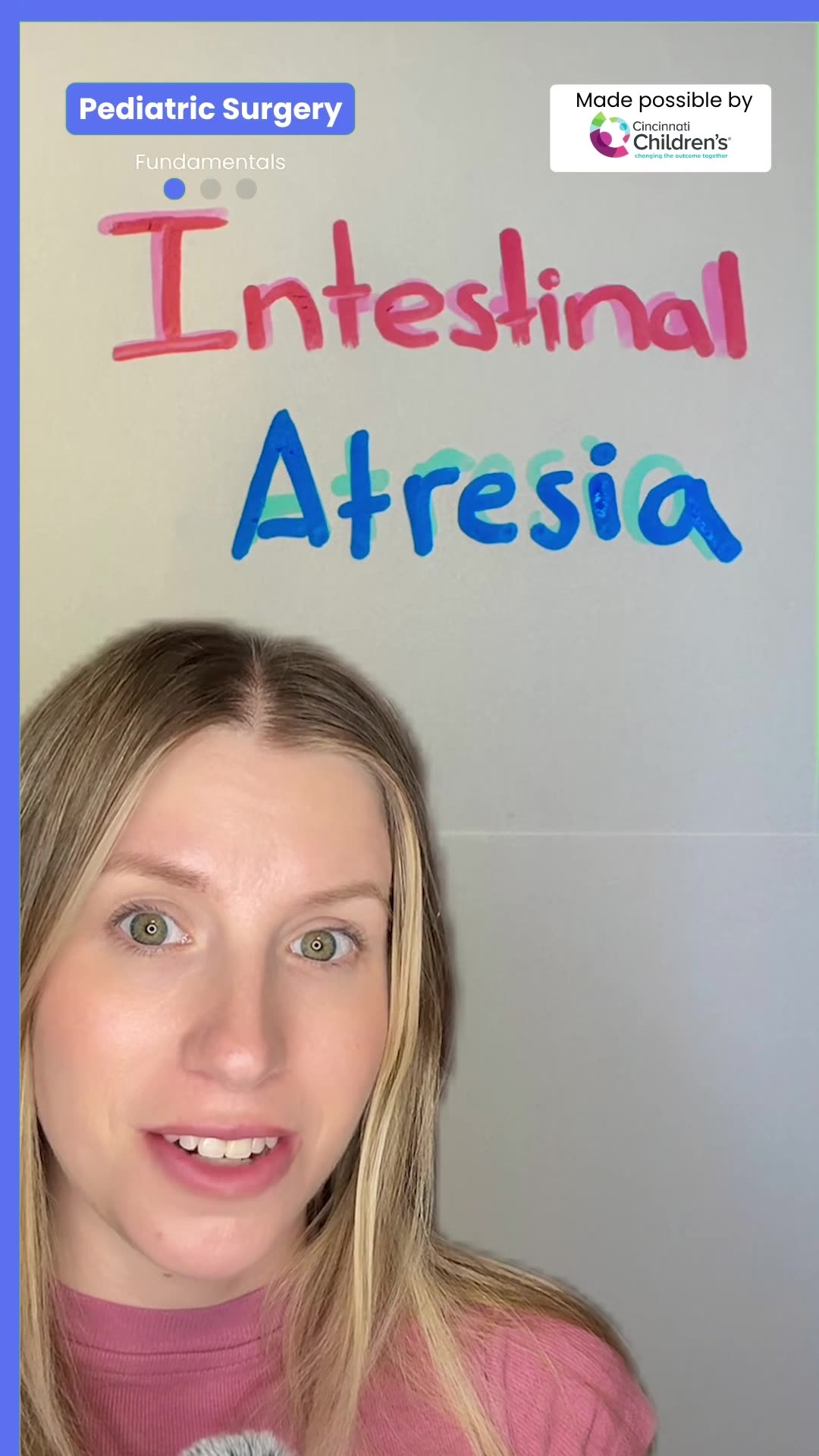
Intestinal Atresia Types Explained: Grossfeld Classification for Pediatric Surgery
1 min · Published Sep 2026
Video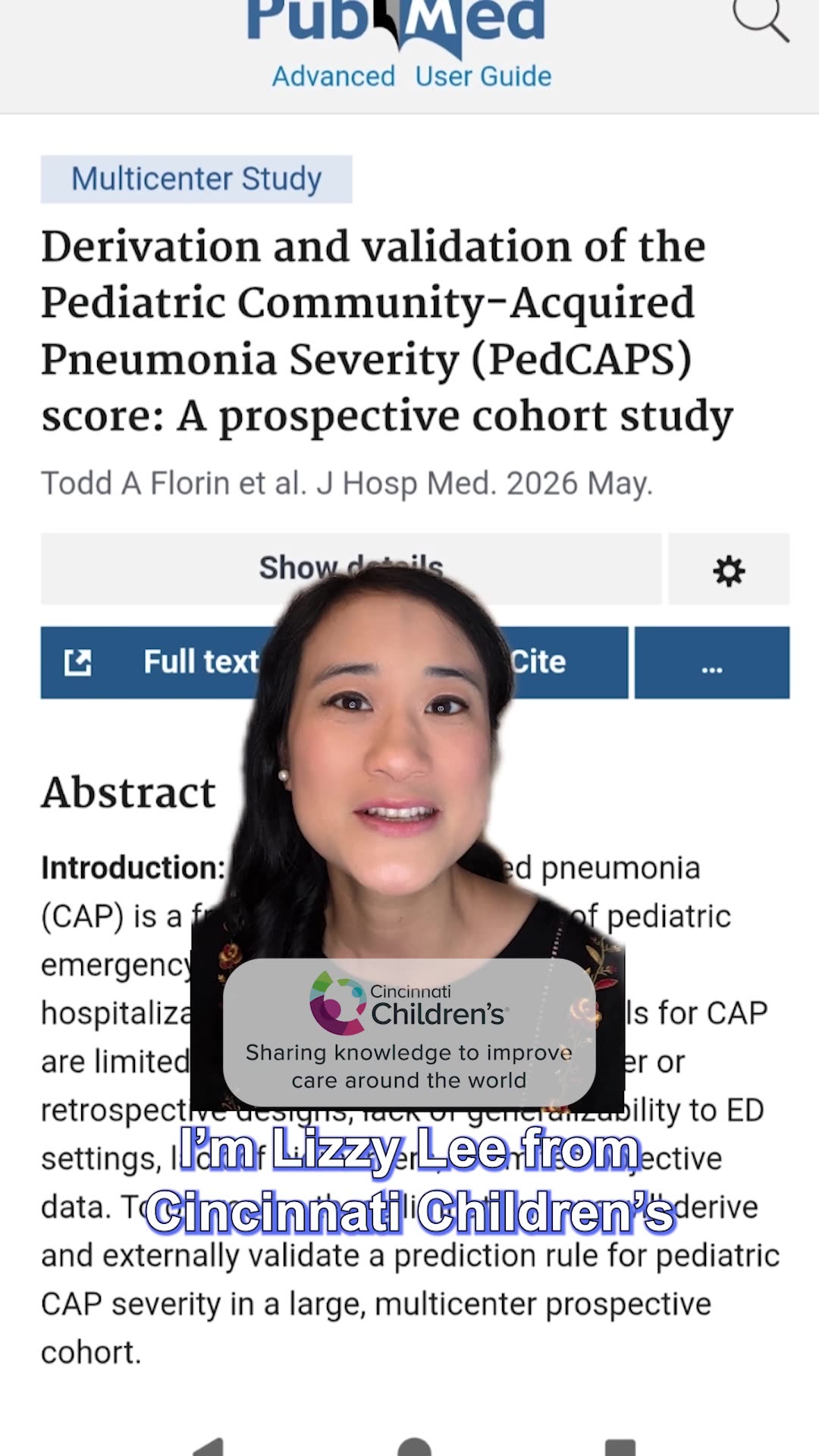
Derivation and validation of the Pediatric Community-Acquired Pneumonia Severity (PedCAPS) score: A prospective cohort study
50 s · Published Sep 2026
Video
FETO for Late-Diagnosed Severe Congenital Diaphragmatic Hernia (CDH) at Cincinnati Children's with Dr. Beth Rymeski
4 min · Published Sep 2026
Video
Severe Congenital Diaphragmatic Hernia (CDH) Case: FETO Management & Unexpected Findings with Dr. Beth Rymeski
3 min · Published Sep 2026
Video
Fetoscopic Endoluminal Tracheal Occlusion (FETO) Procedure: Step-by-Step Guide with Dr. Beth Rymeski
4 min · Published Sep 2026
Video
Choledochal Cyst Types Explained: Pediatric Surgery Fundamentals
1 min · Published Sep 2026
What the experts said
APSA's 50th anniversary meeting changed the typical format by breaking up 45-minute to hour-long named lectures so that no lecture is longer than about 20 or 25 minutes.
APSA introduced TED-style talks called 'pediatric surgery, education, and disruption' that were often outside the domain of pediatric surgery and medicine, covering topics like robotics and artificial intelligence.
The meeting used a stage thrust format with headset microphones, allowing speakers to move out from behind the podium and into the crowd.
The Professional Development Committee (PDC) in pediatric surgery synthesizes information from literature, committees, and meetings to identify practice gaps that pediatric surgeons need to know.
Tech talks at the meeting included a summary of practice gaps from the previous year and 4 new 10-15 minute talks on practice gaps, presented as visual abstracts focusing on study findings and actionable recommendations rather than detailed methodology.
Taking 2 years off for research followed by 2-3 years of residency and 2 years of fellowship means returning to the lab 5 years later when the field has completely changed and techniques learned are likely obsolete.
In some medical fellowships, research time is embedded with fellowship time, such as a year of clinical fellowship and one or two years of research.
Moving research years in surgical training would require significant juggling by many surgical programs.
It is hard to judge quality by popularity in academic dissemination.
Media summaries of studies published in journals like the New England Journal or The Lancet are often inaccurate when compared to the original papers.
Paring down a complicated multi-center study to just a few lines on a Twitter feed requires caution.
The number of tweets or likes should not be used as an indicator of quality or success in academic medicine.
There is an exponential growth of medical content and knowledge, making it impossible to be up to date on everything.
Three factors that will impact knowledge curation are artificial intelligence/machine learning, crowdsourcing, and platforms.
Natural language processing (NLP) can read articles, pick out words, understand their meaning, and help identify high-quality journals, similar to what human article reviewers do.
Crowdsourcing is effective at identifying good content, with voted-on articles typically rising to the top.
Knowledge dissemination must move beyond podiums and journal articles to digital platforms that are free and easy to access.
Social media is effective at disseminating content beyond single journal publications or podium presentations.
Using social media to disseminate content will increase recognition, but alt-metric scores (measuring internet presence) do not necessarily help with academic promotion currently.
The role of alt-metrics in academic promotion is likely to change in the future.