


From
StayCurrentMD
APSA Article of Interest: REBOA in Pediatric Trauma
hosted by Dr. Brittany Levy
Part of
Trauma 11 items
Chapter 1 of 1 · Evidence & Research
REBOA registry review
REBOA in Pediatric Trauma: Registry Review
Expert statements on this page
No expert statements were drawn from this page.
Host summaries · secondary, not cited in answers
Educational content from recorded physician discussions — not medical advice. Talk to your (or your child's) care team about your situation.
Video
Pediatric trauma centers use less imaging than adult centers for adolescent patients
Todd Ponsky · 3 min · Published Jan 2018
Video
Differences Between Pediatric & Adult Trauma Centers
3 min · Published Mar 2017
Video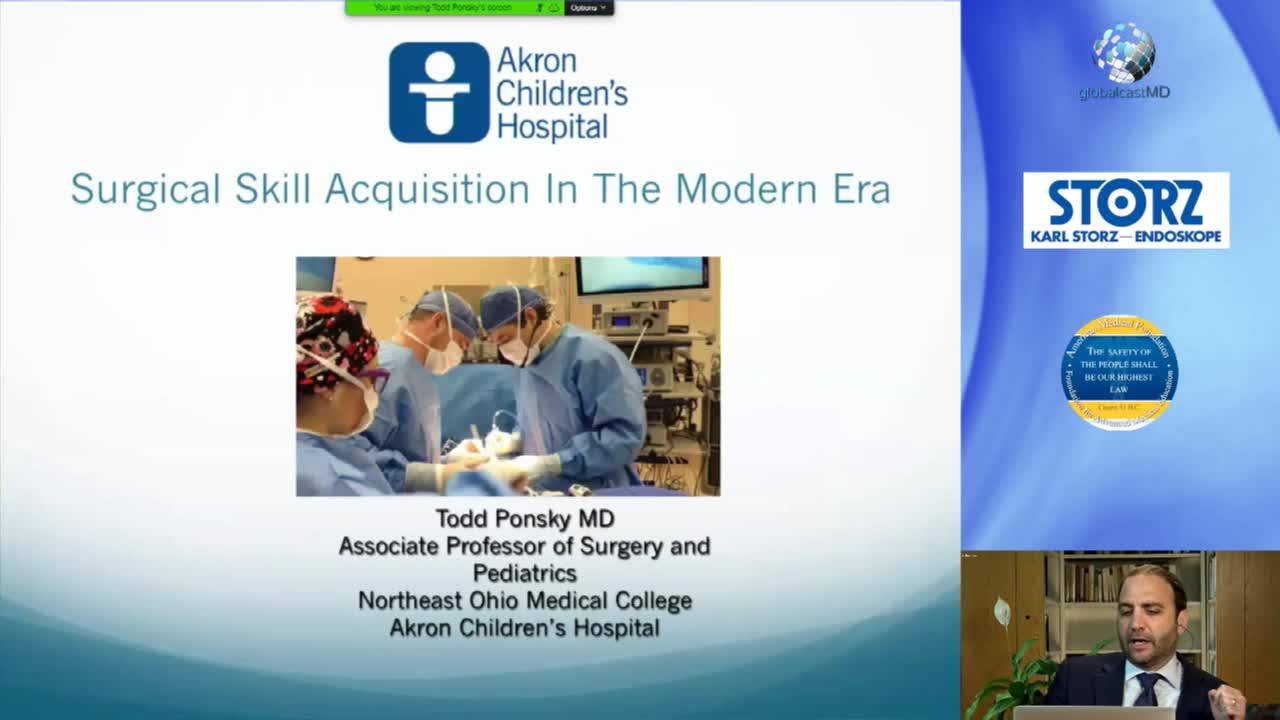
Surgical Skill Acquisition in the Modern Era: Comparative Technology in...
Dr. Todd Ponsky · 13 min · Published May 2016
Video
Pediatric Gun Violence: Pediatric Trauma Series 2017
22 min · Published Jan 2018
Video
VTE PPX in High Risk Trauma Patients: 2018 Pediatric Surgery Practice Gap #7
Dr. Todd Ponsky · Published Jun 2019
Podcast
#APSA50: Social Determinants of Health
47 min · Published Jun 2019
Podcast
Diaphragm pacing as alternative to mechanical ventilation in pediatric respiratory failure
1 min · Published Nov 2026
Podcast
Fetoscopic endoluminal tracheal occlusion for congenital diaphragmatic hernia
4 min · Published Nov 2026
Podcast
FETO procedure for late-diagnosed severe CDH with liver herniation
4 min · Published Nov 2026
Podcast
Severe CDH case with FETO: unexpected anatomic findings and clinical outcome
3 min · Published Nov 2026
Podcast
Pediatric pancreatitis: diagnosis, causes, and genetic insights with Dr. Juan Gurria
3 min · Published Nov 2026
Podcast
Understanding craniosynostosis: skull sutures, growth patterns, and diagnosis in infants
10 min · Published Nov 2026
What the experts said
REBOA stands for resuscitative endovascular balloon occlusion of the aorta
REBOA is a minimally invasive method of hemorrhage control where a sheath is introduced into the aorta via femoral arterial access and inflated to occlude arterial flow in zone one, two, or three of the thoracic or abdominal aorta
REBOA has been gaining popularity for trauma and non-trauma indications in adult centers
REBOA is not used at all centers even in adults
Over seven years, there were only 11 patients in the AAST REBOA registry that were less than 18 years old that had a REBOA placed
All 11 pediatric patients who received REBOA were adolescents with a median age of 17
REBOA improved hemodynamics in the pediatric population studied
Only 30% of pediatric patients who received REBOA survived
REBOA has not made it into prime time for pediatric trauma yet
The technology might need some modifications for pediatric use
A better identification strategy is needed to know what patients would benefit from REBOA intervention