


From
StayCurrentMD
Journal of Pediatric Surgery Article Review: October 2023
With Dr. Pablo Laje & Dr. Tom Wiley & Dr. Madina Chakraborty & Dr. Elizabeth Speck · hosted by Dr. Cecilia Gigena & Dr. Em Gootee
Chapter 1 of 5 · Fundamentals
Introduction
Introduction and episode overview
Expert statements on this page
No expert statements were drawn from this page.
Host summaries · secondary, not cited in answers
Educational content from recorded physician discussions — not medical advice. Talk to your (or your child's) care team about your situation.
Video
Prophylactic Acid-suppression Medication to Prevent Anastomotic Strictures After Oesophageal Atresia Surgery
Published Dec 2023
Podcast
Journal of Pediatric Surgery Article Review: December 2021
16 min · Published Jan 2022
Video
Comparison of robotic versus thoracoscopic repair for congenital esophageal atresia
56 s · Published Feb 2024
Video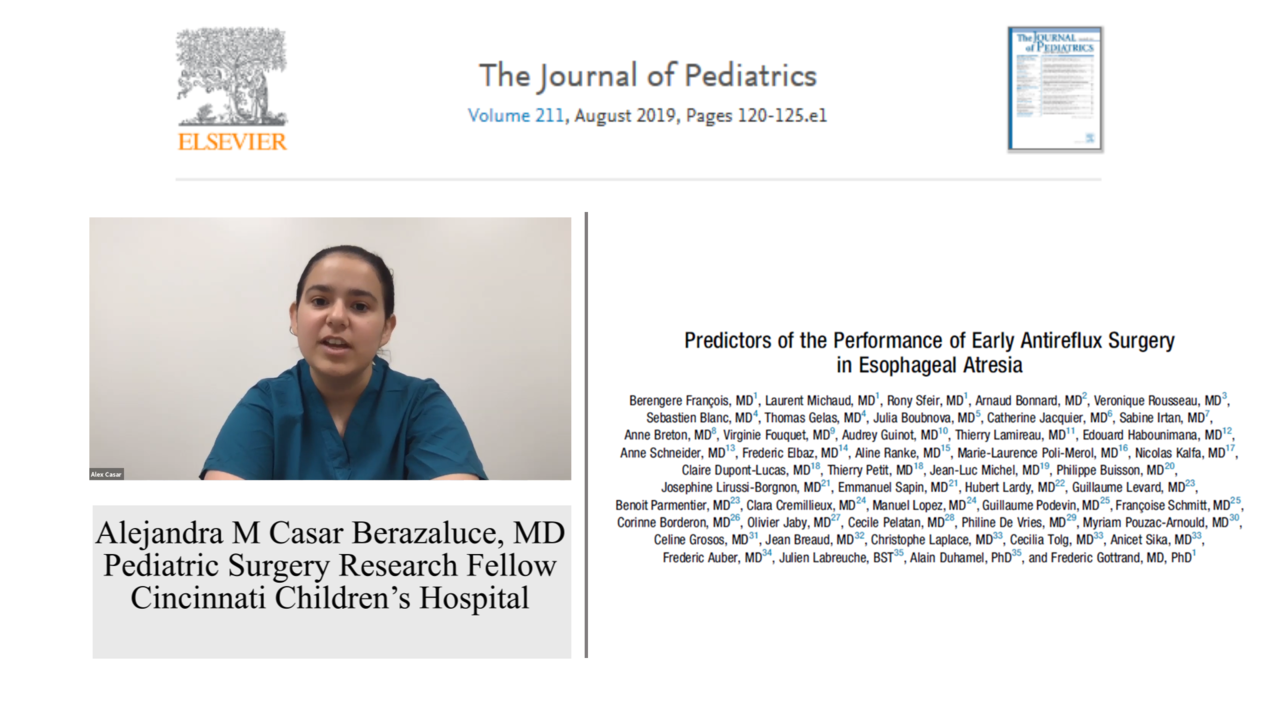
What are risk factors for anti-reflux surgery after esophageal atresia repair?
Published Oct 2019
Video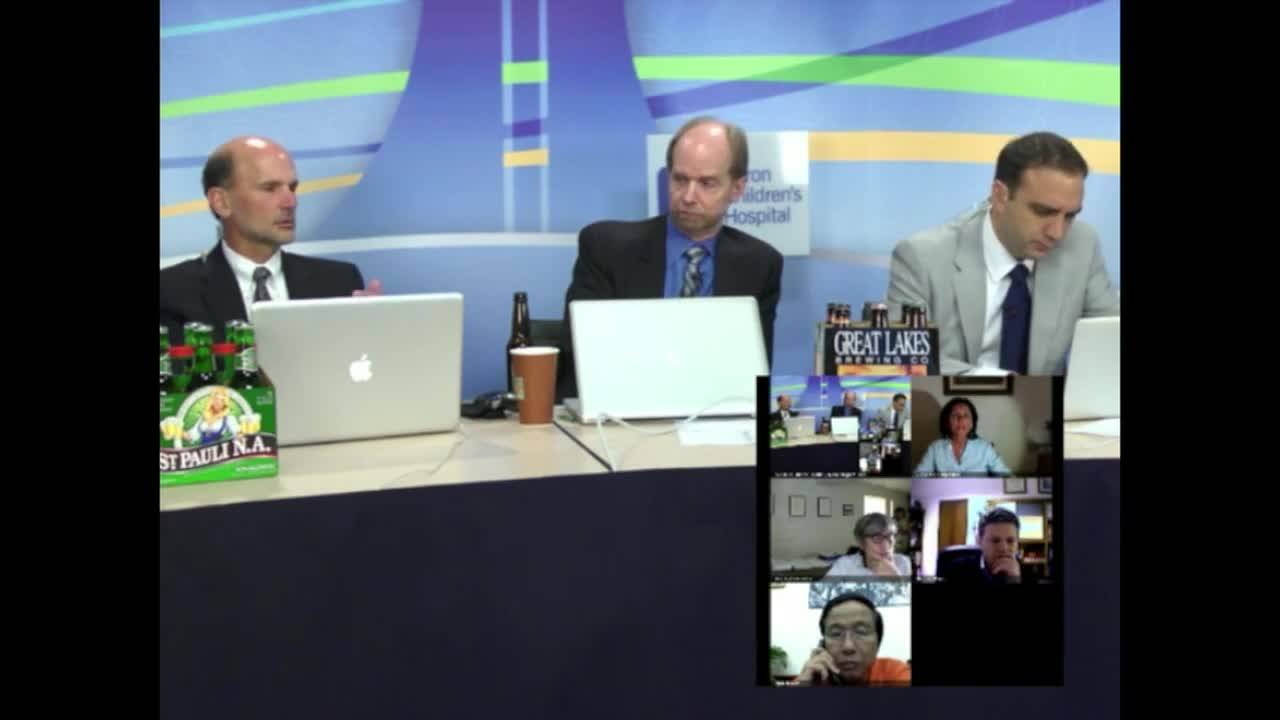
Panel Discussion: Pediatric Thoracic Surgery Part 1-Lung Lesions 2012
61 min · Published Jul 2017
Video
Neonatal Thoracotomy Has 25% Chance of Chest Wall Deformity
Published Jan 2018
Video
Quick Literature Updates Episode 18
4 min · Published Mar 2025
Video
Clinical Symptoms Affect Treatment and Prognosis in Pediatric Patients with Congenital Pulmonary Airway Malformation
55 s · Published Dec 2023
Video
Update Course Rewind: Congenital Lung Lesions 2022
4 min · Published Aug 2023
Video
Update Course 2022 - APSA PDC UPDATES - Mary Edwards, Paul Jeziorczak, Craig Lillehei, and Charles Snyder,
64 min · Published Sep 2022
Podcast
Case Based Journal Review - CPAM in 2022
12 min · Published Apr 2022
Podcast
The Full Story on CPAMs
56 min · Published Sep 2021
Video
Intestinal Atresia Types Explained: Grossfeld Classification for Pediatric Surgery
1 min · Published Sep 2026
Video
Derivation and validation of the Pediatric Community-Acquired Pneumonia Severity (PedCAPS) score: A prospective cohort study
50 s · Published Sep 2026
Video
FETO for Late-Diagnosed Severe Congenital Diaphragmatic Hernia (CDH) at Cincinnati Children's with Dr. Beth Rymeski
4 min · Published Sep 2026
Video
Severe Congenital Diaphragmatic Hernia (CDH) Case: FETO Management & Unexpected Findings with Dr. Beth Rymeski
3 min · Published Sep 2026
Video
Fetoscopic Endoluminal Tracheal Occlusion (FETO) Procedure: Step-by-Step Guide with Dr. Beth Rymeski
4 min · Published Sep 2026
Video
Choledochal Cyst Types Explained: Pediatric Surgery Fundamentals
1 min · Published Sep 2026
What the experts said
Acid suppression medicines, particularly proton pump inhibitors (PPIs), have potential harms
There are no randomized controlled trials on prophylactic acid suppression after esophageal atresia repair
There is currently no evidence that anti-acid medication reduces the risk of stricture, and there was a tendency toward higher incidence of strictures with treatment
A large prospective study demonstrated that even children with sizable pneumothorax can be safely observed
Not every patient with pneumothorax has an active leak; aspiration followed by repeat imaging a few hours later can identify patients who can go home if there is no recurrence
Cross-sectional imaging should not be performed on children with spontaneous pneumothorax to help make clinical decisions; the data support this conclusion
If patients reaccumulate air after initial management, they have an ongoing air leak and warrant an operation
The data support doing some pleural-based management rather than just staple lobectomy alone for spontaneous pneumothorax
Studies are not available to demonstrate that one pleural-based procedure is better than another
For recurrent pneumothorax, whatever procedure was done before, do something more aggressive
The CPAM study reviewed 110 patients operated over about 5 years, comparing perioperative outcomes between symptomatic and asymptomatic patients
The CPAM study did not explain why operations were performed in asymptomatic patients, some of whom were several years old (5 to 120 months)
The CPAM study excluded patients who underwent thoracotomy, including only thoracoscopic resections
Within 1,395 patients across 12 observational studies, 753 received acid suppression medication but this did not reduce the odds of having an esophageal stricture
There was no significant difference in secondary outcomes (gastroesophageal reflux disease, anastomotic leak, esophagitis) between infants receiving prophylactic acid suppression and those who did not
Potential risks of long-term acid suppression therapy include dysbiosis, necrotizing enterocolitis, and increased neonatal infection rates, particularly relevant in preterm and low birth weight infants
Some randomized trials showed that doing something to the pleura does not actually reduce recurrences of spontaneous pneumothorax
For the asymptomatic contralateral side in children with spontaneous pneumothorax, do not do anything unless it develops symptoms
The asymptomatic CPAM group had shorter operating times, shorter postoperative mechanical ventilation, shorter chest tube durations, and shorter hospital stays
Factors associated with symptomatic CPAM lesions include age older than 4 years, postnatal diagnosis, and maximum cyst diameter greater than 39.9 millimeters
The CPAM study did not enroll patients who accepted conservative treatment compared to asymptomatic patients
The CPAM study sample size was insufficient and all patients were from a single center