


From
StayCurrentMD
200% Accountability
Chapter 1 of 1 · Fundamentals
Safety commitment
Perioperative Safety Commitment and 200% Accountability Framework
Expert statements on this page
No expert statements were drawn from this page.
Host summaries · secondary, not cited in answers
Educational content from recorded physician discussions — not medical advice. Talk to your (or your child's) care team about your situation.
Video
Intestinal Atresia Types Explained: Grossfeld Classification for Pediatric Surgery
1 min · Published Sep 2026
Video
Derivation and validation of the Pediatric Community-Acquired Pneumonia Severity (PedCAPS) score: A prospective cohort study
50 s · Published Sep 2026
Video
FETO for Late-Diagnosed Severe Congenital Diaphragmatic Hernia (CDH) at Cincinnati Children's with Dr. Beth Rymeski
4 min · Published Sep 2026
Video
Severe Congenital Diaphragmatic Hernia (CDH) Case: FETO Management & Unexpected Findings with Dr. Beth Rymeski
3 min · Published Sep 2026
Video
Fetoscopic Endoluminal Tracheal Occlusion (FETO) Procedure: Step-by-Step Guide with Dr. Beth Rymeski
4 min · Published Sep 2026
Video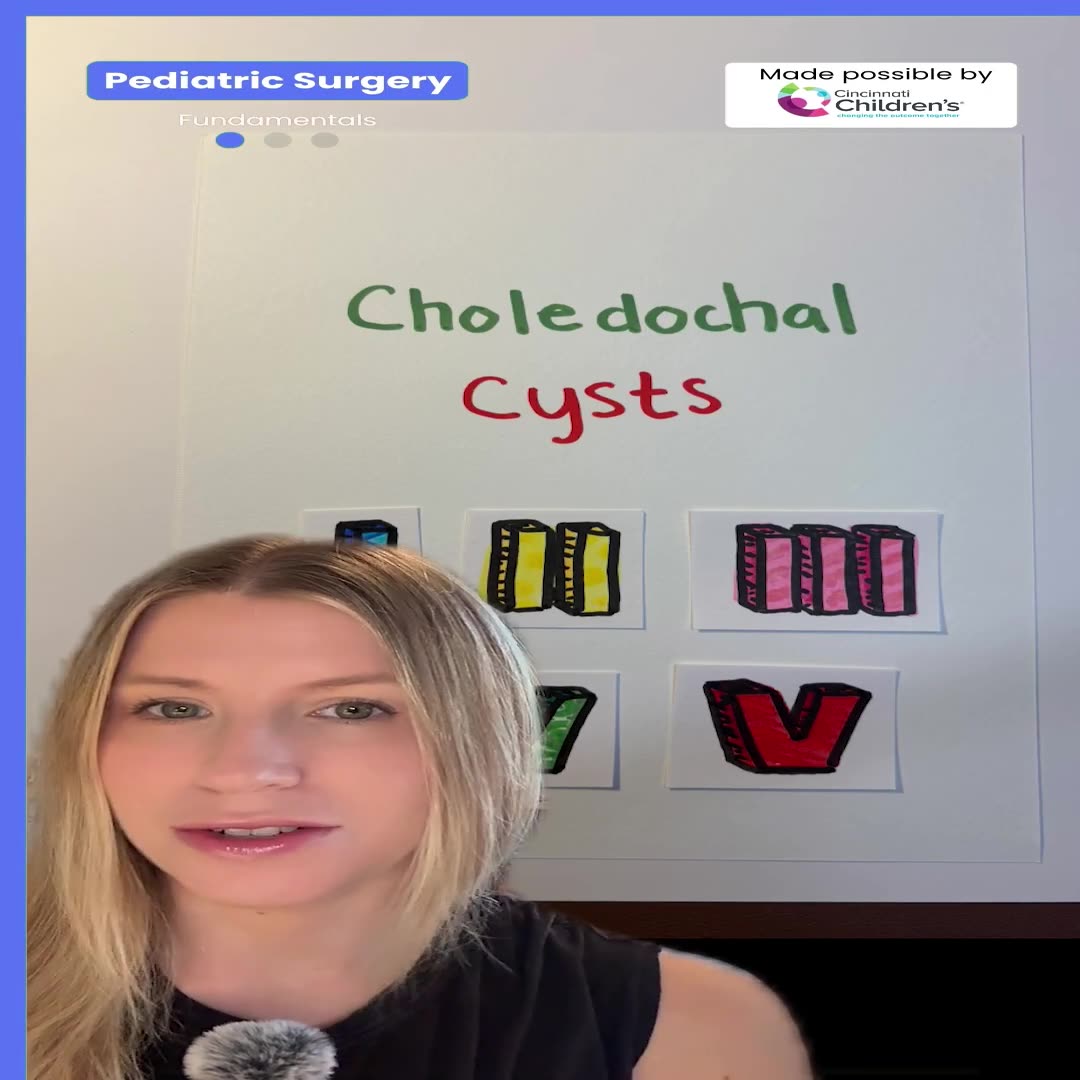
Choledochal Cyst Types Explained: Pediatric Surgery Fundamentals
1 min · Published Sep 2026
What the experts said
Cincinnati Children's perioperative team must put safety of patients, families, and each other as top priority for every patient, every day, every time.
Responsible providers will be present for all key portions of the procedure and at any time requested by team members.
The surgeon will announce the placement of all unmarked or uncounted foreign body into a patient's cavity.
All team members will actively participate and communicate during the announce and count process.
The perioperative vision is to provide the safest, most compassionate, and highest value perioperative care for all patients, their families, and staff.
All team members will ensure clear and accurate communication at all transfers of care.
Team members will communicate in a manner that maximizes team situation awareness, including pre-procedure huddles, intraoperative huddles, and team huddles anytime patient condition or situation changes.
The safety culture empowers every member to speak up and stop for safety, identify and solve system problems, and work as one team.
All team members will be encouraged and empowered to utilize appropriate escalation pathways and closed loop communication to ensure safety.
Patient and employee safety is held higher than any other priority, central to the mission to improve child health.
200% accountability for safety means accountability for the safety of patients, ourselves, and our team.
Every patient must have a clearly identifiable provider and care team responsible for directing their care throughout perioperative areas.
Team members commit to speaking up and listening up for safety, embracing collective responsibility and responding with grace and gratitude for all concerns.
Listening, educating, and engaging patients, families, and caregivers as safety partners empowers them to improve safety outcomes.
All consents will be completed in a clear and accurate manner understandable to patients, family, and staff.
The perioperative team will ensure the scheduled procedure is accurately scheduled and all special equipment needs and safety concerns are communicated.
Every patient will have appropriate surgical site marking when indicated, clear to patients, families, and all perioperative team members.
The perioperative team will confirm the plan with patient and family members present prior to surgery and encourage families to speak up.
All team members, including patients and families, will stop, engage, and participate in the timeout.