


Total Pancreatectomy with Islet Autotransplantation (TPIAT)
With Dr. Juan Pablo Gurria & Dr. Rita Bottino · hosted by Dr. Em Gootee
Chapter 1 of 4 · Fundamentals
Patient selection
Introduction and Patient Selection Criteria
Expert statements on this page
No expert statements were drawn from this page.
Host summaries · secondary, not cited in answers
Educational content from recorded physician discussions — not medical advice. Talk to your (or your child's) care team about your situation.
Video
Update Course Rewind: Management of Chronic Pancreatitis 2023
8 min · Published Apr 2024
Video
Update Course Rewind: Management of Recurrent Pancreatitis
CCHMC Pediatric Surgery · 6 min · Published May 2024
Video
Surgical Interventions for Pancreatitis in Children: Insights from Dr. Juan Gurria
4 min · Published Oct 2026
Video
Pancreatitis in pediatric patients with pancreatic solid pseudopapillary neoplasms- a single center experience
59 s · Published Apr 2026
Video
Welcome and Introductions: Pancreatic Disease
Dr. Todd Ponsky · 6 min · Published Sep 2016
Video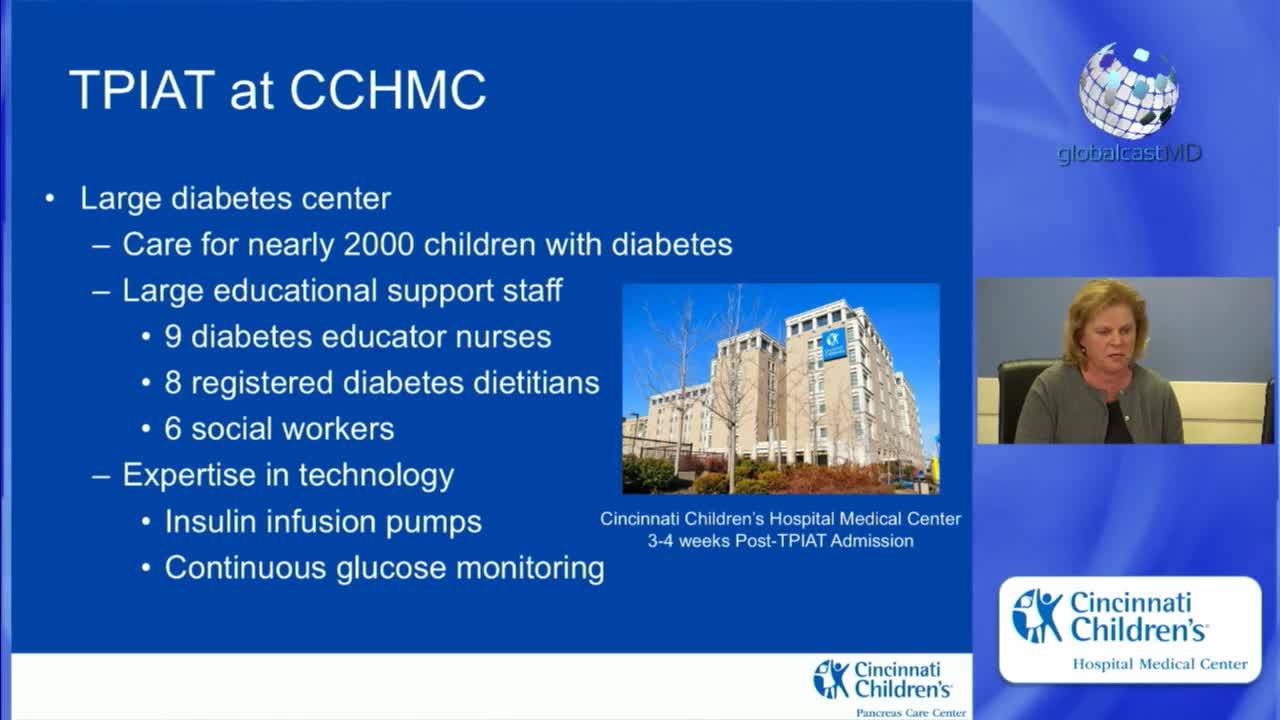
Total Pancreatectomy with Islet Autotransplantation: Pancreatic Disease
47 min · Published Sep 2016
Podcast
Update Course Rewind 2025: Robotics in Pediatric Surgery: Which indications benefit the most?
Juan Pablo Gurria · 4 min · Published Jun 2026
Video
Total pancreatectomy with islet autotransplantation (TPIAT) - Cincinnati Children's Pancreas Care Center
CCHMC Pediatric Surgery · 10 min · Published Dec 2024
Video
Pancreas Care Center | Cincinnati Children's
Juan Pablo Gurria · Published Jan 2023
What the experts said
TPIAT is one of the most complex abdominal surgical procedures performed in children
Surgical indications for TPIAT are for patients with either chronic or acute recurrent pancreatitis
Patients are candidates for TPIAT when all medical and endoscopic therapy has failed
TPIAT preparation involves months of advance evaluation by the entire Pancreas Care Center team including GI, social worker, endocrine, surgery, radiology, genetics, behavioral health, physical therapy, anesthesia and pain team
Patients require vaccinations for potential splenectomy as part of TPIAT preparation
Pain catheters are placed in the transversus abdominis muscle by pain specialists during TPIAT
The pancreas in TPIAT patients has often been injured for years, making the procedure quite challenging
Blood supply to the pancreas must be preserved very carefully until the very last moment to avoid hypoxia of islet cells
Islet isolation involves injecting exocrine enzymes (collagenases and neutral proteases) into pancreatic ducts to break down extracellular matrix
Islet number correlates with good outcome in TPIAT
Islet cells are suspended in medium with albumin, heparin, and antibiotics for infusion
Islet cells are transfused into the portal vein with the goal of implanting in the liver to produce insulin
Portal vein pressures are constantly monitored during islet infusion to prevent portal vein thrombosis
Post-operative ICU care focuses on controlling hemodynamics, fluid balance, vital signs, and maintaining a homeostatic environment for islet cell healing
Glucose and insulin are controlled via exogenous infusions in the immediate post-operative period
Nutrition is key in the healing of connections between the biliary tract and gastrointestinal tract
Discharge criteria include well-controlled pain, full feeds via G-tube or by mouth, well-controlled glucose via continuous glucose monitoring, and completion of patient education
TPIAT patients usually have a genetic mutation that drives the disease
TPIAT patients typically present with chronic debilitating pain that can lead to opioid addiction or severe impairment of their mental health
Central venous catheter placement uses ultrasound for vein puncture and fluoroscopy for appropriate insertion
Enzyme injection turns the pancreas from solid to liquid form by releasing islet cells and exocrine cells
Maximum infusion volume is 5 mL per bag with 3 bags per patient for portal vein safety