


From
StayCurrentMD
QUAD #4: Surgical Management of Button Battery & Caustic Ingestion with Dr. Aaron Garrison
With Dr. Aaron Garrison · hosted by Dr. Em Gootee
Chapter 1 of 8 · Fundamentals
Introduction
Introduction to Quad Conference and Topic Overview
Expert statements on this page
No expert statements were drawn from this page.
Host summaries · secondary, not cited in answers
Educational content from recorded physician discussions — not medical advice. Talk to your (or your child's) care team about your situation.
Video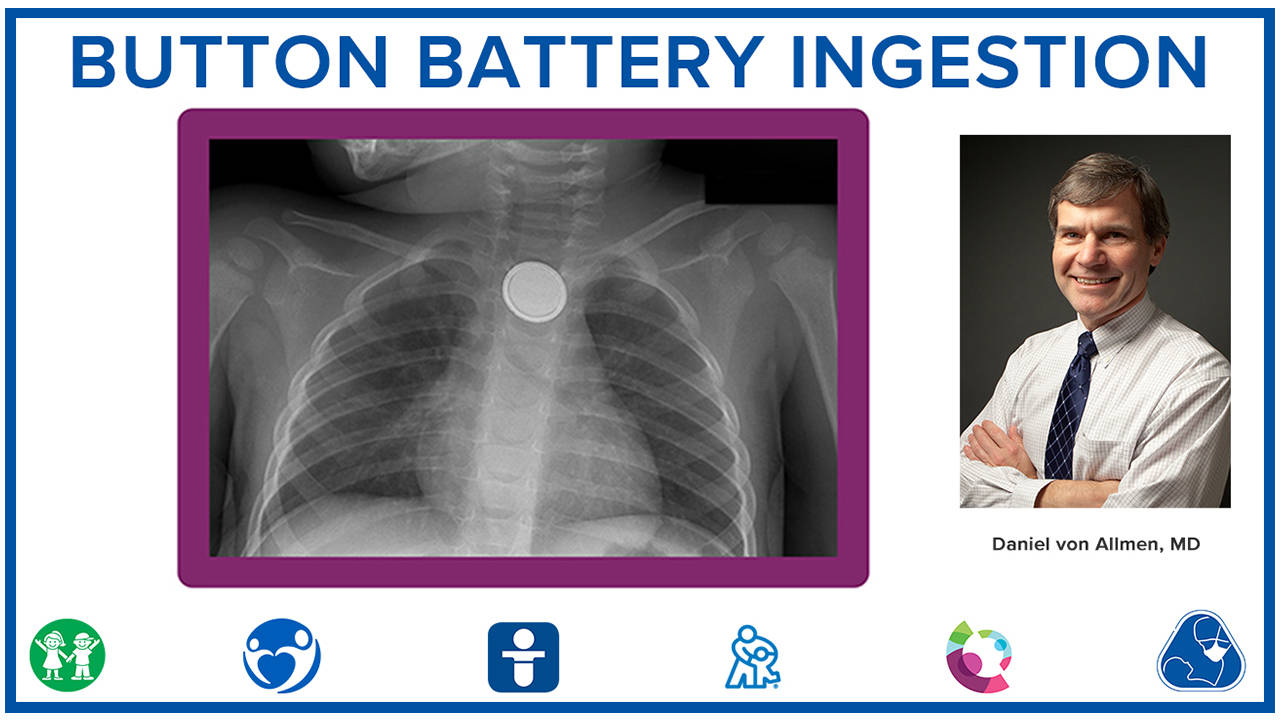
Button Battery Ingestion
14 min · Published Mar 2020
Podcast
Journal of pediatric surgery Article Review: April 2023, IPEG issue
13 min · Published Jul 2023
Video
Pediatric button battery ingestion: A single center experience and risk score to predict severe outcomes
Published May 2023
Video
Ingestión de pila boton en pediatría: Experiencia de un centro y score de riesgo para predecir resultados
Published May 2023
Video
Update Course 2021: APSA PDC UPDATES
Published May 2022
Video
Surgeon annual volume impacts recurrence rates of pediatric inguinal hernia repairs: A multi-institutional study
54 s · Published Feb 2026
Podcast
Journal of Pediatric Surgery Article Review: 2nd Quarter (Apr-Jun) 2025
16 min · Published Aug 2025
Video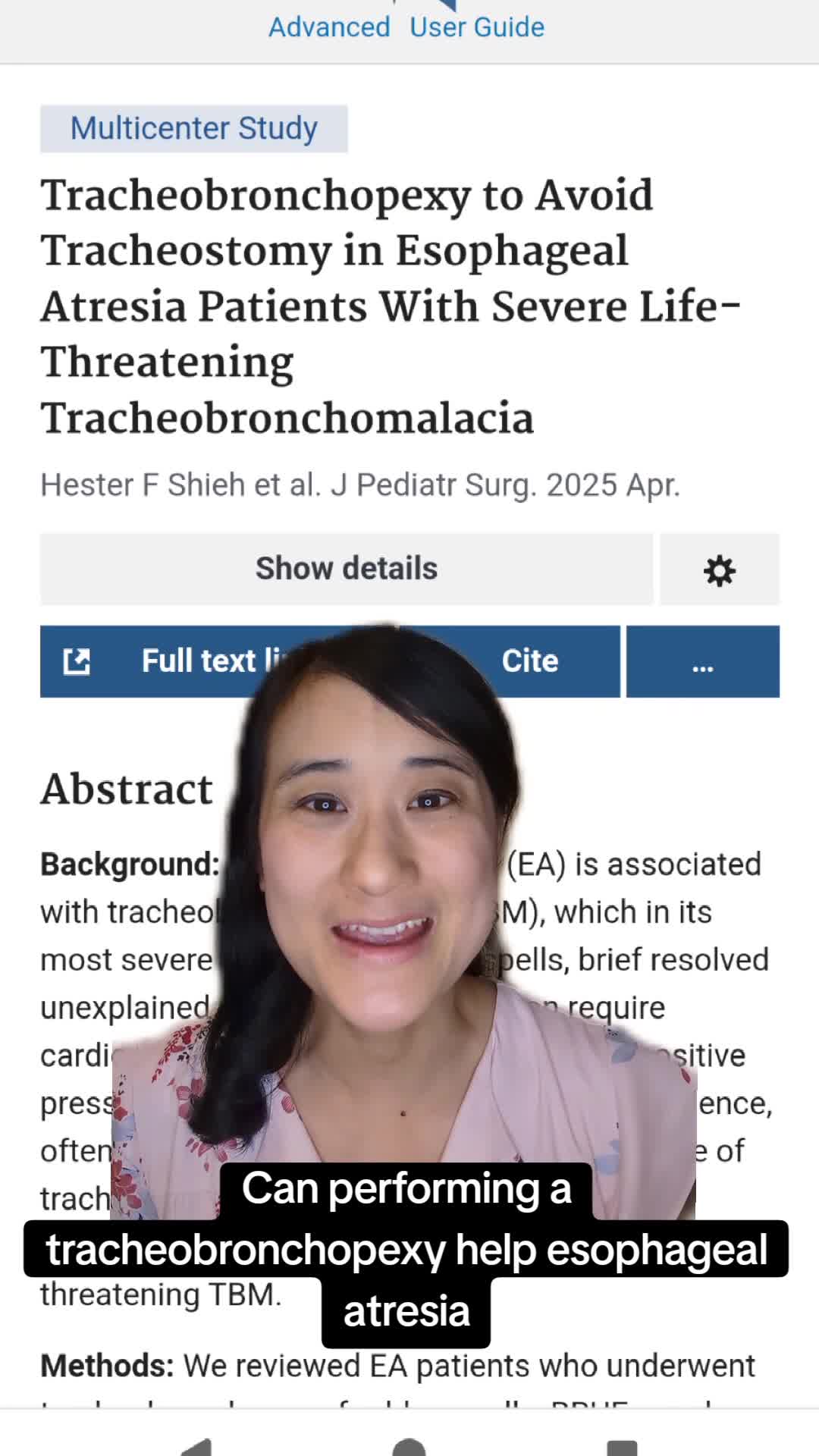
Tracheobronchopexy to Avoid Tracheostomy in Esophageal Atresia Patients With Severe Life-Threatening Tracheobronchomalacia
50 s · Published Apr 2025
Video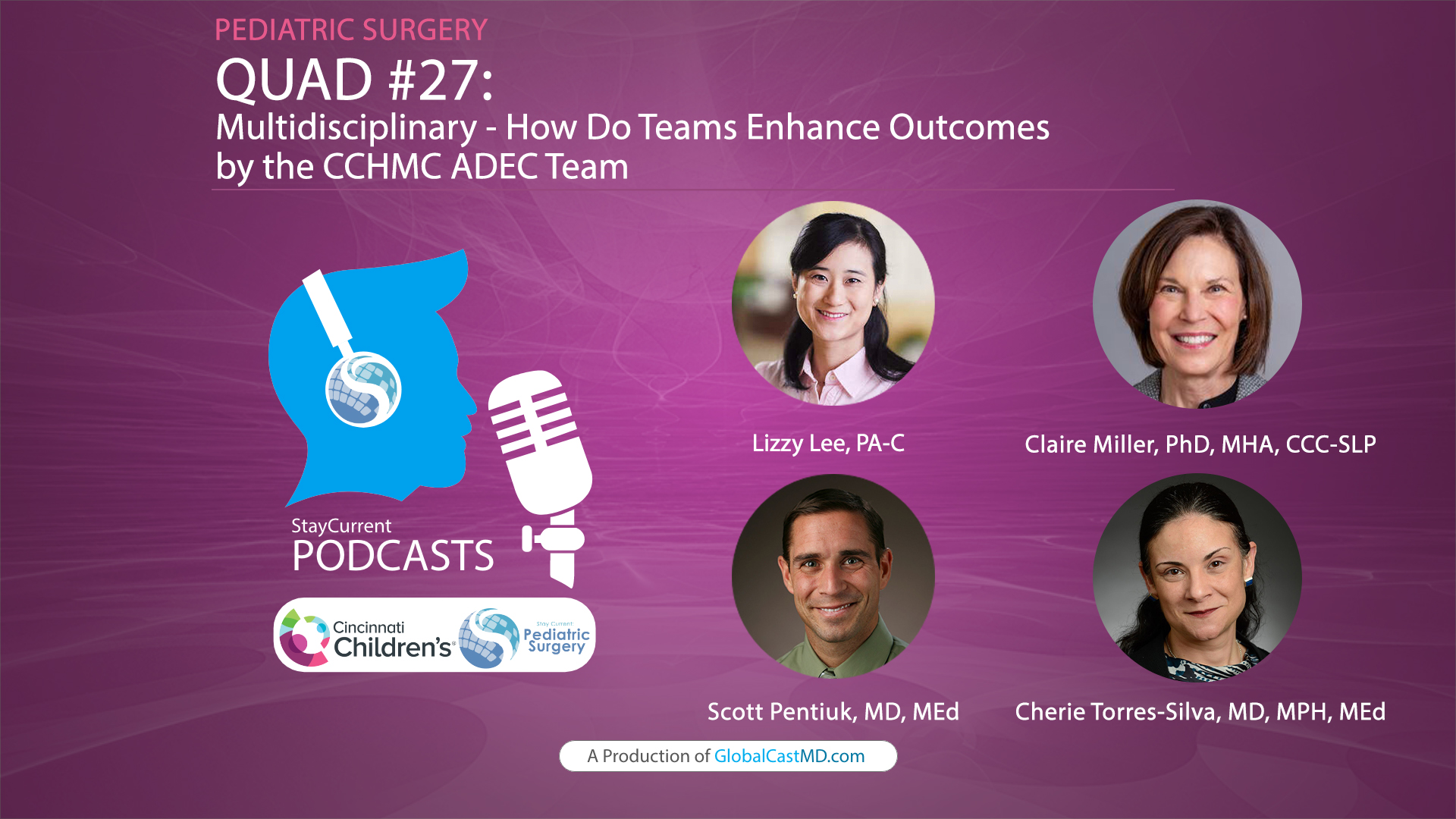
QUAD #27 - Multidisciplinary - How Do Teams Enhance Outcomes by the CCHMC ADEC Team
CCHMC Pediatric Surgery · 10 min · Published Apr 2025
Video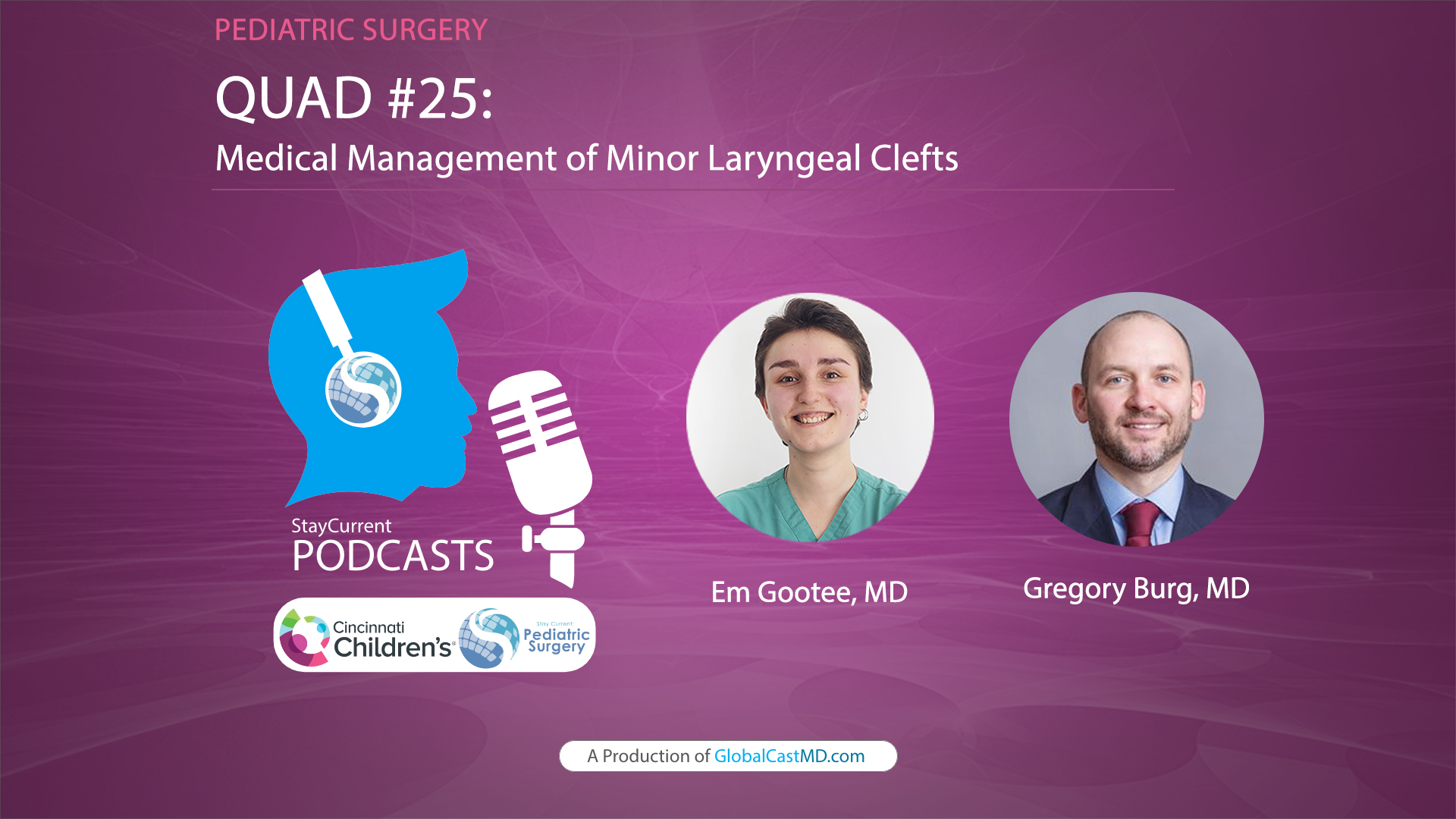
QUAD #25: Medical Management of Minor Laryngeal Clefts with Dr. Greg Burg
CCHMC Pediatric Surgery · 7 min · Published Feb 2025
Video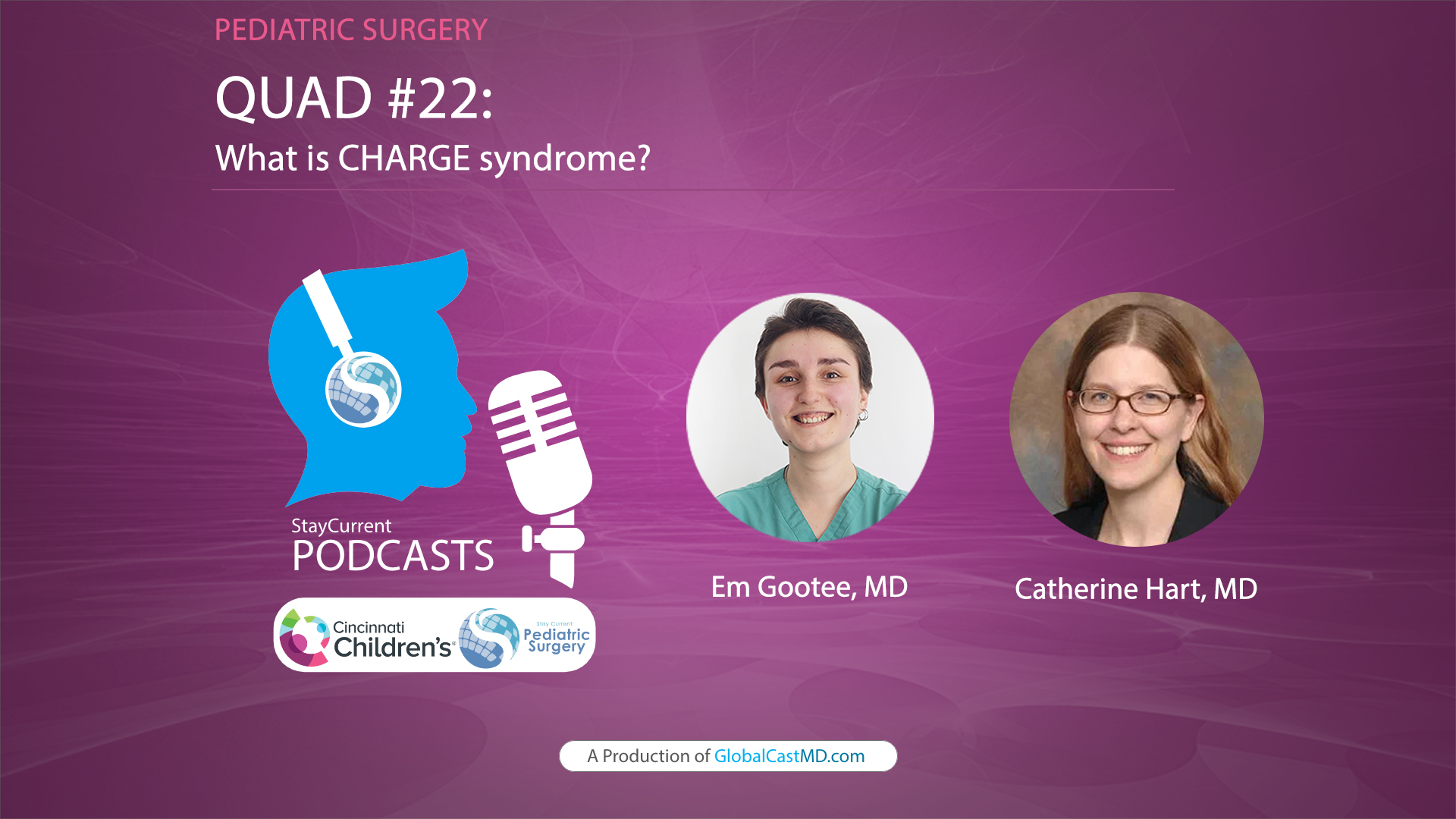
QUAD #22: What is CHARGE syndrome? with Dr. Catherine Hart
CCHMC Pediatric Surgery · 59 s · Published Dec 2024
Video
QUAD #2 Thoracoscopic Tracheopexy with Dr. Aaron Garrison
CCHMC Pediatric Surgery · 7 min · Published Jan 2024
Video
Esophageal Foreign Bodies
CCHMC Pediatric Surgery · Published Mar 2022
Video
Esophageal Atresia in Brief: Presentation, Workup, Diagnosis, and Treatment
Dr. Todd Ponsky · Published Feb 2022
Video
Esophageal Atresia/Tracheoesophageal Fistula Bronchoscopy and Surgical Technique
Dr. Todd Ponsky · 16 min · Published Nov 2021
Video
Hirschsprung Disease in Brief
Dr. Todd Ponsky · 10 min · Published Oct 2021
Podcast
The Colorectal Quiz Episode 5: Proximal Hirschsprung Disease Surgical Technique
14 min · Published Mar 2021
Video
Intestinal Atresia Types Explained: Grossfeld Classification for Pediatric Surgery
1 min · Published Sep 2026
Video
Derivation and validation of the Pediatric Community-Acquired Pneumonia Severity (PedCAPS) score: A prospective cohort study
50 s · Published Sep 2026
Video
FETO for Late-Diagnosed Severe Congenital Diaphragmatic Hernia (CDH) at Cincinnati Children's with Dr. Beth Rymeski
4 min · Published Sep 2026
Video
Severe Congenital Diaphragmatic Hernia (CDH) Case: FETO Management & Unexpected Findings with Dr. Beth Rymeski
3 min · Published Sep 2026
Video
Fetoscopic Endoluminal Tracheal Occlusion (FETO) Procedure: Step-by-Step Guide with Dr. Beth Rymeski
4 min · Published Sep 2026
Video
Choledochal Cyst Types Explained: Pediatric Surgery Fundamentals
1 min · Published Sep 2026
What the experts said
There are 3 locations in the esophagus where button batteries tend to get stuck: the upper esophageal sphincter, behind the aortic arch, and at the lower esophageal sphincter.
High-risk criteria include younger patients with smaller esophagus.
Longer duration that the battery has been in the esophagus is associated with worse outcomes.
If a patient has had a battery removed and presents later with a bleed, that is an emergency that needs to be taken seriously and requires a plan.
Almost 25% of patients in the Colorado series died.
Two of the fatalities in the Colorado series presented with the button batteries already in the stomach.
Any small communication between the esophagus and the aorta can be potentially life-threatening.
Aortoesophageal fistulas do not always happen in the hospital, so having a high index of suspicion and a plan for what to do once the battery is removed is helpful.
For sick patients with esophageal foreign bodies and active bleeding or clinical instability, it is recommended to have GI surgery and CT surgery available for the procedure.
If imaging shows injury close to the aorta, continue NPO and antibiotics and repeat MRI in 5 to 7 days to assess the trajectory of inflammation.
For high-risk patients (less than 5 years old, larger battery size), endoscopic evaluation of the esophagus is recommended because the duration of battery presence higher up than the stomach is unknown.
The need for ECMO or cardiopulmonary bypass depends on the location of the fistula and whether you can intubate past the injury enough to ventilate during the case.
If the fistula is near the carina, complex airway reconstruction will be needed and adequate ventilation during the case will not be possible.
In one case with a large tracheoesophageal fistula, the patient was placed on ECMO because they were unable to adequately ventilate.
In the Cincinnati Children's case, an interposition graft was performed by removing a segment of trachea and using that trachea as the front wall of the esophagus.
The airway may take priority in caustic ingestion cases, and patients can present in extremis or with an allergic-reaction-like presentation.
For esophageal perforation, the approach is to maintain the same exposure, debride to viable tissue, achieve layered closure with coverage, and if possible use a muscle flap for coverage.
If the perforation is too big, drain it to allow for delayed repair.
A 1992 study reviewed more than 2000 cases of button battery ingestion in children and found no deaths.
Recent studies have found a sevenfold increase in fatalities following button battery ingestions.
The increase in fatalities is because of the change to a 20-volt lithium cell which causes coagulative necrosis.
When a button battery sits in one of these positions, it causes transmural injury and will make a fistula between the esophagus and adjacent structures including trachea, blood vessels, or vocal cords.
A larger battery over 20 millimeters or greater is riskier.
A battery behind the aortic arch is more concerning.
In a Colorado study of 13 patients with high severity button battery injuries, 30% had esophageal perforation.
In the Colorado study, 23% of patients developed stricture.
Some patients in the Colorado study required G-tube placement and stayed in the hospital for nearly 2 weeks.
Sentinel bleeds can be the first sign of aortoenteric fistulas.
Some aortoesophageal fistulas showed up over 2 weeks after the batteries were removed.
Imaging beforehand with a CTA to assess inflammation and proximity to the aorta is helpful.
If there is any bleeding or concern for sentinel bleed, have a plan with interventional radiology, cardiology, or anyone who can help in that situation.
In one case report with a pseudoaneurysm from the arch of the aorta, repair was done with a staged approach: sternotomy on bypass to fix the aorta with a graft, followed by flap repair of the esophagus.
Button batteries are ingested more than 3500 times per year in the United States.
Caustic ingestion is most common in young children between 1 and 3 years of age.
Most caustic ingestions by children are accidental and the amounts ingested tend to be small.
Acidic substances that are spit back up rather than swallowed can cause severe injury to the epiglottis.
Smaller children, bigger batteries, and longer ingestion time pose greater risk.
Do not be reassured by a battery in the stomach, as injuries can progress even after battery removal.
Having an imaging plan to be proactive about finding transmural and worsening inflammation toward vessels is important.
For caustic ingestions, be patient; small perforations can heal and be managed conservatively.
If strictures develop after caustic ingestion, either dilation or surgery may be necessary.