


From
Live Event Content
William G. Lee, MD - Best of the Best in Pediatric Surgery 2024
With Dr. William G. Lee
Chapter 1 of 6 · Fundamentals
Introduction
Introduction to presentation
Expert statements on this page
No expert statements were drawn from this page.
Host summaries · secondary, not cited in answers
Educational content from recorded physician discussions — not medical advice. Talk to your (or your child's) care team about your situation.
Video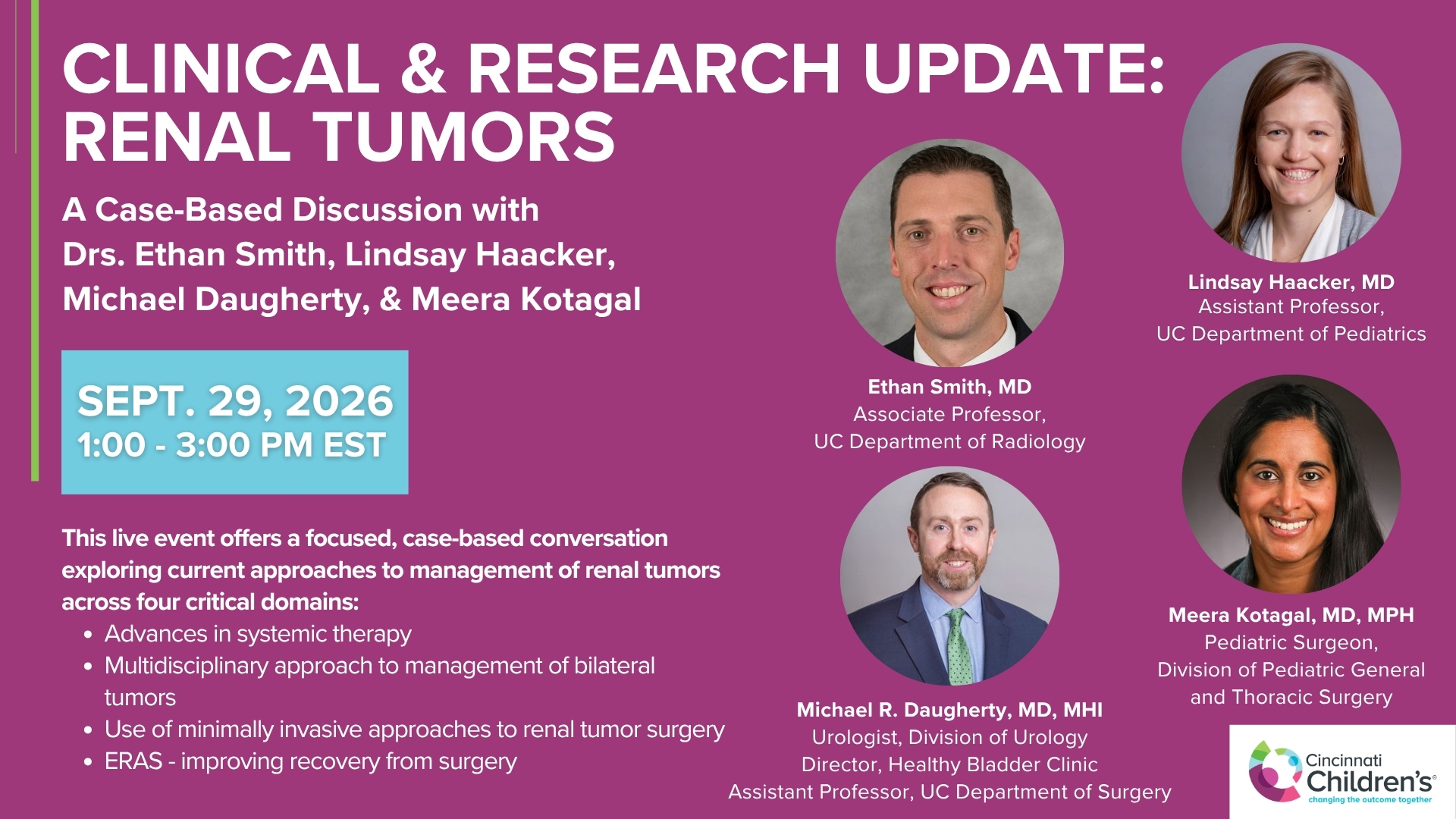
Clinical & Research Update: Renal Tumors with Drs. Ethan Smith, Lindsay Haacker, Michael Daugherty, and Meera Kotagal
71 min · Published Sep 2026
Video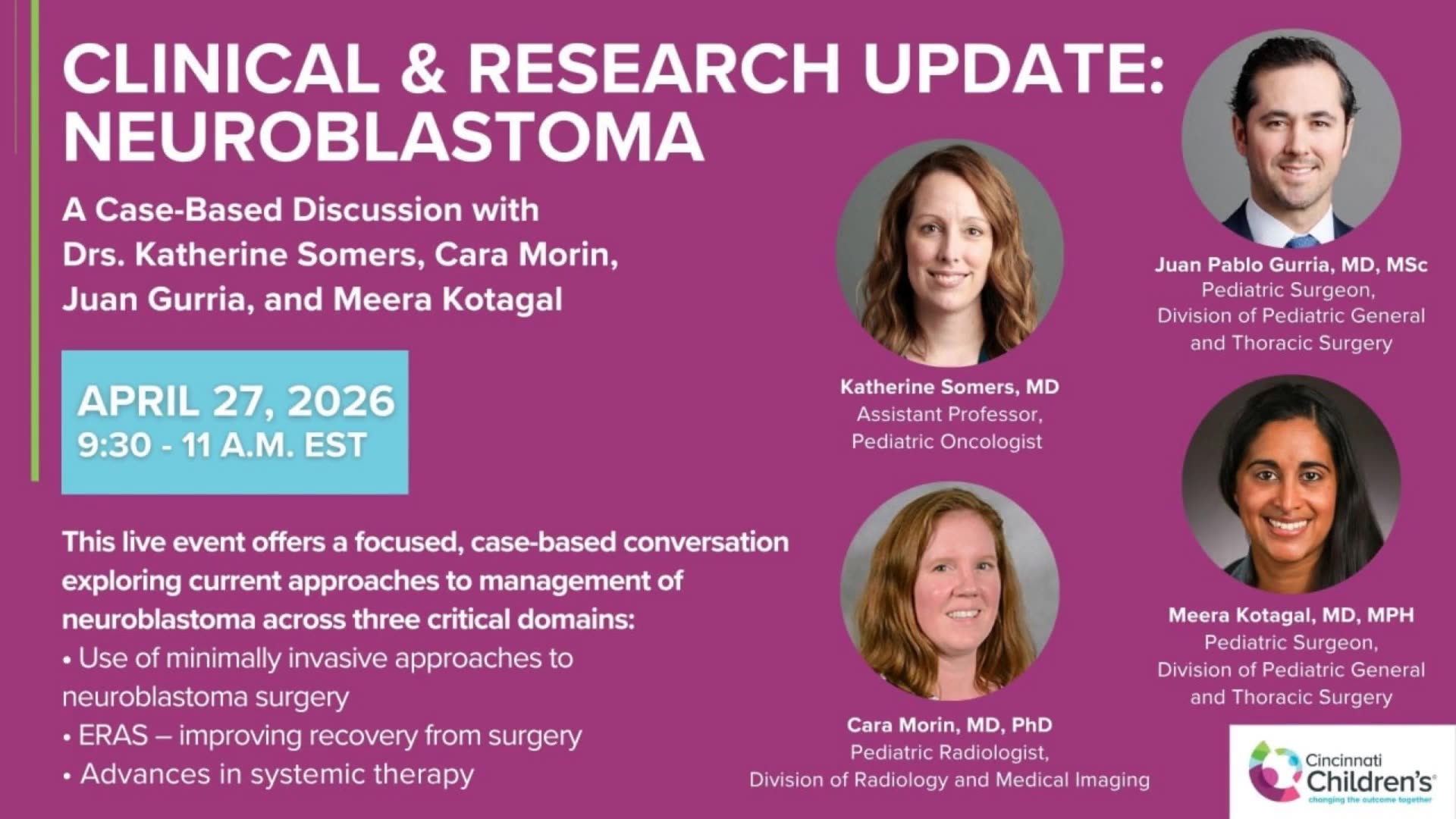
Clinical & Research Update: Neuroblastoma with Drs. Katherine Somers, Cara Morin, Juan Gurria, and Meera Kotagal
67 min · Published Sep 2026
Video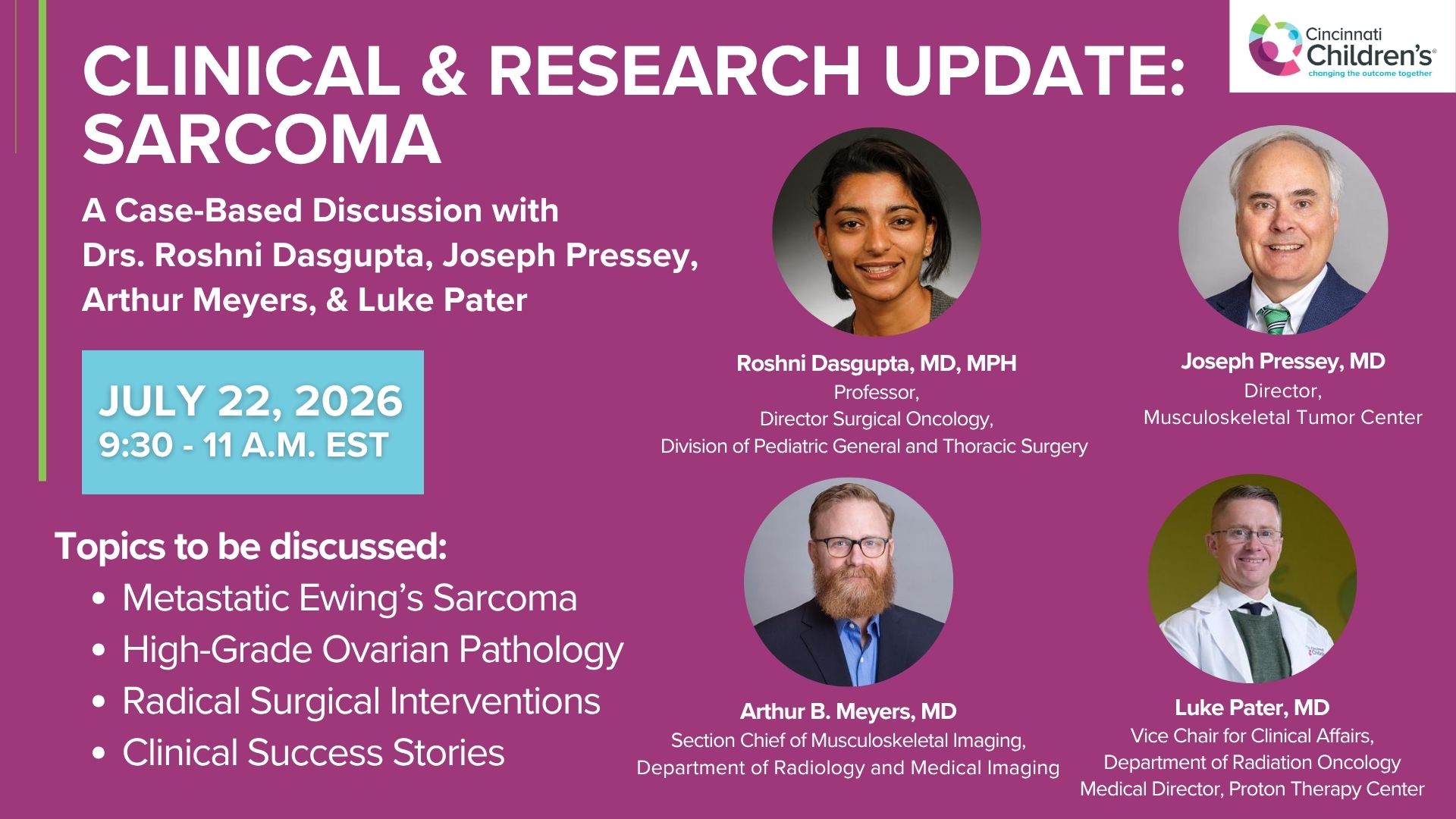
Clinical & Research Update: Sarcoma w/ Drs. Roshni Dasgupta, Joseph Pressey, Arthur Meyer, Luke Pater
66 min · Published Sep 2026
Video
2026 Laparoscopic Pediatric Hernia Repair
123 min · Published Jun 2026
Video
Beyond the Spectrum: Diagnosis, Myths & Management - Caitlin Couch & Leslie Lopez - APP Conference 2026
50 min · Published May 2026
Video
Dysautonomia: Navigating the Journey - Martha Willis - APP Conference 2026
55 min · Published May 2026
What the experts said
Gonadal torsion commonly affects the adolescent population where timely surgical intervention is critical in preserving long-term fertility.
In June 2015, US News and World Report implemented a national quality metric encouraging children's hospitals to expedite patients with suspected testicular torsion to the OR in under 4 hours.
The introduction of expedited clinical pathways for testicular torsion subsequently increased testicular salvage rates.
National quality metrics for the expedited management of ovarian torsion are lacking.
Since implementation of the national quality metric for testicular torsion, no prior studies have evaluated trends of time to operative intervention for children with ovarian torsion.
Over the 9-year study period, 216 patients were included in the testicular torsion cohort and 192 patients in the ovarian torsion cohort.
In the testicular torsion cohort, median age was 13 years, with the majority of patients presenting with testicular pain and/or scrotal swelling.
Post-quality metric implementation, there was an increase in patients reporting symptoms of nausea and emesis and a decrease in scrotal swelling in the testicular torsion cohort.
In the ovarian torsion cohort, median age was 13 years, and the majority of patients presented with abdominal pain, nausea, and emesis.
For the testicular torsion cohort, overall median time to OR was 247 minutes.
After implementation of the national quality metric for testicular torsion in June 2015, interrupted time series analysis revealed a significant decrease in median year-to-year time to OR by 27.8 minutes per year.
The variation in time to OR demonstrated by the interquartile range decreased post-quality metric for testicular torsion.
For the ovarian torsion cohort, overall median time to OR was 462 minutes.
Following quality metric implementation for testicular torsion, there was no significant change in time to OR for ovarian torsion.
For testicular torsion, patients who avoided orchiectomy had a significantly shorter median time to OR.
For ovarian torsion, there was no significant difference in time to OR between patients who underwent oophorectomy and those that did not.
Patients with a known enlarged ovary (greater than 5 centimeters) experienced a shorter median time to OR, but this did not affect rates of ovarian salvage.
52% of the female cohort had a known enlarged ovary at time of hospital intake.
The testicular torsions were performed by pediatric urologists and the ovarian torsions were performed by pediatric surgeons.
Males with testicular torsion often present earlier due to the external site of the gonad and are imaged and expedited to the OR more rapidly compared to ovarian torsion.
Ovarian torsion symptoms are often non-specific, with abdominal pain, nausea, and emesis being most common.
The internal location of the ovary has diagnostic overlap with alternative intraabdominal pathologies that are more common, such as appendicitis.
The sensitivity for ovarian torsion imaging for absent flow is anywhere from 40 to 73%.
For a positive imaging read concerning for ovarian torsion or cannot exclude, the sensitivity is only 51%.
The negative laparoscopy rate for ovarian torsion is very high across the country because it cannot be ruled out definitively.