


From
Live Event Content
Shruthi Srinivas, MD - Best of the Best in Pediatric Surgery 2024
With Dr. Shruti Srinivas · hosted by Dr. Todd Ponsky
Chapter 1 of 3 · Fundamentals
Introduction
Introduction to presentation
Expert statements on this page
No expert statements were drawn from this page.
Host summaries · secondary, not cited in answers
Educational content from recorded physician discussions — not medical advice. Talk to your (or your child's) care team about your situation.
Video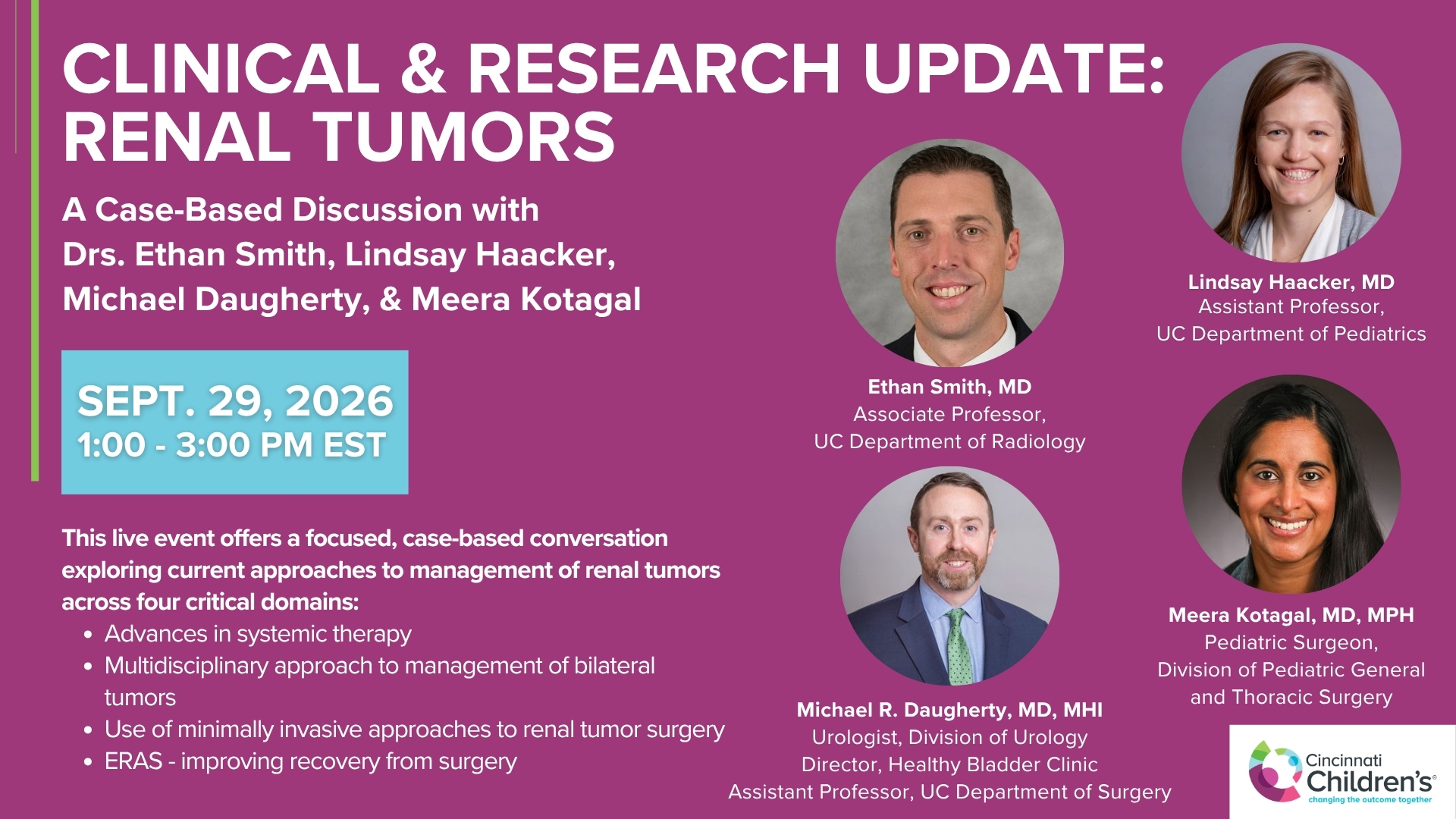
Clinical & Research Update: Renal Tumors with Drs. Ethan Smith, Lindsay Haacker, Michael Daugherty, and Meera Kotagal
71 min · Published Sep 2026
Video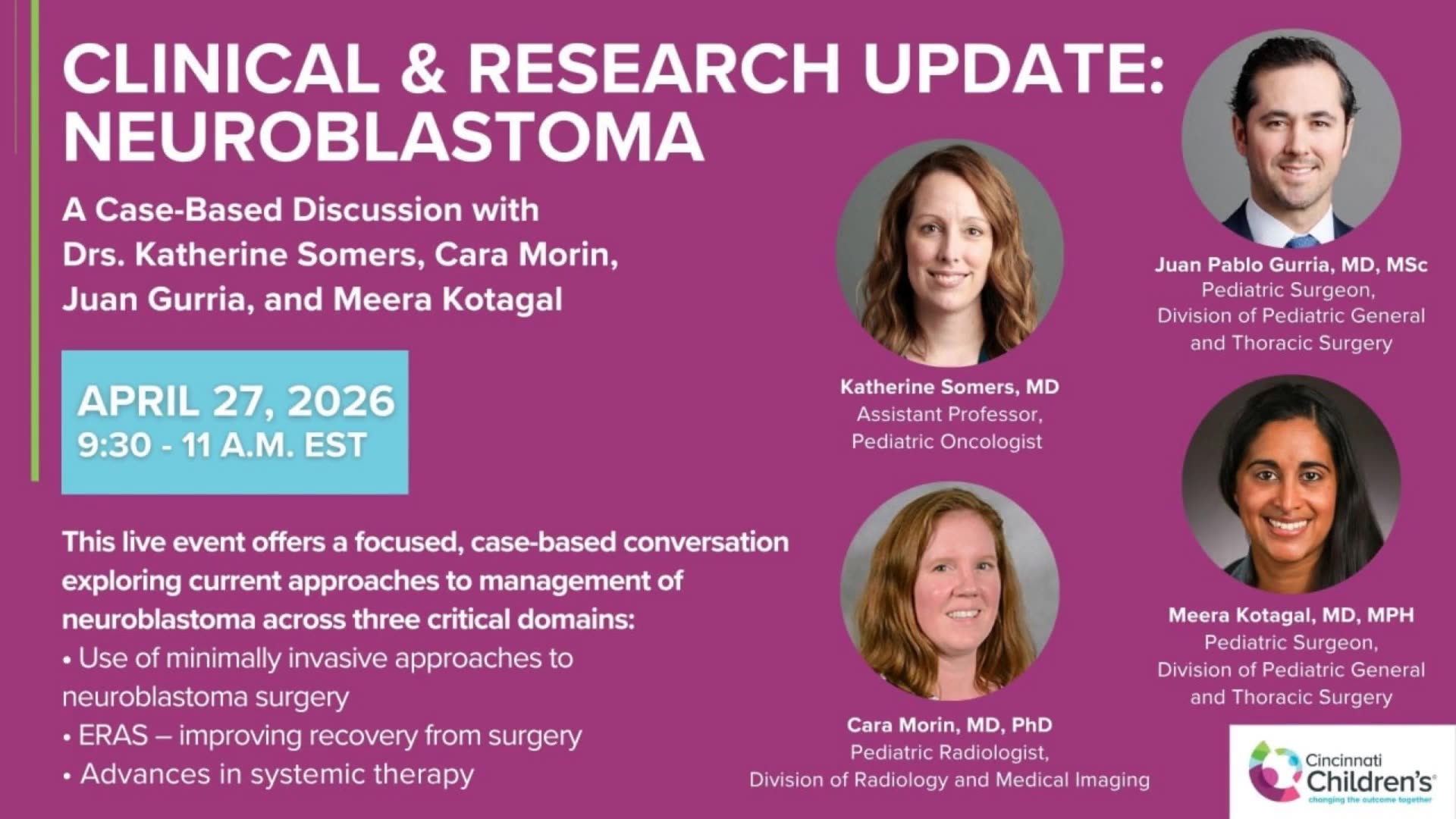
Clinical & Research Update: Neuroblastoma with Drs. Katherine Somers, Cara Morin, Juan Gurria, and Meera Kotagal
67 min · Published Sep 2026
Video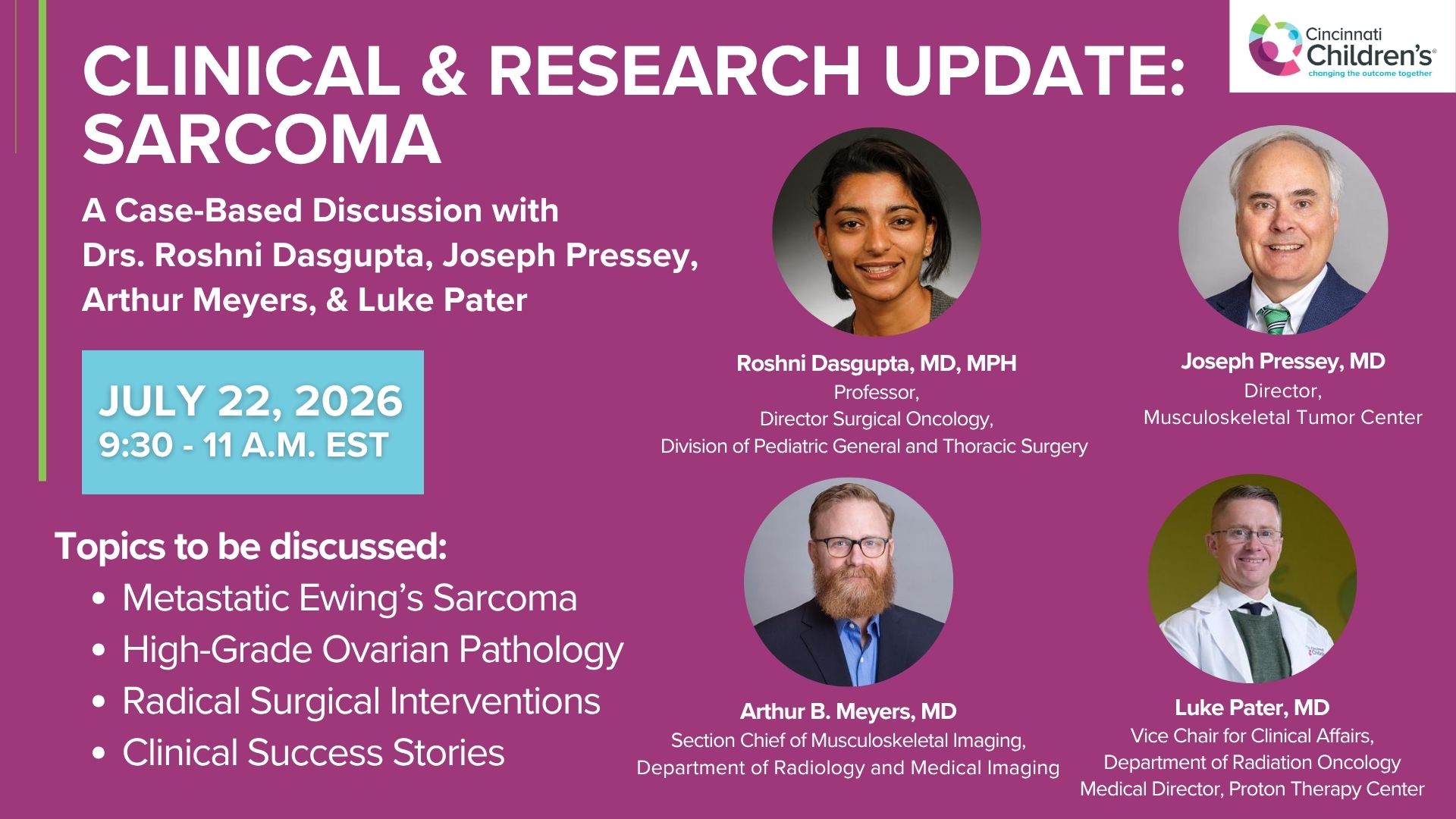
Clinical & Research Update: Sarcoma w/ Drs. Roshni Dasgupta, Joseph Pressey, Arthur Meyer, Luke Pater
66 min · Published Sep 2026
Video
2026 Laparoscopic Pediatric Hernia Repair
123 min · Published Jun 2026
Video
Beyond the Spectrum: Diagnosis, Myths & Management - Caitlin Couch & Leslie Lopez - APP Conference 2026
50 min · Published May 2026
Video
Dysautonomia: Navigating the Journey - Martha Willis - APP Conference 2026
55 min · Published May 2026
What the experts said
Cloacal atresia affects approximately 1 in 200,000 pregnancies and occurs along a spectrum of severity.
Initial surgical management of cloacal atresia is focused on drainage with an end colostomy or ileostomy and drainage of the bladder.
The study included 98 patients with cloacal atresia from 11 major pediatric hospitals over a 10-year period.
All 98 patients underwent initial stoma creation at a median age of 2 days.
For patients who underwent pull-through, the median age at pull-through was 1.3 years.
Only 29% of the 98 patients received a pull-through procedure.
Five patients required a redo stoma for various reasons, leaving 24% of the initial cohort continuing to use their pull-through.
Of patients still using their pull-through, the majority (almost 70%) are not clean, defined as more than one accident per week.
Only 7 patients in the cohort are clean following their pull-through, representing an overall successful pull-through rate of 7%.
Only 1 patient is continent without the use of bowel management.
Approximately 21% of the population has an unsuccessful pull-through, meaning they are not clean or they returned to an ostomy.
The ability to form solid stool was not different between successful and unsuccessful pull-through groups.
The group with successful pull-through had over double the preoperative colon length compared to the unsuccessful pull-through group, measured using contrast enema studies.
Most children with cloacal atresia will keep their stoma indefinitely.
A longer colon length correlates with higher success post pull-through.
There was a perception that every child with cloacal atresia should get a pull-through, but the data suggest it is the exception rather than the rule that actually does well with the pull-through.
A urology collaborative group did a similar study looking at how many kids are actually using a urethra.
Many children end up requiring APRs (abdominoperineal resections) because they are leaking all the time after pull-through.
The practice approach is to test patients with bowel management through their stoma to see that they are going to be clean before offering them a pull-through.
With longer colons and good preparation, some patients can be clean, but it is the exception rather than the rule.