


From
EUPSA/ERNICA
What is Omphalocele? An ERNICA animation for parents and families
Chapter 1 of 4 · Fundamentals
Omphalocele definition
Definition and Pathophysiology of Omphalocele
Expert statements on this page
No expert statements were drawn from this page.
Host summaries · secondary, not cited in answers
Educational content from recorded physician discussions — not medical advice. Talk to your (or your child's) care team about your situation.
Video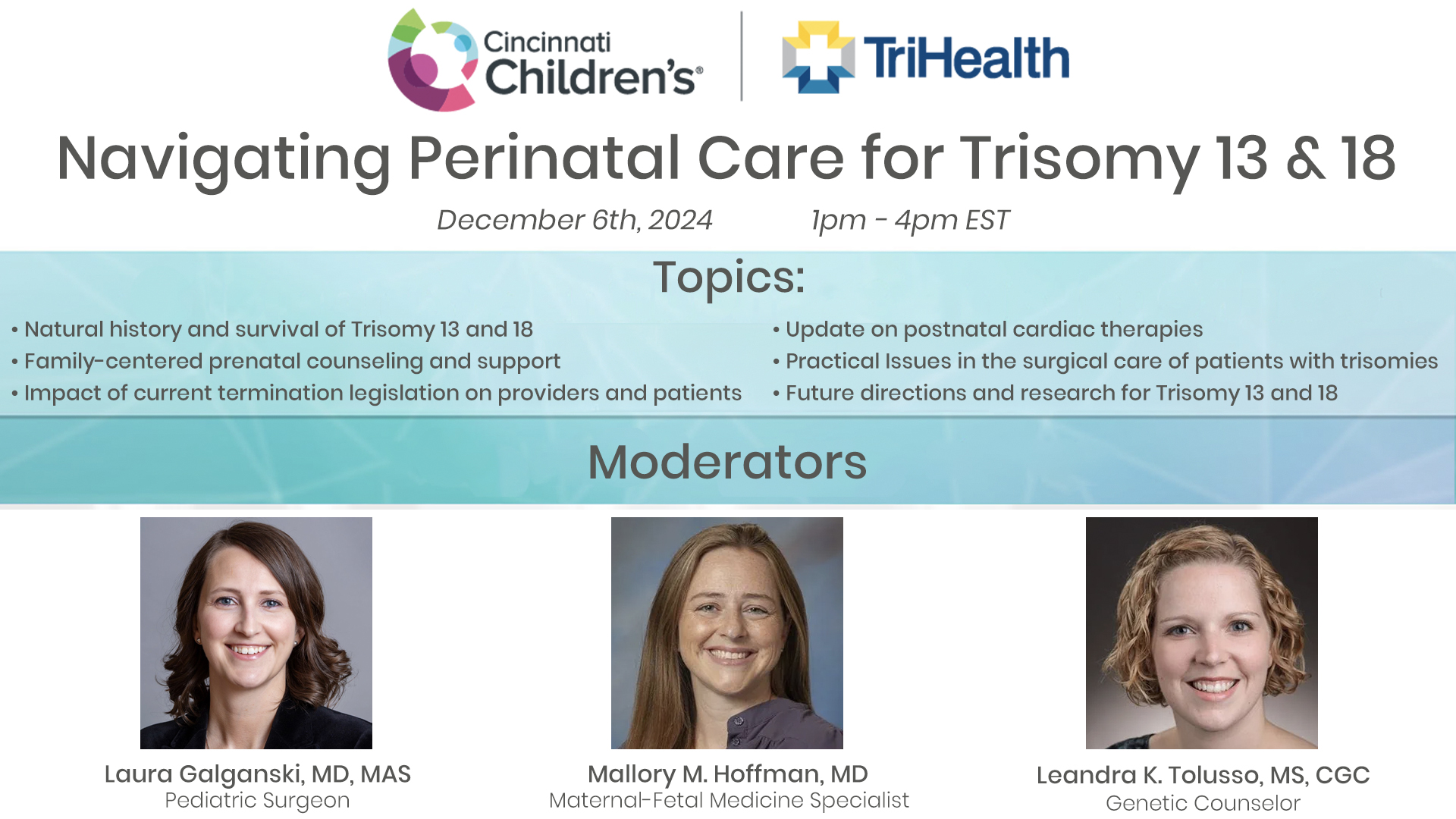
Mallory Hoffman, MD - 2024 Fetal Care Center Navigating Perinatal Care for Trisomy 13 & 18
29 min · Published Dec 2024
Video
Omphalocele & Gastroschisis
Dr. Todd Ponsky · 9 min · Published Mar 2022
Podcast
Omphalocele and Gastroschisis With Dr. Foong-Yen Lim
9 min · Published Feb 2022
Video
Gastroschisis - Clinical Practice Updates
Published Sep 2020
Video
Error Traps and Culture of Safety in Abdominal Wall Defects
CCHMC Pediatric Surgery · Published Oct 2019
Video
Antibiotic Stewardship - APSA Practice Gaps 2019
Published Mar 2020
Podcast
Update Course Rewind: Omphalocele & Gastroschisis 2020
Miguel Guelfand · 15 min · Published Jul 2026
Video
Surgeon annual volume impacts recurrence rates of pediatric inguinal hernia repairs: A multi-institutional study
54 s · Published Feb 2026
Video
A multi-institutional comparison of management techniques for infants with giant omphalocele
51 s · Published Jan 2026
Video
Quick Literature Updates Ep 22
4 min · Published Oct 2025
Video
Quick Literature Updates Episode 20
4 min · Published Jun 2025
Video
Educational Outcomes in School-Aged Children With a History of Simple and Complex Gastroschisis are Poor Compared to Controls
53 s · Published Apr 2025
Video
What is Gastroschisis? An ERNICA animation for parents and families
2 min · Published Dec 2023
Video
What is Congenital Diaphragmatic Hernia (CDH)? An ERNICA animation for parents and families
3 min · Published Dec 2023
Video
What is small bowel atresia?: An ERNICA animation for parents and families
4 min · Published Dec 2023
Video
Hirschsprung-associated enterocolitis in children: An ERNICA animation for parents and families
3 min · Published Dec 2023
Video
Surgical treatment for Hirschsprung’s Disease: An ERNICA animation for parents and families
3 min · Published Dec 2023
Video
How is Hirschsprung's Disease diagnosed? An ERNICA animation for parents and families
3 min · Published Dec 2023
What the experts said
Omphalocele occurs when the front of a baby's belly does not form properly during early pregnancy, resulting in an opening at the belly button.
In omphalocele, the baby's abdominal organs pass through the umbilical opening and are covered by a thin sac.
Omphalocele is classed as a rare birth defect.
In some cases of omphalocele, only a portion of the small intestine passes through the opening.
In other cases, more organs including some or most of the liver pass through the opening; this is called large or giant omphalocele.
The cause of omphalocele is unknown.
Omphalocele can be a feature of many genetic syndromes.
Many babies with omphalocele have other birth defects.
A diagnosis of omphalocele can be made before birth using ultrasound.
Prenatal tests should be carried out to identify any associated anomalies in babies with omphalocele.
Ongoing care for babies with omphalocele should be provided at a specialist center by a dedicated team of professionals with knowledge and experience of the condition.
Omphalocele is a serious condition and can be life threatening for the baby before birth and as a newborn.
Most babies with omphalocele do survive.
Some babies with giant omphalocele may be transferred to a dedicated intensive care unit after birth.
After birth, the contents of the belly that have passed through the opening are wrapped in a sterile bag to avoid damage.
When the baby is stable, surgery can be performed to place the organs back in the belly and close the opening.
Small omphaloceles can be repaired in one operation, called a primary repair.
For babies with giant omphalocele, repair is done in several steps, called a staged repair.
In some giant omphalocele cases, there may not be enough room in the newborn baby's belly for the organs to fit back inside.
When the abdominal cavity is inadequate, surgery may be postponed for weeks or months to allow the lungs and body to grow first.
Babies with giant omphalocele may be able to return home during the period of delayed surgery with appropriate nursing care in place.
The amount of time a baby with omphalocele spends in hospital differs depending on the severity of the omphalocele, any associated anomalies or complications, and how well they respond to treatment.
Follow-up care by a multidisciplinary team (MDT) of different clinical specialists is required for babies with omphalocele.
Some babies with omphalocele may experience ongoing difficulties such as feeding or breathing difficulties that require different types and levels of care.
Identifying any complications or difficulties early is very important in babies with omphalocele.
Babies with giant omphaloceles need to be monitored more closely.
Peer support can be accessed through patient and family support groups for families of babies with omphalocele.