


From
StayCurrentMD
Bowel Management - Use Of Ultrasound To Monitor Effects Of Enema
Chapter 1 of 6 · Fundamentals
Indications
Introduction to hydrocolonic sonography and its indications
Expert statements on this page
No expert statements were drawn from this page.
Host summaries · secondary, not cited in answers
Educational content from recorded physician discussions — not medical advice. Talk to your (or your child's) care team about your situation.
Video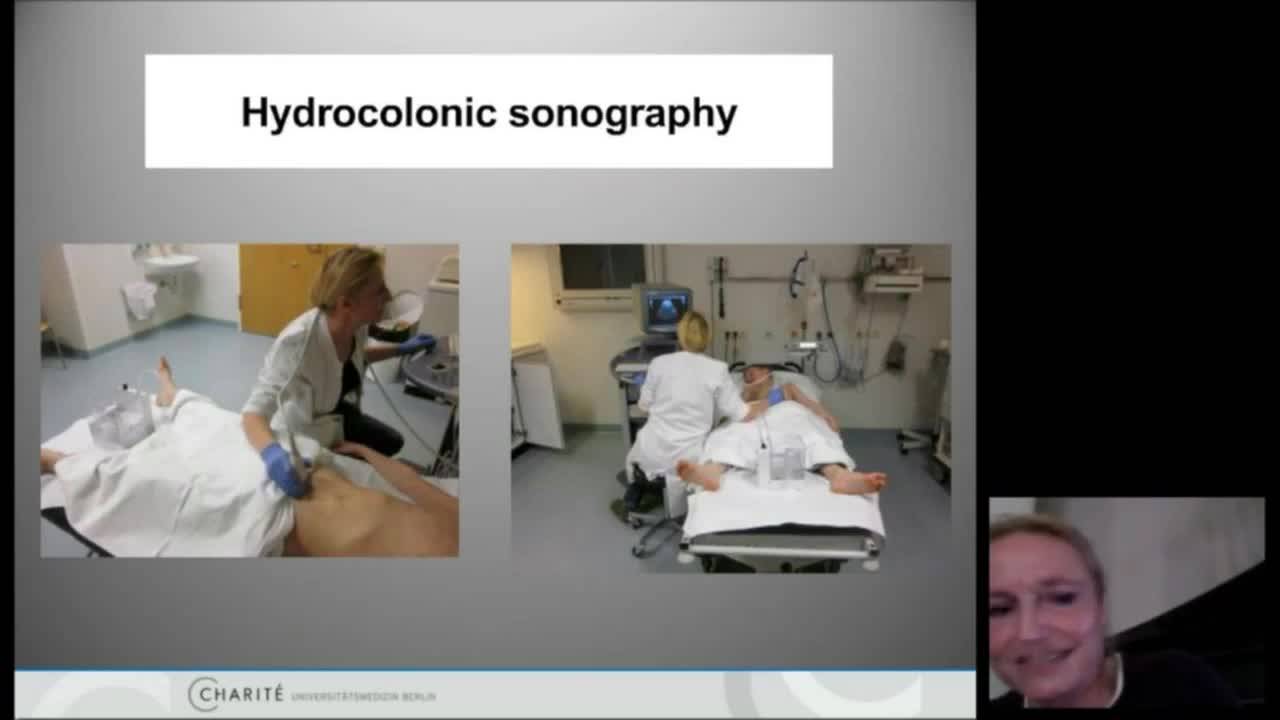
Use of hydrocolonic sonography to monitor the effects of an enema: Pediatric...
Dr. Todd Ponsky · 12 min · Published May 2013
Podcast
Update Course Rewind: 2020 Colorectal Part 1
12 min · Published Mar 2021
Video
What is Hirschsprung's Disease? An ERNICA animation for parents and families
4 min · Published Dec 2023
Video
Bowel Management - Bowel Management In Communities With Limited Resources
9 min · Published Nov 2018
Podcast
Colorectal Quiz: Episode 46
Marc Levitt · 29 min · Published Apr 2025
Podcast
Colorectal Quiz: Episode 43
Marc Levitt · 23 min · Published Jan 2025
Video
Intestinal Atresia Types Explained: Grossfeld Classification for Pediatric Surgery
1 min · Published Sep 2026
Video
Derivation and validation of the Pediatric Community-Acquired Pneumonia Severity (PedCAPS) score: A prospective cohort study
50 s · Published Sep 2026
Video
FETO for Late-Diagnosed Severe Congenital Diaphragmatic Hernia (CDH) at Cincinnati Children's with Dr. Beth Rymeski
4 min · Published Sep 2026
Video
Severe Congenital Diaphragmatic Hernia (CDH) Case: FETO Management & Unexpected Findings with Dr. Beth Rymeski
3 min · Published Sep 2026
Video
Fetoscopic Endoluminal Tracheal Occlusion (FETO) Procedure: Step-by-Step Guide with Dr. Beth Rymeski
4 min · Published Sep 2026
Video
Choledochal Cyst Types Explained: Pediatric Surgery Fundamentals
1 min · Published Sep 2026
What the experts said
Hydrocolonic sonography is used to avoid guessing the enema volume and to avoid radiography in bowel management.
Hydrocolonic sonography is indicated for fecal incontinence to evaluate colonic motility and measure the volume of enema needed.
Hydrocolonic sonography is indicated for constipation to visualize fecal impaction, evaluate colonic motility, and identify stool infection.
The diagnostic process includes pediatric surgical evaluation with detailed clinical history, physical examination, exact classification of the anorectal malformation, and evaluation for associated defects.
Patients are requested to fulfill a two-week defecation protocol prior to therapy to distinguish pseudo-incontinence (overflow with intact continence organ) from true fecal incontinence.
Treatment always starts with intestinal purgation using polyethylene glycol (macrogol or movicol) to achieve a clean colon for evaluation.
The bowel management program includes individually tailored enema, anal hygiene (showering after every enema), physiotherapy, and a defecation protocol to monitor success.
Two pump systems can be used for hydrocolonic sonography: an electric pump system (originally for stoma irrigation) or a hand pump (made for people with spina bifida).
The speaker's center uses a Foley catheter 24 French with a 30 mL balloon blockage, the same catheter system used in Cincinnati.
For successful sonography, there should be no air in the colon, as air makes abdominal ultrasound monitoring very difficult.
The catheter should be cleared of any air before insertion to prevent air introduction into the colon during the procedure.
Explanation and cooperation of the children is very important; the procedure is demonstrated using the child's fist to represent the anal opening and showing that the inflated balloon does not hurt.
Hydrocolonic sonography is performed in a special room in the presence of parents, with children watching the water progress on the ultrasound screen.
In a successfully cleaned colon, ultrasound shows colonic movement and allows contact with every colonic cell; the time between filling and first movement (adaptation period) can be measured.
White spots on ultrasound represent air bubbles and indicate the colon is not totally clean.
The goal is to monitor whether the enema reaches the cecum and measure the volume needed to reach that point.
If the enema volume reaches the cecum, it should be as effective at cleaning the whole colon as a Malone antegrade enema.
Hydrocolonic sonography can visualize fecal impaction (fecal stones in the rectum) in children with chronic constipation.
The ideal toilet position for post-enema defecation is sitting low with feet firmly fixed on the ground.
In a series of 20 patients aged 14 years and older with fecal incontinence after anorectal malformation surgery, all had constant social problems and soiling before treatment.
After tailored enema therapy guided by hydrocolonic sonography, 18 of 20 patients achieved continence at 6 and 12 months follow-up.
The two patients who continued to have incontinence and soiling were those who did not follow the regime and decided not to do rectal irrigation.