


From
StayCurrent Espanol
Rapid Microbiological Testing Impact on Infectious Disease Management in Emergency Medicine
With Dr. Andrea Cruz · hosted by Dr. Javier Gonzalez del Rey
Chapter 1 of 7
Introduction
Introduction and Context Setting for Rapid Diagnostic Testing
Expert statements on this page
No expert statements were drawn from this page.
Host summaries · secondary, not cited in answers
Educational content from recorded physician discussions — not medical advice. Talk to your (or your child's) care team about your situation.
More about this diagnosis
BronchiolitisVideo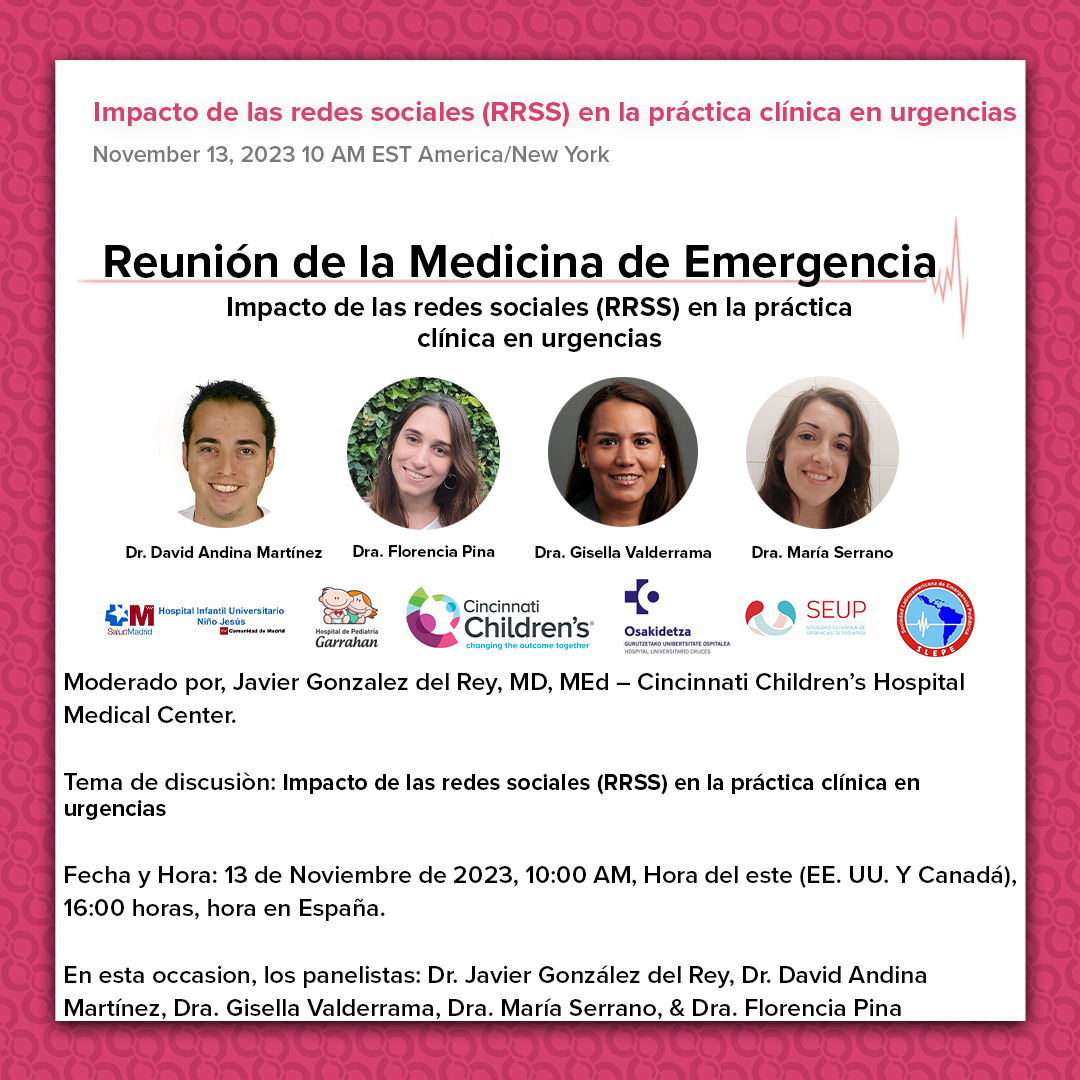
Reunión de la Medicina de Emergencia - Impacto de las redes sociales (RRSS) en la práctica clínica en urgencias
CCHMC Pediatric Surgery · 48 min · Published Nov 2023
Video
New Concepts in Radiology: Update Course 2017
40 min · Published Aug 2017
Podcast
Top Ten Things to Remember from the 2017 Stay Current Annual Update Course...
25 min · Published Oct 2017
Video
Todd Ponsky: What is new in Pediatric Surgery? Teaser
Todd Ponsky · 65 min · Published Jul 2026
Video
Volumen testicular en la pubertad en niños con criptorquidia congénita aleatorizados a tratamiento en diferentes edades
1 min · Published Jul 2024
Video
Cuidado de transición en malformación anorrectal y enfermedad de Hirschsprung
1 min · Published Jul 2024
Video
Exploración laparoscópica trancística del conducto biliar común en pacientes pediátricos con coledocolitiasis
1 min · Published Jul 2024
Video
Características clínicas y pronóstico de la atresia de vías biliares con niveles bajos de metaloproteinasa 7 de la matriz sérica
55 s · Published Jul 2024
Video
Reglas de predicción PECARN para imágenes por TC de niños que acuden al servicio de urgencias con traumatismo craneoencefálico menor o abdominal cerrado
58 s · Published Jul 2024
Video
El cese del tratamiento con antibióticos para la apendicitis complicada en el momento del alta no aumenta el riesgo de infección posoperatoria
55 s · Published Jul 2024
What the experts said
Andrea Cruz's institution stopped using antigen tests for RSV and streptococcus due to very low sensitivity
Rapid diagnostic testing may benefit immunocompromised children and hospitalized patients where results could change isolation protocols or antibiotic management
For children presenting to emergency with fever and neutropenia, rapid viral testing does not change the management - these children will receive antibiotics regardless of viral test results
Many community hospitals do not have access to RSV-specific treatments (presumably palivizumab or nirsevimab), making RSV testing less clinically useful
Positive viral test results in children under 4 years old may reflect viral shedding from an infection acquired 2 weeks prior rather than acute illness
Clinical evaluation including patient history, vaccination status, and physical examination should be the primary basis for decision-making, not laboratory test results
Rapid diagnostic tests can play a role in initial stabilization and antibiotic decision-making for children with suspected bacterial infection who are not severely ill
If a child is in good general condition and bacterial cultures are negative at 4 hours, the patient can potentially be managed as an outpatient with more conservative approach
In children under 3 years with fever, bacterial testing yields positive results in only about 2% of cases maximum
From a clinical perspective, rapid viral respiratory testing has no relevant role in general emergency department management, including bronchiolitis management and decisions about hospitalized patients
Evidence shows that multiplex respiratory viral panels do not reduce antibiotic use, do not shorten hospital stays, and do not reduce hospitalizations in general emergency populations
Rapid testing may show benefit in specific patient populations during influenza epidemics when a positive influenza test could impact management
Informing families about multiple respiratory viruses detected can cause more anxiety than it helps, as families may become frightened when told their child has adenovirus or other viruses
An 8-year-old child with rhinovirus is clinically very different from an infant with rhinovirus, making the same positive test result have different clinical implications
Families waiting 14 hours in emergency departments for children with simple flu symptoms, expecting test results, represents inappropriate resource utilization
Rapid diagnostics should be available in emergency departments but must be applied judiciously according to protocols that specify appropriate clinical scenarios