


From
Dr. Roshni Dasgupta
Immature teratoma of the ovary with microscopic yolk sac tumor in children and adolescents: A multi-institutional study
pubmed.ncbi.nlm.nih.gov shows its articles on its own site.
Read the article on pubmed.ncbi.nlm.nih.gov ↗Article · Jul 2026 · 1 min read
In brief
In brief
Multi-institutional study of 143 pediatric patients shows that microscopic yolk sac tumor foci within ovarian immature teratomas correlate with higher-grade disease but do not significantly impact recurrence-free survival compared to pure immature teratomas. Findings suggest favorable outcomes despite more aggressive initial presentation.
Written by the GCMD Library team from the article.
Objective: Immature teratoma (IT) of the ovary is an uncommon tumor with controversial management. The significance of microscopic yolk sac tumor (YST) within ovarian IT is unclear. We therefore aim to review the characteristics, management and outcomes of pediatric and adolescent patients with ovarian IT containing microscopic foci of YST and compare these patients to those without microscopic foci of YST, with a specific focus on recurrence-free survival (RFS). Methods: A multicenter review was performed by 29 institutions participating in the Pediatric Surgical Oncology Research Collaborative of females <18 years with ovarian IT diagnosed between 2010 and 2022. Patients with microscopic foci of YST (defined as ≤5% or documented by the institutional pathologist as a microscopic, single focus) were compared to those without. Results: We identified 143 females with ovarian IT, with 16 (11.1%) containing microscopic foci of YST. Patients with microfoci of YST were more likely to have higher-grade, higher-stage tumors, and higher alpha fetoprotein values at diagnosis than those without microscopic YST. Those with microscopic YST were more likely to receive chemotherapy (68.8%). There were 3 overall recurrences in the YST group (18.8%). There was no difference in RFS between those with and without YST; malignant recurrence was seen in 6.25% of those with YST vs. 7.1% of those of without. Conclusions: Children and adolescents with ovarian IT containing microscopic YST have favora
Educational content from recorded physician discussions — not medical advice. Talk to your (or your child's) care team about your situation.
Article
Ovarian neoplasms — the role of minimally invasive surgery
Roshni Dasgupta · Published Oct 2026
Article
Surgeon perceptions on fertility counseling and preservation in children with cancer: A multicenter survey of North American Hospitals
Roshni Dasgupta · Published Jul 2026
Article
Immature teratoma of the ovary in children and adolescents: A multi-institutional study of characteristics and management
Roshni Dasgupta · Published Jul 2026
Video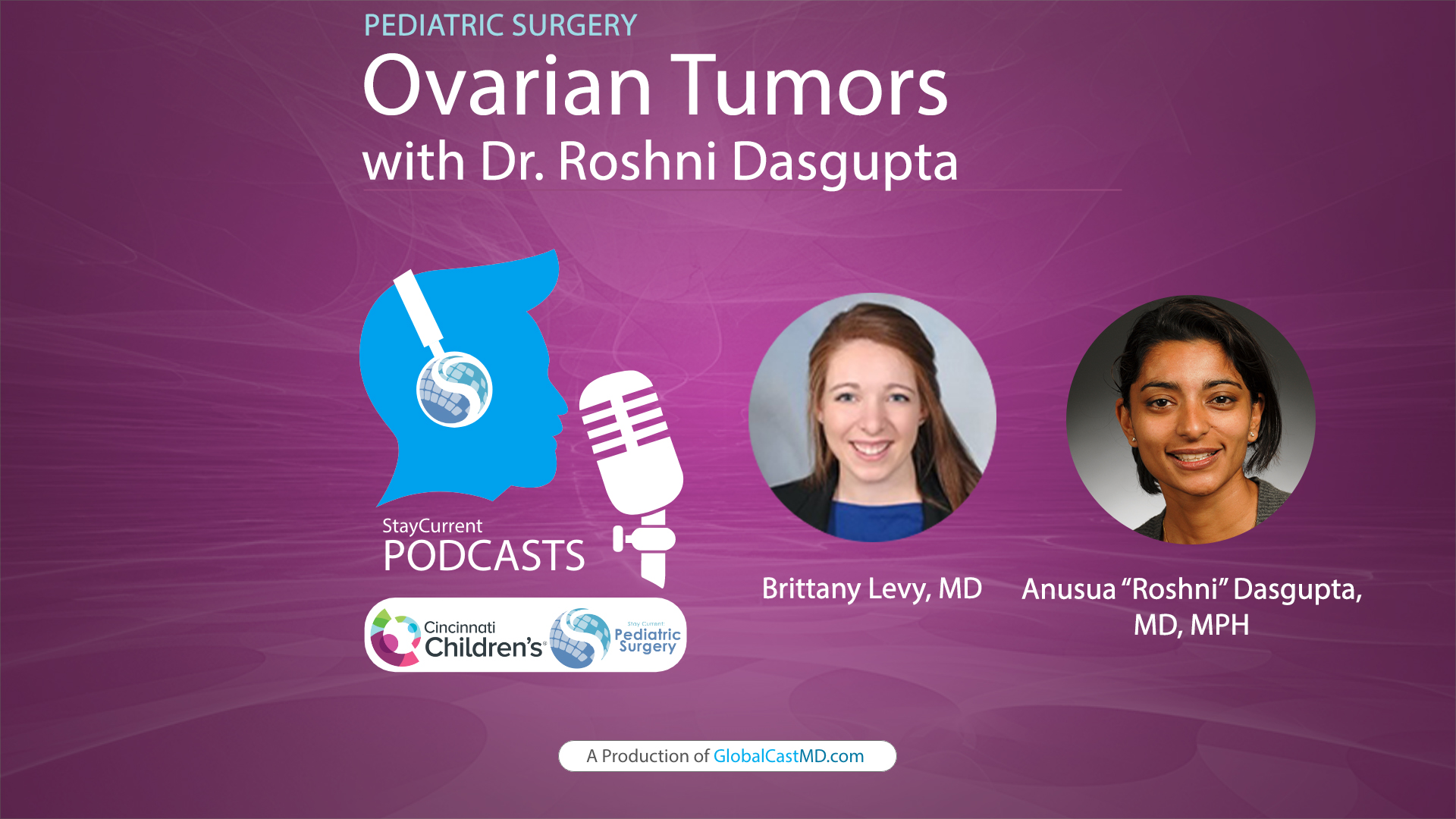
Ovarian Tumors with Dr. Roshni Dasgupta
CCHMC Pediatric Surgery · Published Sep 2022
Video
Ovarian Cysts with Dr. Roshni Dasgupta
Published Aug 2022
Article
Histologic type predicts disparate outcomes in pediatric hepatocellular neoplasms: A Pediatric Surgical Oncology Research Collaborative study
Roshni Dasgupta · Published Oct 2026
Article
Contemporary Biology, Management, and Outcomes of Renal Medullary Carcinoma in Children and Adults: A Pediatric Surgical Oncology Research Collaborative Study
Roshni Dasgupta · Published Oct 2026
Article
Pediatric Cancer, An Issue of Surgical Oncology Clinics of North America, E-Book
Roshni Dasgupta · Published Oct 2026
Article
Pediatric Surgical Oncology
Roshni Dasgupta · Published Oct 2026
Article
Management of rhabdomyosarcoma in pediatric patients
Roshni Dasgupta · Published Oct 2026
Article
Pancreaticoduodenectomy for the treatment of pancreatic neoplasms in children: A Pediatric Surgical Oncology Research Collaborative study
Roshni Dasgupta · Published Oct 2026