


From
StayCurrentMD
AIMed Talks with Dr Todd Ponsky
With Dr. Todd Ponsky · hosted by Dr. Anthony Chang & Dr. Todd Ponsky
Chapter 1 of 3 · Evidence & Research
COVID knowledge transfer
Knowledge Transfer Challenges During COVID-19 Pandemic
Expert statements on this page
No expert statements were drawn from this page.
Host summaries · secondary, not cited in answers
Educational content from recorded physician discussions — not medical advice. Talk to your (or your child's) care team about your situation.
Podcast
Tracheoesophageal Fistula
Todd Ponsky · Published Oct 2026
Podcast
History Of Pediatric Surgery
Todd Ponsky · Published Oct 2026
Podcast
Necrotizing Enterocolitis
Todd Ponsky · Published Oct 2026
Podcast
Pediatric Trauma II: Solid Organ Injury
Todd Ponsky · Published Oct 2026
Podcast
Wilms Tumor
Todd Ponsky · Published Oct 2026
Podcast
22. Pediatric Hernias
Todd Ponsky · Published Oct 2026
Video
Intestinal Atresia Types Explained: Grossfeld Classification for Pediatric Surgery
1 min · Published Sep 2026
Video
Derivation and validation of the Pediatric Community-Acquired Pneumonia Severity (PedCAPS) score: A prospective cohort study
50 s · Published Sep 2026
Video
FETO for Late-Diagnosed Severe Congenital Diaphragmatic Hernia (CDH) at Cincinnati Children's with Dr. Beth Rymeski
4 min · Published Sep 2026
Video
Severe Congenital Diaphragmatic Hernia (CDH) Case: FETO Management & Unexpected Findings with Dr. Beth Rymeski
3 min · Published Sep 2026
Video
Fetoscopic Endoluminal Tracheal Occlusion (FETO) Procedure: Step-by-Step Guide with Dr. Beth Rymeski
4 min · Published Sep 2026
Video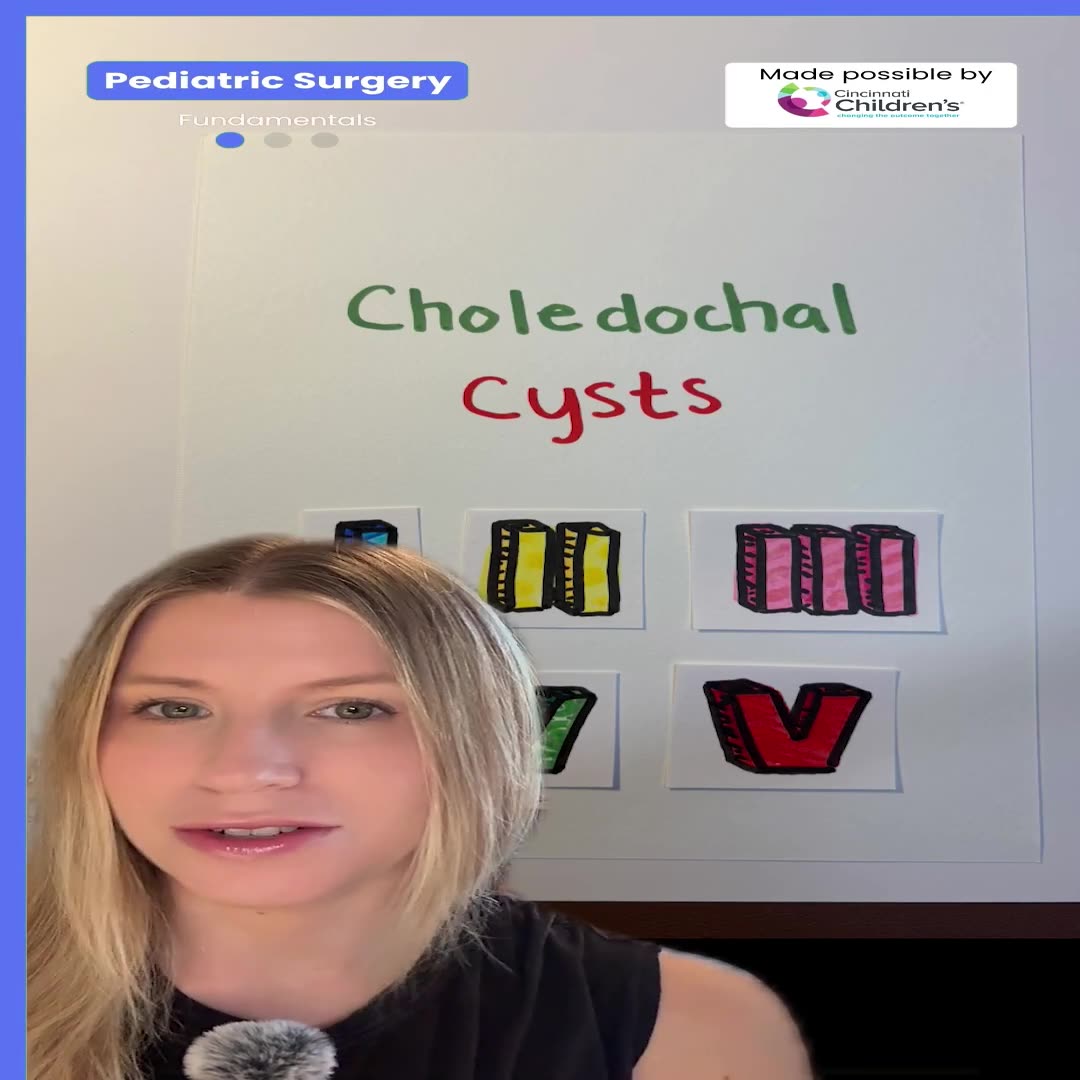
Choledochal Cyst Types Explained: Pediatric Surgery Fundamentals
1 min · Published Sep 2026
What the experts said
Effective knowledge transfer requires both a platform people will use and a method to filter what information is important
A communication platform must work with all different types of healthcare professional lifestyles to be effective
A trusted network is essential, as too much information from too many people creates noise
Crowdsourcing and AI can help filter important information
The COVID-19 crisis exaggerated the pre-existing problem of too many communication channels without knowing which to pay attention to
Proning was already known but is now being discussed for earlier use in COVID-19
Some clinical information like early proning cannot wait 6 months to disseminate
Pilots always have a co-pilot, but surgeons are oftentimes by themselves in a community doing operations in spaces they're not comfortable with
Surgical telementoring allows one surgeon to beam into the room and guide another surgeon with telestration and pointing to make operations safer
Telementoring is intended for trained surgeons who need interaction from others, not for novices being told what to do
Measurements have shown that surgical telementoring absolutely needs to take place
Medical-legal issues could get in the way of surgical telementoring implementation
Real-time peer review should be crowdsourced rather than limited to selected individual peer reviewers
Senior surgeons who may not be able to operate anymore still have the skill set and know-how to contribute through telementoring
Two people talking together elevates the entire surgical procedure
Two surgeons should be walking and telestrating during telementoring
AI image recognition could be applied live during surgery to implement CT scan data and warn surgeons about anatomical structures like the hepatic artery
COVID-19 presents a different lung disease pattern than ICU physicians typically see
Proning patients and avoiding intubation appears to be a good strategy for some COVID-19 patients, at least early in the disease
Gastroenterologists are already using real-time AI to determine which lesions to biopsy