

From
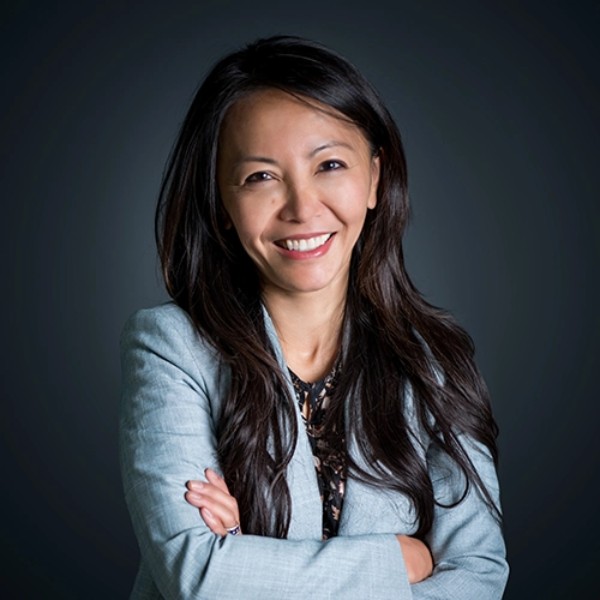
Dr. Diana Ponsky
Surgeons and Social Media - with Diana Ponsky MD
With Dr. Diana Ponsky · hosted by Dr. Catherine Mali
Part of
Head and Neck Cancer 5 items
Chapter 1 of 7 · Fundamentals
Career path
Introduction and Background - Path to Facial Plastic Surgery
Expert statements on this page
No expert statements were drawn from this page.
Host summaries · secondary, not cited in answers
Educational content from recorded physician discussions — not medical advice. Talk to your (or your child's) care team about your situation.
Video
Botox for TMJ with Dr. Diana Ponsky #shorts
Dr. Diana Ponsky · 1 min · Published Jun 2026
Video
Real Patient Testimonials with Dr. Diana Ponsky
Dr. Diana Ponsky · 3 min · Published Jun 2026
Video
What is an upper lip lift? Ask Dr. Diana Ponsky
Dr. Diana Ponsky · 48 s · Published Jun 2026
Video
3 Nonsurgical Under Eye Treatments | Dr. Diana Ponsky
Dr. Diana Ponsky · 56 s · Published Jun 2026
Video
What is filler fatigue? Facial plastic surgeon Dr. Diana Ponsky explains!
Dr. Diana Ponsky · 48 s · Published Jun 2026
Video
Role model MD: Meet Dr. Diana Ponsky from Ponsky Facial Plastic Surgery in Beachwood
Dr. Diana Ponsky · 5 min · Published Jun 2026
What the experts said
Dr. Ponsky's path to facial plastic surgery was influenced by mentors at each stage, including a chemist in college who inspired her to pursue sciences and a dermatologist she worked for who introduced her to the medical field.
Dr. Ponsky fell in love with ENT during medical school rotations for the intricacies of head and neck cancer surgery, then developed a stronger interest in rhinoplasty while working at the VA for 2 years during her husband's fellowship.
Dr. Ponsky maintained a hybrid academic-private practice model for many years before leaving academia completely in August 2020 to focus solely on private practice.
The transition from academic to private practice was gradual because Dr. Ponsky was nervous about taking the bold step away from academia.
In academic practice, Dr. Ponsky valued working within a team, having colleagues to consult, collaborating on cases, and teaching residents.
Academic practice became difficult due to scheduling conflicts when the university used multiple staff members who worked with many different surgeons, and many of Dr. Ponsky's colleagues left, leaving her as probably the last one standing.
A major frustration in academic practice was that patients would get angry at Dr. Ponsky because the hospital billing office couldn't figure out a good system for functional nasal surgery combined with cosmetic nasal surgery, putting her in the middle without ability to influence the billing.
Dr. Ponsky worked throughout COVID, taking shifts for a whole week at a time to cover call and help protect pulmonary faculty.
In Dr. Ponsky's current practice, approximately 80% of cases are cosmetic and 20% involve functional insurance issues.
At the university, the Department of Otolaryngology/Facial Plastics marketed Dr. Ponsky purely in the nasal arena because plastic surgery took over everything else.
Dr. Ponsky completed her fellowship training with Bahman Guyuron and was trained in all aspects of facial plastic surgery including rhinoplasty, facelifts, blepharoplasty, and brow lifts.
Currently, approximately 75% of Dr. Ponsky's surgeries are rhinoplasties, 15-20% are facelifts, and the remainder are blepharoplasties and brow lifts, with time split evenly between non-surgical and surgical days.
The younger generation is more likely to try non-surgical treatments early on as part of preventive skin care and wrinkle prevention, which can delay the need for more invasive procedures.
Some established plastic surgeons in the community do not perform Botox or fillers and instead send patients to dermatology, focusing only on surgical cases.
Dr. Ponsky values the relationship building that occurs through non-surgical treatments both before patients need surgery and for maintenance after surgery.
Dr. Ponsky's chairman supported her transition by allowing her to rent space in the plastic surgery building for 2 days a week as a timeshare arrangement for 2 years.
Dr. Ponsky leases space in a mixed-use business building that houses both medical offices (gastroenterology with surgical suite, dental and oral surgery) and non-medical businesses (equity firms, office leasing, digital internet company).
Dr. Ponsky had a 5-year lease on her office space which she recently renewed.
Dr. Ponsky benefited from staying in the same geographic area where she had previously worked, allowing her to maintain referrals from internists, pediatric offices for broken noses, and dermatology practices for cancer and Mohs patients.
Dr. Ponsky employs a social media manager who runs her own company, and they meet once a week to discuss ideas for delivering consistent messaging.
Dr. Ponsky uses Elegant Brands (BSMs) who connected her with a digital marketing expert who participates in weekly social media meetings.
Dr. Ponsky's husband, a pediatric surgeon, is very active on internet educational webinars across multiple platforms and has provided marketing tips.
Dr. Ponsky employs a marketing strategist with no formal marketing education who previously worked at the Museum of Art and brings creative ideas to the practice.
Managing staff is the most challenging portion of running a private practice.
Early in private practice, Dr. Ponsky hired people based on experience, but discovered that not every personality meshed well together, making HR the toughest part of practice management.
Dr. Ponsky now hires for personality rather than experience alone.
Dr. Ponsky's current team includes an employee who has been with her for 5 years, an RN who is soon to be a nurse practitioner whom she trained for over 1 year, a creative director, and a front desk staff member.
Dr. Ponsky discovered that she does not know how to manage people well, as she did not receive training in management.
Dr. Ponsky's biggest business mistake was going into partnership with a family member (her husband's cousin) who was at a different career level (attending vs. resident), and the partnership did not work out.
After the partnership dissolution, both Dr. Ponsky and her former partner felt they were better off having the latitude to do what they wanted independently.
In Ohio, a nurse injector can inject with the physician in proximity, but the regulations are somewhat gray; a nurse practitioner has more latitude to work independently with the physician as a collaborating or overseeing physician.
Dr. Ponsky prefers to train nurse practitioners herself, including taking them into the OR to show anatomy, rather than sending them to courses taught by instructors who may never have seen the deeper anatomy where they inject.
Dr. Ponsky relies on multiple discussions with rhinoplasty patients (typically 2-3 meetings) to assess their motivation and personality before surgery.
Dr. Ponsky structures patient interactions as a consultation, a follow-up discussion, and a pre-op discussion with her nurse to identify potential problem patients.
Dr. Ponsky has turned away two rhinoplasty patients because they showed concerning signs between the second and third visits that suggested she could not possibly achieve all their goals.
The human nose is not an inanimate object like a car door that can be pounded out to perfection or given the right color.
Morphing software is the biggest leveling tool for managing rhinoplasty expectations, providing capabilities that previous generations of surgeons did not have when they could only draw overlays.
Showing rhinoplasty patients examples of other patients who required revision surgery or developed soft tissue polybeaks requiring injection and follow-up helps set realistic expectations.
Dr. Ponsky follows rhinoplasty patients for up to 1 year post-operatively, with patients coming to the office at least 5 times during that journey, establishing a long-lasting relationship.
Red flags for difficult rhinoplasty patients include bringing 8 different morphed versions of their desired nose with specific requests about slopes and features.
Dr. Ponsky no longer receives as many celebrity photos from rhinoplasty patients because she tells them she will create a better version of their own features rather than replicate someone else's nose.
Kim Kardashian's nose would not look good on someone with a round face, illustrating the importance of facial harmony in rhinoplasty planning.
Dr. Ponsky tells rhinoplasty patients that when their nose is balanced with their face, they and others will no longer notice it because it is no longer their leading feature.
Patients consistently report after rhinoplasty that they spent so much time fixated on their nose, but after surgery no one comments on it and instead notice improvements in other features like their eyes.
Dr. Ponsky unexpectedly enjoyed learning about and managing the business and marketing aspects of private practice more than she expected.
Private practice is predicted to swing back as more physicians seek to have control over their lives, with hospitals showing more acute care patients and multi-specialty groups becoming less popular due to institutional bureaucracy.
The AMA is starting a subsector of education on returning to private practice, covering what works and what doesn't.
Dr. Diana Ponsky is board certified in facial and reconstructive surgery with a private practice in Beechwood, Ohio for the past 6 years and has performed more than 1,500 rhinoplasties.
Dr. Ponsky is an assistant professor for the Department of Otolaryngology at University Hospitals.