


From
StayCurrentMD
Social Determinants of Health Influence on Survival in Wilms Tumor, Neuroblastoma, and Hepatoblastoma
hosted by Dr. Sophia Schermerhorn
Chapter 1 of 1 · Evidence & Research
Social Determinants and Pediatric Oncology Survival
Expert statements on this page
No expert statements were drawn from this page.
Host summaries · secondary, not cited in answers
Educational content from recorded physician discussions — not medical advice. Talk to your (or your child's) care team about your situation.
Video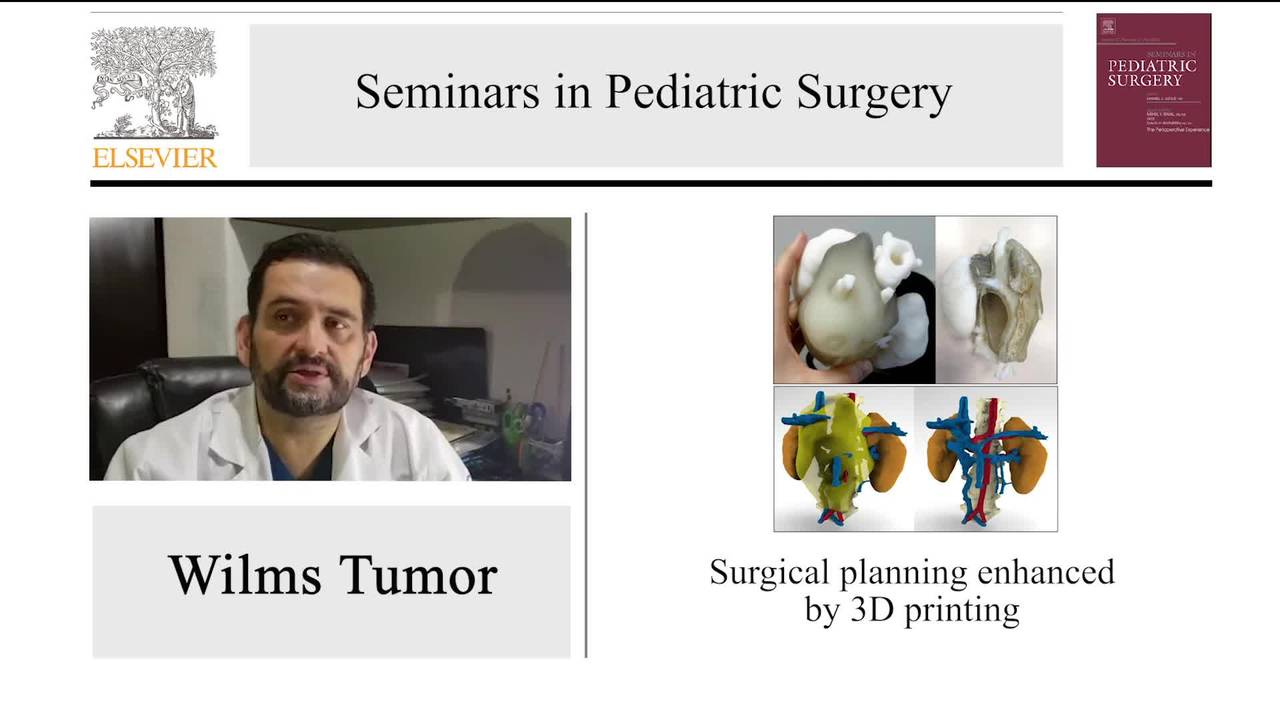
Error Traps and Culture of Safety in Pediatric Surgical Oncology
CCHMC Pediatric Surgery · Published Sep 2019
Video
Hepatoblastoma with Dr. Greg Tiao
CCHMC Pediatric Surgery · Published Mar 2022
Video
Update Course 2023 - Updates in the use of ICG
19 min · Published Aug 2023
Video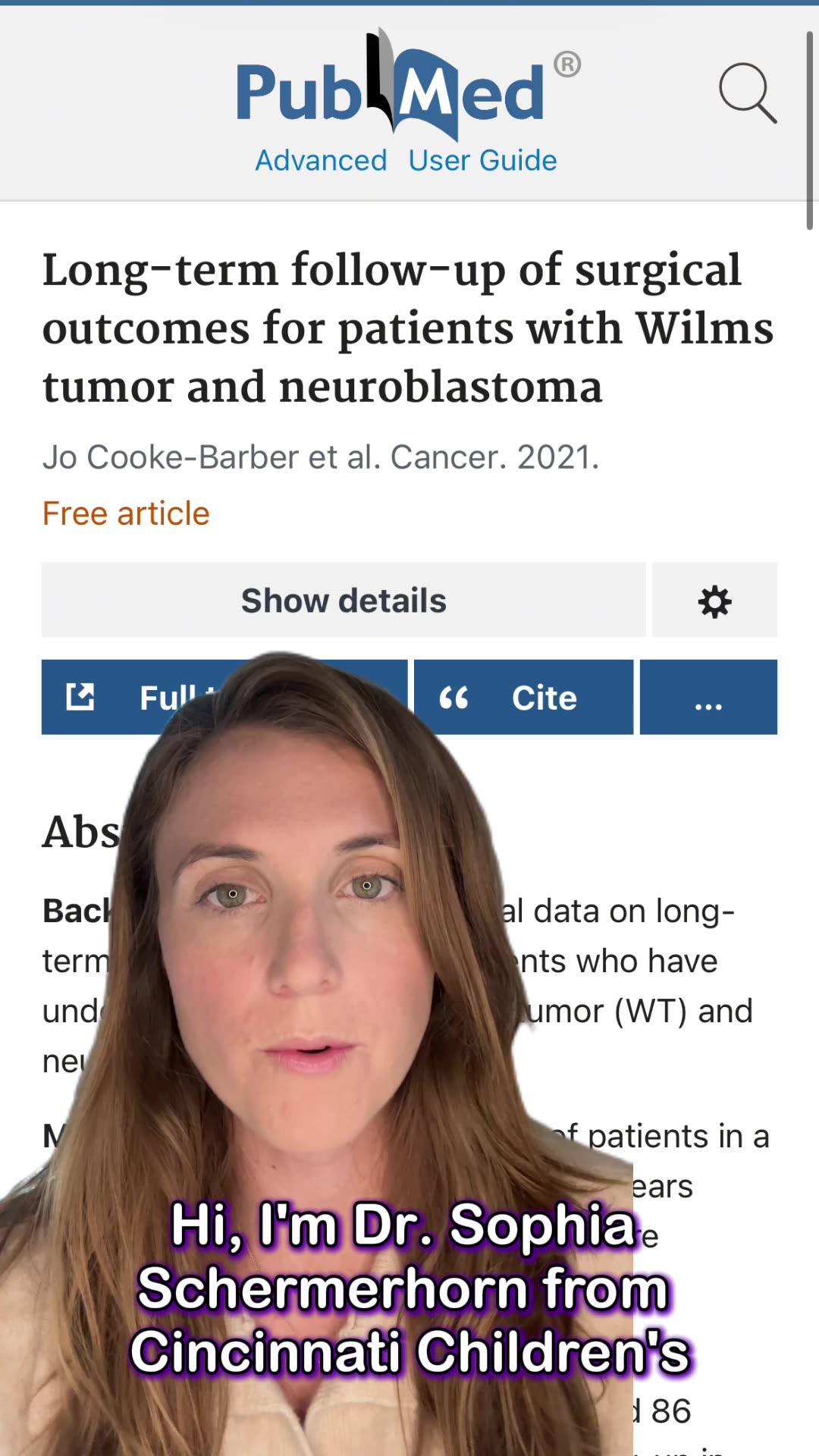
Long-Term Follow-Up of Surgical Outcomes for Patients With Wilms Tumor and Neuroblastoma
1 min · Published Feb 2026
Video
2025 Pediatric Surgery Update Course - Updates in Oncology
21 min · Published Aug 2025
Video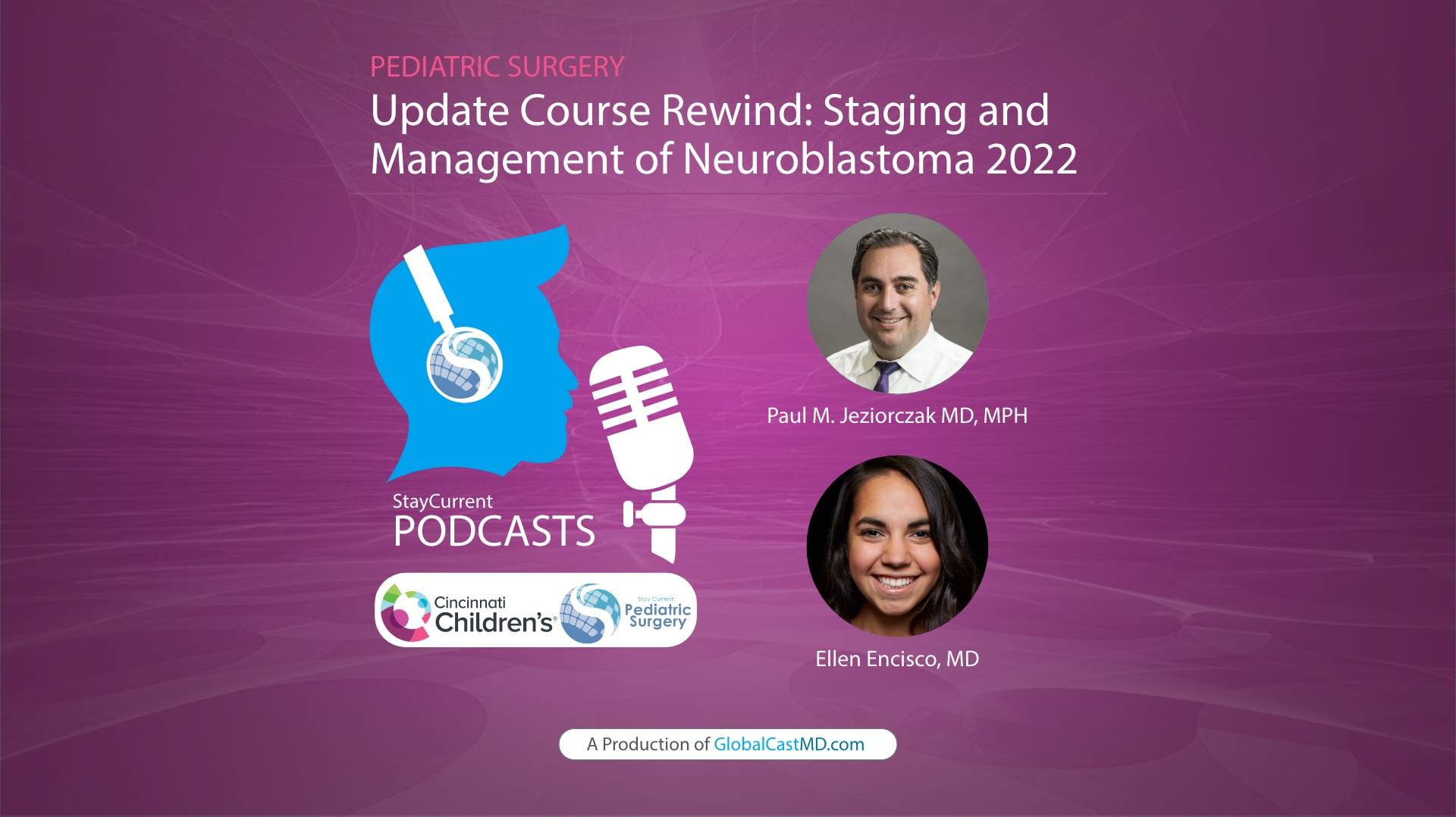
Update Course Rewind: Staging and Management of Neuroblastoma 2022
Published Jun 2023
Video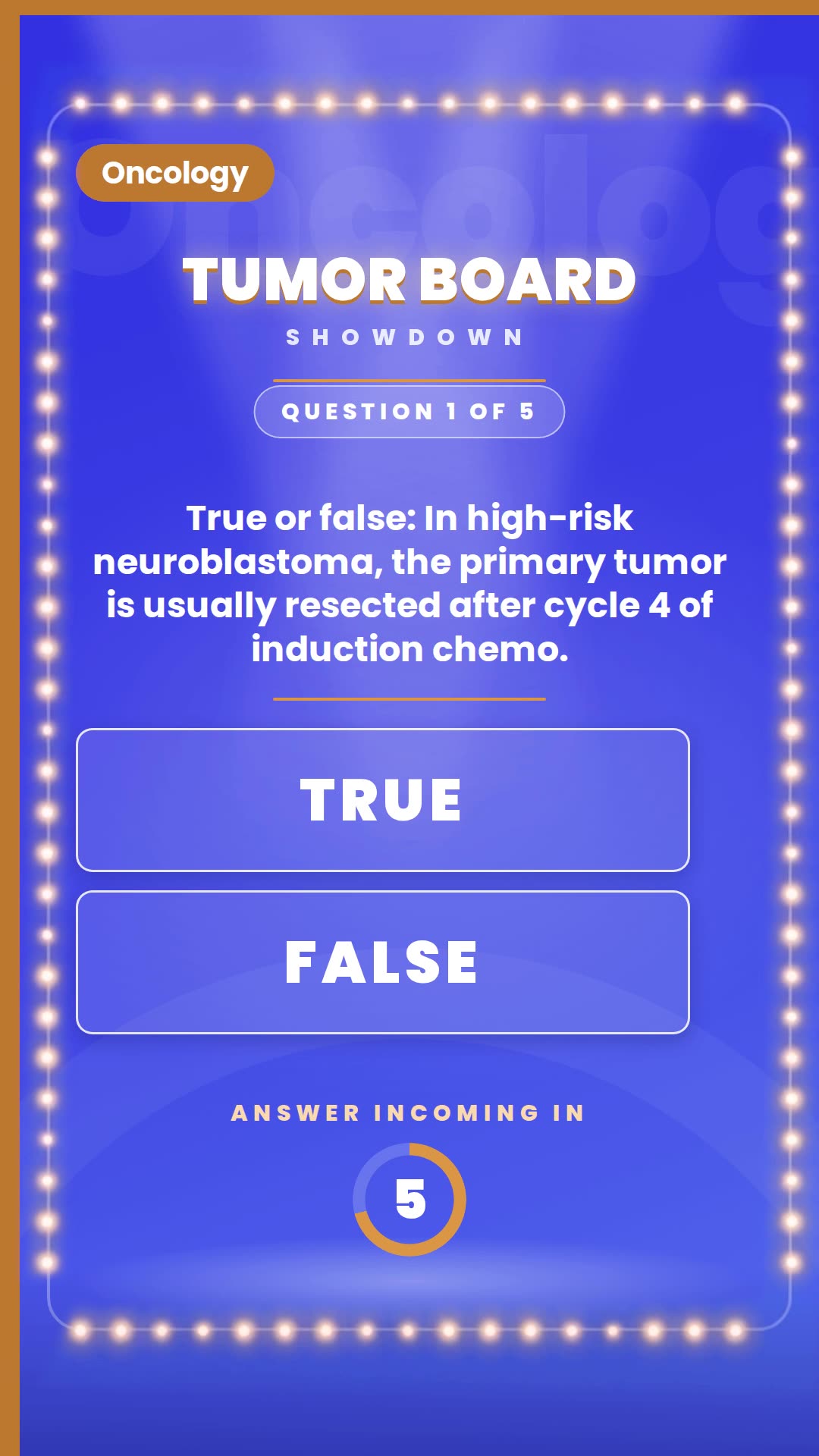
Oncology Tumor Board Showdown: Pediatric Oncology 5 Question Quiz
1 min · Published Oct 2026
Video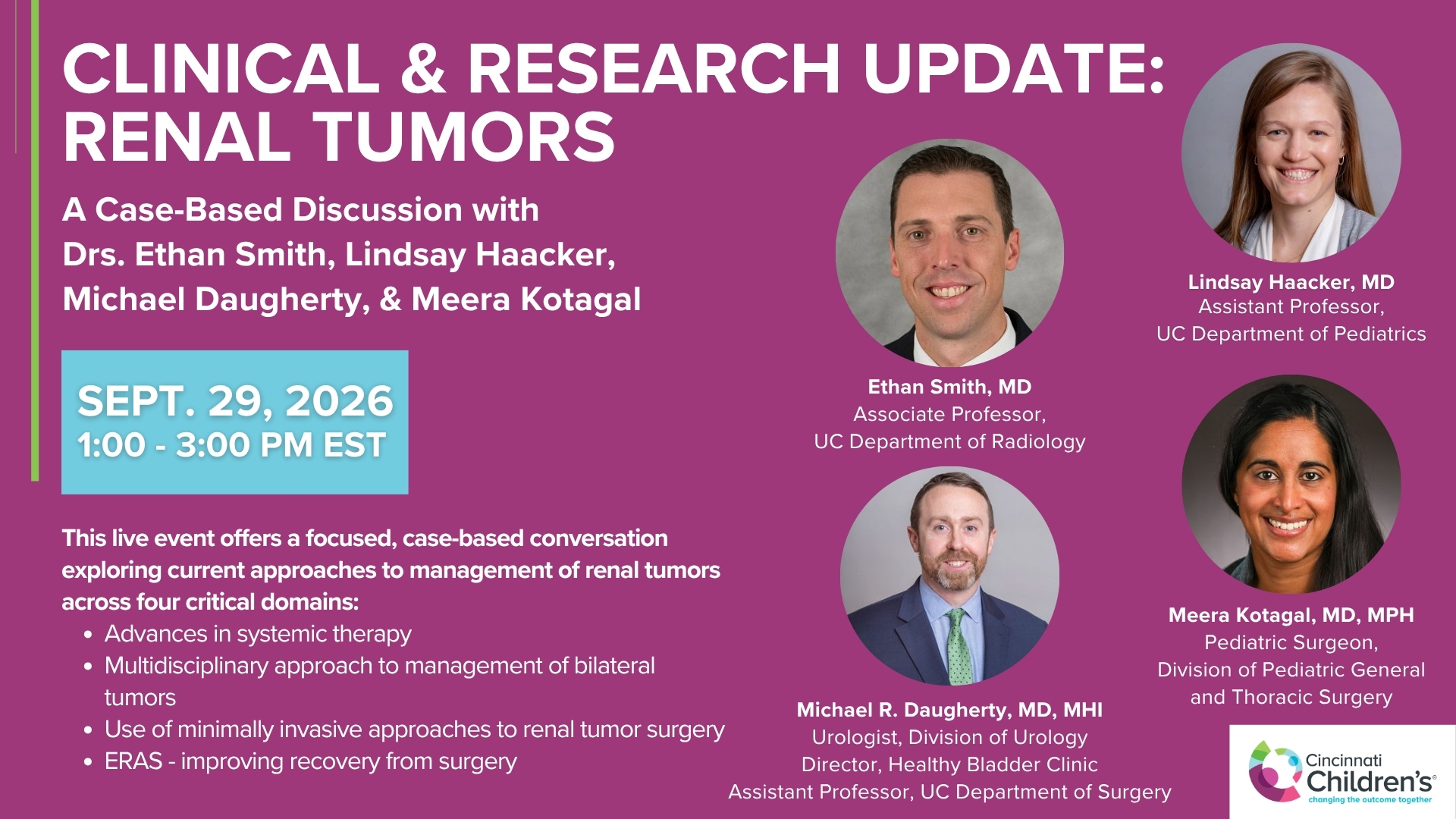
Clinical & Research Update: Renal Tumors with Drs. Ethan Smith, Lindsay Haacker, Michael Daugherty, and Meera Kotagal
71 min · Published Sep 2026
Video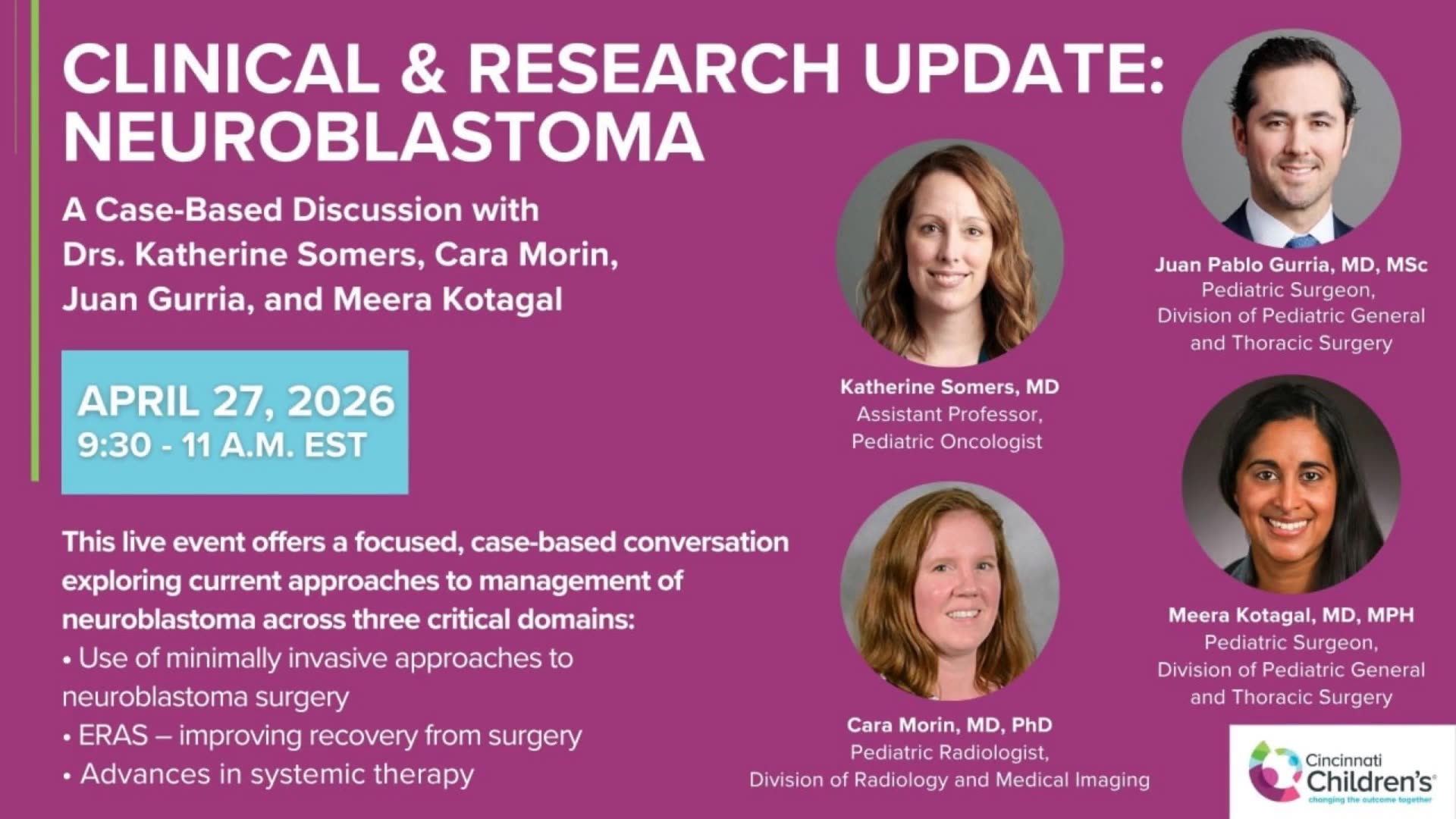
Clinical & Research Update: Neuroblastoma with Drs. Katherine Somers, Cara Morin, Juan Gurria, and Meera Kotagal
67 min · Published Sep 2026
Video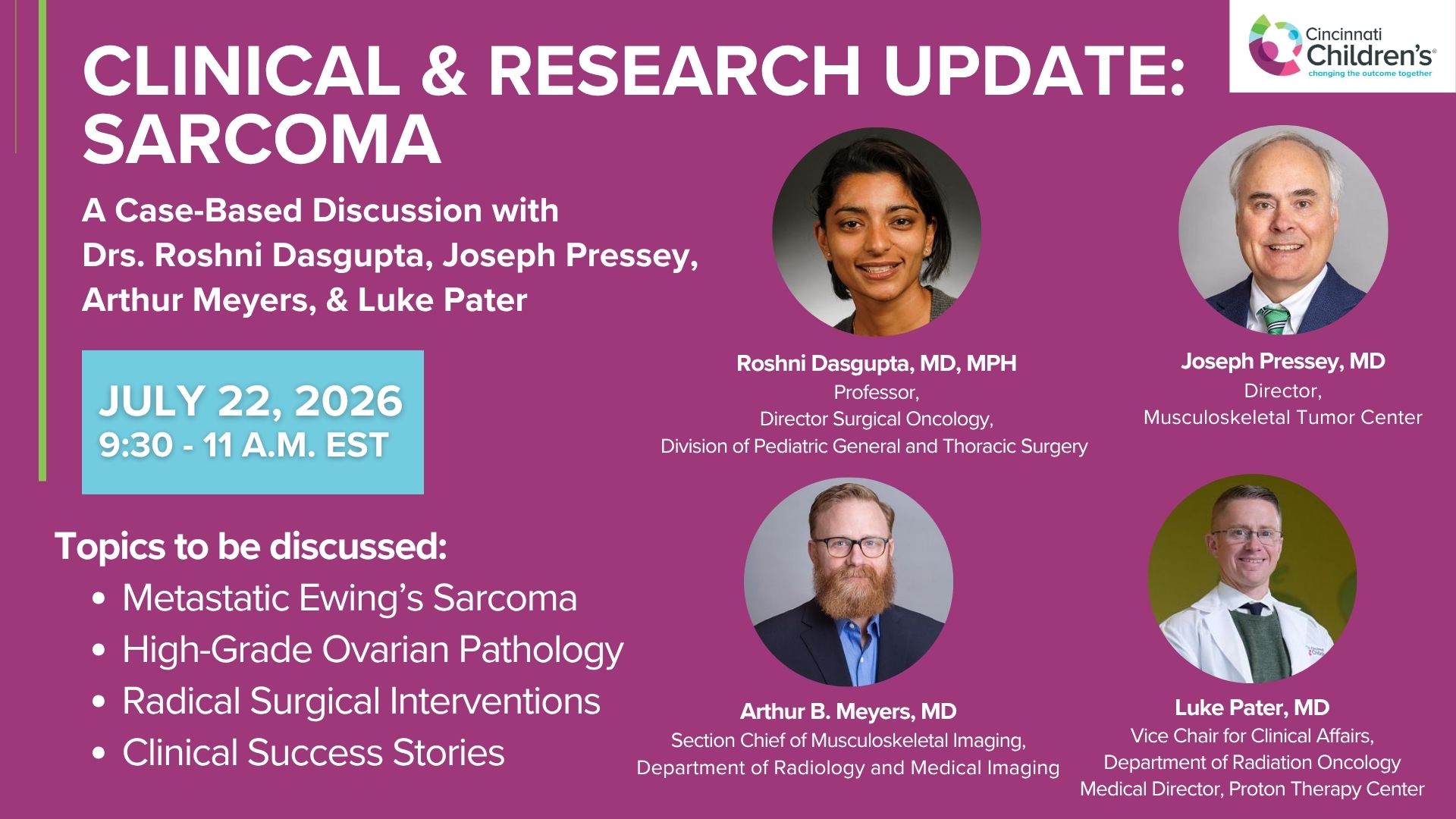
Clinical & Research Update: Sarcoma w/ Drs. Roshni Dasgupta, Joseph Pressey, Arthur Meyer, Luke Pater
66 min · Published Sep 2026
Video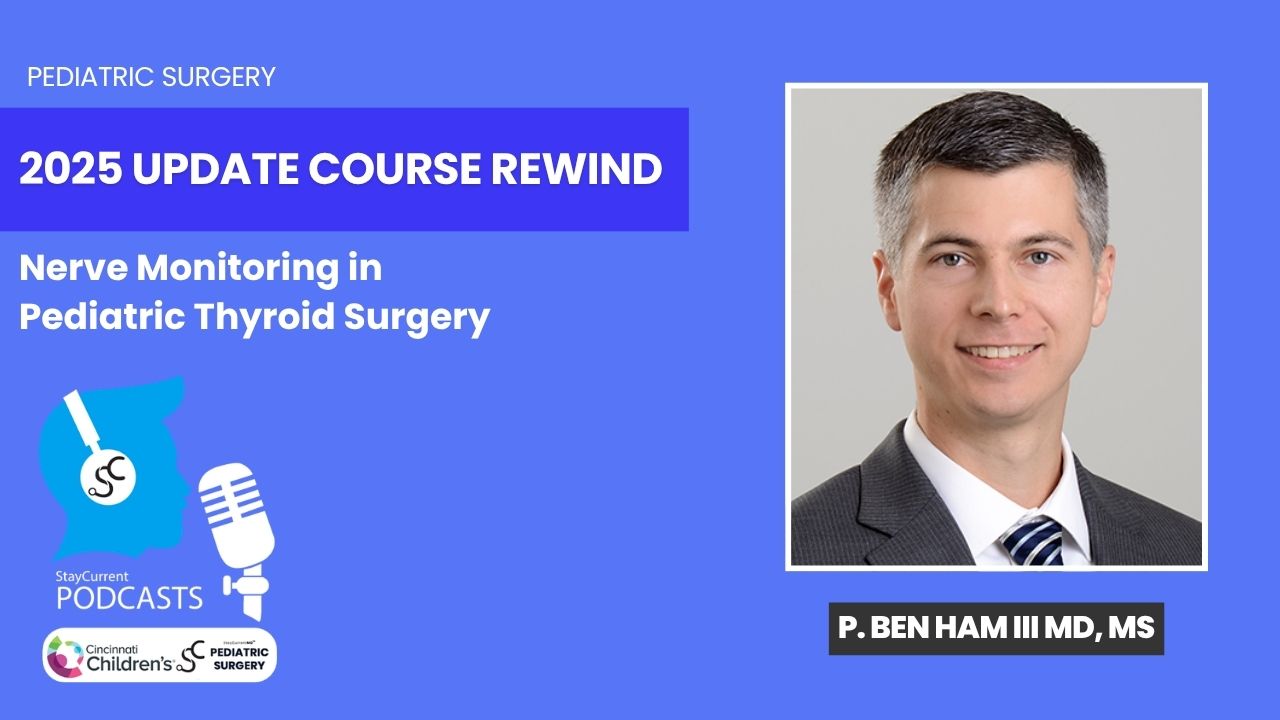
Update Course Rewind 2025: Nerve Monitoring in Pediatric Thyroid Surgery
6 min · Published Jul 2026
Video
Journal of Pediatric Surgery Article Review: June 2023, AAP Issue
Todd Ponsky · 13 min · Published Jul 2026
Video
Intestinal Atresia Types Explained: Grossfeld Classification for Pediatric Surgery
1 min · Published Sep 2026
Video
Derivation and validation of the Pediatric Community-Acquired Pneumonia Severity (PedCAPS) score: A prospective cohort study
50 s · Published Sep 2026
Video
FETO for Late-Diagnosed Severe Congenital Diaphragmatic Hernia (CDH) at Cincinnati Children's with Dr. Beth Rymeski
4 min · Published Sep 2026
Video
Severe Congenital Diaphragmatic Hernia (CDH) Case: FETO Management & Unexpected Findings with Dr. Beth Rymeski
3 min · Published Sep 2026
Video
Fetoscopic Endoluminal Tracheal Occlusion (FETO) Procedure: Step-by-Step Guide with Dr. Beth Rymeski
4 min · Published Sep 2026
Video
Choledochal Cyst Types Explained: Pediatric Surgery Fundamentals
1 min · Published Sep 2026
What the experts said
Study was a retrospective analysis of 12,000 patients with neuroblastoma, Wilms tumor, and hepatoblastoma from the National Cancer Database
Socioeconomic disadvantage score was created for each patient based on median household income and education level in their local communities
The most disadvantaged children were more likely to have worse survival for Wilms tumor and neuroblastoma
After adjusting for tumor size, grade, treatment, and comorbidities, socioeconomic effects on survival remained present
Hazard ratio for socioeconomic disadvantage was 2.02 for Wilms tumor
Hazard ratio for socioeconomic disadvantage was 1.29 for hepatoblastoma
Pediatric oncology outcomes depend on tumor biology, treatment received, and social determinants of health
Identifying socioeconomic risk factors is necessary to close equity gaps and improve survival for all children with solid tumors