
Pneumonia
Everything in the library about pneumonia — built automatically from the recorded discussions that name it
Educational content from recorded physician discussions — not medical advice. Always talk to your child's care team about your child's situation.
Content of this collection
Acute Management
1 item

Spontaneous Pneumothorax: Update Course 2014
Watch →
Dr. Dan Ostlie, Division of Pediatric Surgery, American Family Children's Hospital, presents on spontaneous pneumothorax. He discusses initial diagnostic evaluation, and different treatment options, including chest tube insertion, VATS, and
video15:59 · Jan 2019
Medical Management
1 item

Empyema with Dr. Shawn St. Peter
Listen →
Discussion with Dr. Shawn St. Peter and Dr. Todd Ponsky regarding evaluation and management of empyema.Dr. Ponsky: Welcome to "Stay Current in Pediatric Surgery.” Today we’re going to be talking about empyema and with us we have Dr. Shawn S
podcast36:37 · Dec 2020
Surgical Management
1 item
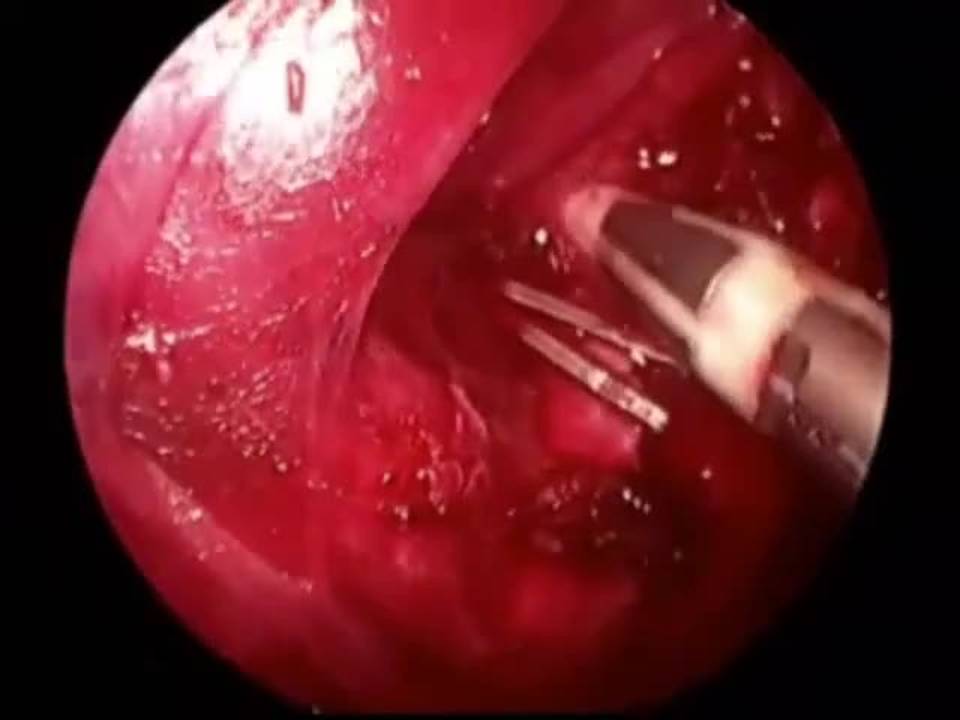
Thoracoscopic Upper Lobectomies for Symptomatic Congenital Pulmonary Airway...
Watch →
This video appears in a new pediatric surgery textbook, Clinical Pediatric Surgery: A Case-Based Interactive Approach," by Dr. Sherif Emil. The book is an innovative educational resource that focuses on judgment and decision-making in pedia
video5:58 · Feb 2020
Summaries and takeaways+ Show
The doctors in this collection+ Show
All expert statements+ Show
Every expert statement below comes from the recorded discussions, with its speaker and moment.
Empyema with Dr. Shawn St. Peter
Ultrasound has no disadvantage compared to CT for diagnosing empyema and identifying pleural stranding, and prospective studies show that placing ultrasound before CT decreases CT utilization without changing outcomes.
clinicalShawn St. Peter15:16 ↗
Empyema is defined by pleural fluid with greater than 10,000 white blood cells, which was the enrollment criterion used in the randomized trial.
clinicalShawn St. Peter6:50 ↗
When pleural fluid has >10,000 white cells and the patient undergoes VATS, the pleural space appearance is consistent with typical empyema.
clinicalShawn St. Peter7:02 ↗
The randomized trial at Children's Mercy compared primary VATS to primary fibrinolysis and found no difference in length of stay, with a 16% failure rate in the fibrinolysis group.
clinicalShawn St. Peter7:39 ↗
Great Ormond Street published a study of 60 patients using urokinase with 4-hour dwell time that found identical results: no difference in length of stay and a 1 in 6 (approximately 16%) failure rate.
clinicalShawn St. Peter17:34 ↗
A Spanish randomized trial of 100 patients using urokinase found no difference in length of stay and a 15% failure rate, consistent with prior studies.
clinicalShawn St. Peter19:14 ↗
Three randomized trials totaling 200 patients all show the same results: no difference in length of stay between VATS and fibrinolysis, with 15-16% failure rate for fibrinolysis.
clinicalShawn St. Peter19:14 ↗
In 100 consecutive patients treated with fibrinolysis after the trial, there was no difference in operative time or blood loss for patients who required subsequent VATS compared to primary VATS, contradicting concerns that fibrinolysis makes subsequent surgery more difficult.
clinicalShawn St. Peter19:14 ↗
The TPA protocol is 4mg mixed in 40mL normal saline, instilled into a 12 French chest tube with 1-hour dwell time, repeated at 24 and 48 hours (three doses total over 48 hours).
clinicalShawn St. Peter16:03 ↗
Patients do not get sicker with fibrinolysis, unlike VATS where barrel trauma to the good lung and manipulation of the bad lung can cause patients to 'fly pretty close to the treetop' postoperatively.
opinionShawn St. Peter9:40 ↗
Daily chest X-rays after fibrinolysis are not useful because the chest will look bad for quite a while even after completing treatment, and X-ray appearance does not help determine if fibrinolysis has failed.
clinicalShawn St. Peter23:25 ↗
Failure of fibrinolysis should be defined by persistent clinical illness (oxygen requirement, poor feeding) at 3-4 days after treatment, not by fever alone, since fever may be due to parenchymal disease.
clinicalShawn St. Peter23:57 ↗
A second round of fibrinolysis is only indicated when imaging shows a walled-off collection not in continuity with the initial chest tube placement; if the tube is well-positioned and there is persistent pleural disease in continuity with the tube, a second round is not recommended.
clinicalShawn St. Peter26:42 ↗
Extensive pulmonary necrosis is an absolute contraindication to surgical intervention because manipulating necrotic lung risks protracted bronchopleural fistulas requiring Heimlich valves for months.
clinicalShawn St. Peter26:53 ↗
Bronchopleural fistulas only occur when operating in a field of necrosis and debriding that necrosis; peripheral lung lesions heal without this complication.
clinicalShawn St. Peter26:53 ↗
During VATS for failed fibrinolysis, if the lung appears necrotic (black, necrotic-appearing), it should be left alone and only the pleural space should be debrided.
clinicalShawn St. Peter29:11 ↗
A patient with complete unilateral pulmonary necrosis who underwent needle biopsy died from exsanguination into the wound and bronchi, demonstrating that necrotic lung does not tolerate being touched.
clinicalShawn St. Peter29:50 ↗
A 3-year-old with bilateral pulmonary necrosis requiring VV ECMO for almost a month survived without surgical intervention and left the hospital without oxygen, demonstrating that necrotic lung heals with conservative management.
clinicalShawn St. Peter31:21 ↗
Well-defined peripheral pulmonary abscesses can be drained percutaneously with a drain left in place, but multifocal or complex abscesses should be managed conservatively like necrosis.
clinicalShawn St. Peter32:06 ↗
The IDSA community-acquired pneumonia guidelines recommend 10 days of antibiotics after becoming afebrile, but this is a grade D recommendation based on no data.
host_summaryShawn St. Peter11:20 ↗
At Children's Mercy, the average duration of antibiotics was 25 days total with 19 days after becoming afebrile, and 40% of patients had complications from antibiotic therapy including diarrhea and fungal superinfections.
clinicalShawn St. Peter11:41 ↗
The current antibiotic protocol at Children's Mercy is 7 days after meeting three criteria: completed fibrinolysis, off oxygen, and afebrile. Antibiotics can be switched to oral if the patient is a candidate.
clinicalShawn St. Peter13:00 ↗
Recurrent empyema after successful treatment is extremely rare because the pleural space is typically obliterated (cemented space), making randomized trials of antibiotic duration unfeasible due to zero event rate.
clinicalShawn St. Peter13:00 ↗
In the United States, TPA is the only available fibrinolytic agent for empyema since urokinase is not available and streptokinase has come off the market.
clinicalShawn St. Peter34:27 ↗
A randomized trial in adults suggested more rapid clearance by adding DNase to fibrinolytic therapy, but DNase is not approved for intrapleural use and requires an IND for pediatric study.
clinicalShawn St. Peter34:37 ↗
Mary Anne Jackson, an infectious disease physician, recommended the >10,000 white cell entry criterion for the trial, which initially seemed too soft but proved completely correct.
clinicalShawn St. Peter4:40 ↗
When comparing an operation to a non-operative approach, if results are equal, there is no way to recommend the operation and no parent would choose surgery when outcomes are the same.
opinionShawn St. Peter18:20 ↗
Placing a 12 French chest tube under ultrasound guidance is less invasive and faster than placing a PICC line, taking less than a minute.
clinicalShawn St. Peter21:06 ↗
In older children who are not severely tachypneic, chest tube placement can be performed with local anesthetic alone without sedation.
clinicalShawn St. Peter22:20 ↗
Ted Carter and colleagues from Seattle proposed an algorithm for pleural effusions categorizing them as small (<25%), moderate (25-50%), or large (>50%), with symptomatic versus asymptomatic branches under each category.
host_summaryShawn St. Peter5:10 ↗
What's new+ Show