
Crohn's Disease
Everything in the library about Crohn's disease — built automatically from the recorded discussions that name it
Educational content from recorded physician discussions — not medical advice. Always talk to your child's care team about your child's situation.
Content of this collection
Surgical Management
2 items
Enhanced Recovery After Surgery (ERAS) Program: Update Course 2016
Watch →
Dr. Kurt Heiss discusses enhanced recovery after surgery programs (ERAS). This presentation includes discussion of enhanced healing mechanisms through means of nutrition, electrolyte consumption, decreasing the length of stay, no narcotics,
video44:22 · Jan 2019
Inflammatory Bowel Disease: Update Course 2015
Watch →
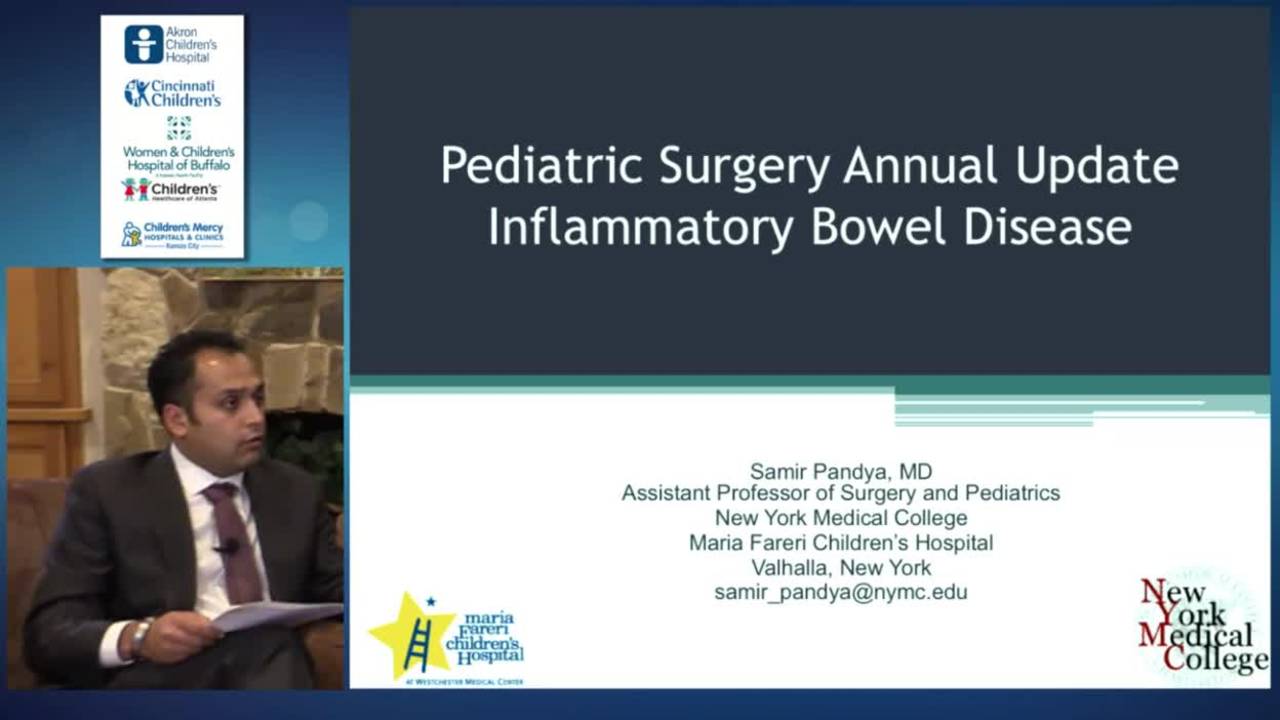
Dr. Samir Pandya,Assistant Professor, Department of Surgery, Children's and Women's Physicians of Westchester presents on inflammatory bowel disease. He discusses management of ulcerative colitis, indeterminate colitis, colectomy, and J-pou
video13:49 · Jan 2019
Case-Based Learning
3 items

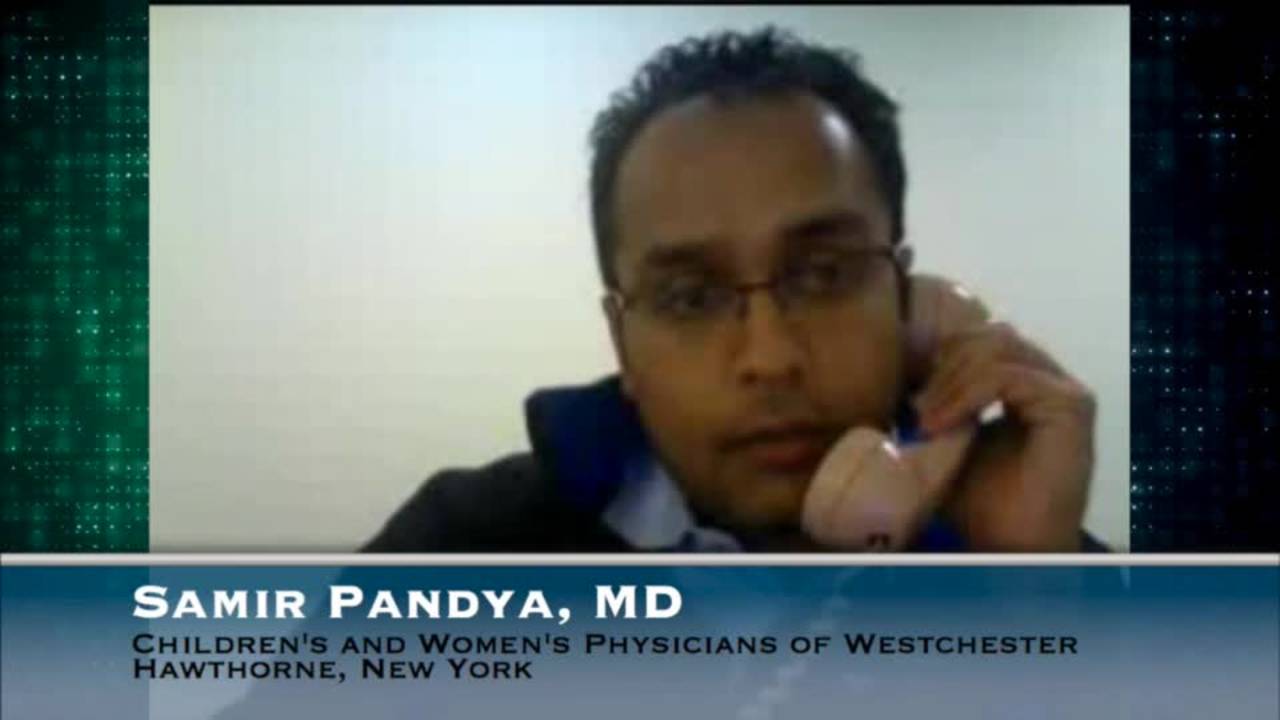

Inflammatory Bowel Disease (IBD) - Samir Pandya: Update Course 2014
Watch →
Dr. Samir Pandya presents case studies of Crohn's disease of ulcerative colitis.Discussion involved imaging modalities in Crohn's Disease, diagnosis of fibrostenotic and fistulizing Crohn's disease, endorectal advancement flap, permanent di
video28:36 · Nov 2018
Inflammatory Bowel Disease: Update Course 2014
Watch →
Dr. Samir Pandya presents case studies of Crohn disease and ulcerative colitis. Discussion involves imaging modalities, diagnosis and management of fibrostenotic and fistulizing Crohn disease, endorectal advancement flap, permanent diversio
video28:36 · Jan 2019
Colorectal Quiz Episode 26: Perianal Crohn's Disease
Listen →
In this week's episode, Dr. Levitt and Dr. Frischer discuss perianal Crohn's disease with Dr. Lisa McMahon, director of the IBD center at Phoenix Children's Hospital and pediatric surgery fellow, Dr. Cristine Velazco.
We'll go over how to a
podcast23:58 · Jan 2022
Summaries and takeaways+ Show
The doctors in this collection+ Show
All expert statements+ Show
Every expert statement below comes from the recorded discussions, with its speaker and moment.
Colorectal Quiz Episode 26: Perianal Crohn's Disease
In pediatric patients, unlike adult patients, the first presenting factor for Crohn's disease can often be perianal disease.
clinicalJason Frischer9:29 ↗
Male gender over the age of 10, and presence of a fistula are risk factors with much higher incidence of Crohn's disease being diagnosed in patients presenting with perianal lesions to the emergency room.
epidemiologicalJason Frischer9:00 ↗
The mucosa heals first compared to skin in perianal disease, so leaving a mucosal opening without a seton risks recurrent abscess when biologics heal the mucosa.
clinicalJason Frischer12:31 ↗
Making a large cruciate incision and packing a perianal abscess in a child with undiagnosed Crohn's disease may result in non-healing and potentially require colostomy or ileostomy.
clinicalJason Frischer13:12 ↗
The highest risk factors for lymphoma with biologic therapy are male gender, teenage age, and combination therapy with methotrexate.
clinicalJason Frischer6:52 ↗
Real risks of biologic agents include infectious complications such as tuberculosis and risk of lymphoma.
clinicalChristine Velasco6:29 ↗
When the colonoscope cannot intubate the terminal ileum, capsule endoscopy or fecal calprotectin can be used to aid diagnosis.
clinicalChristine Velasco3:47 ↗
If terminal ileum cannot be intubated, gastroenterologists may treat presumptively and re-scope after a few months of treatment when inflammation has decreased.
clinicalJason Frischer4:36 ↗
Setons should remain in place for at least 6 months to allow the inflammatory tract to become non-inflammatory.
clinicalLisa McMahon17:54 ↗
Before removing a seton, the bottom must look better, drainage must be better, the patient must be symptom-free, and they must have reached steady state of biologic (loading dose plus at least 3 more doses, typically 2-3 months from start).
clinicalJason Frischer19:23 ↗
Inflammatory markers including fecal calprotectin, ESR, and CRP should be checked before removing a seton to ensure systemic disease is under control.
clinicalJason Frischer19:55 ↗
The initial Remicade paper from 1998 or 1999 in the New England Journal of Medicine was on perianal disease and demonstrated improved healing time and improved length of time between recurrence when combination of seton and infliximab is used versus either separately.
clinicalJason Frischer20:49 ↗
Remicade (infliximab) has the most literature on healing perianal disease; Humira also has good evidence but less literature; Stelara and vedolizumab are sometimes used with less information available.
clinicalLisa McMahon20:27 ↗
Literature shows about a 10% response rate for perianal fistulas even without biologics if a seton is placed and removed, with much better outcomes with biologics.
epidemiologicalLisa McMahon19:12 ↗
Source control of infection must be achieved before starting immunosuppressive therapy including steroids and biologics.
clinicalJason Frischer17:17 ↗
If an abscess is not adequately drained, reimaging should be performed before giving biologics or steroids.
clinicalJason Frischer17:17 ↗
Hydrogen peroxide is preferred over methylene blue for identifying fistula tracts because it is neater; 3% hydrogen peroxide in a syringe with 16-20 gauge angiocath is used with a speculum in the anus.
clinicalJason Frischer14:15 ↗
When a fistula opening cannot be found despite hydrogen peroxide testing, a seton should not be placed at that time to avoid creating a hole where there isn't one.
clinicalJason Frischer14:54 ↗
For recurrent patients requiring repeat seton placement, repeat imaging should be obtained before seton removal.
clinicalLisa McMahon18:45 ↗
It is common to have perianal disease in Crohn's; this patient had a delay in diagnosis and had perianal disease for quite some time with multiple skin tags and fissures.
clinicalLisa McMahon7:24 ↗
Inflammatory Bowel Disease (IBD) - Samir Pandya: Update Course 2014
In a review study published recently, CT enterography is more accurate than MR enterography for Crohn's disease, though institutional radiologist expertise determines which modality performs better in practice.
host_summarySamir Pandya0:00 ↗
Children presenting with Crohn's disease for the first time with a perianal or perirectal abscess often have non-colonic small intestinal disease.
clinicalSamir Pandya3:00 ↗
Contrast-enhanced ultrasound has sensitivity and specificity as high as 100% for Crohn's disease in previously undiagnosed patients, and above 95% in patients with known diagnosis, according to the Peloda study published in Pediatrics 2013.
host_summarySamir Pandya4:00 ↗
Contrast-enhanced ultrasound is only available for clinical use in Europe at present and has not been approved by the FDA.
host_summarySamir Pandya4:00 ↗
In Europe, ultrasound is the first-line imaging choice for Crohn's disease, followed by MR or CT enterography, whereas in the US, MR/CT enterography is first-line.
host_summarySamir Pandya5:00 ↗
MR enterography provides information about the chronicity of Crohn's disease strictures, helping determine whether a stricture is chronic and fibrotic (unlikely to resolve with medication) or potentially responsive to medical therapy.
host_summarySamir Pandya6:00 ↗
Perianal abscesses in Crohn's disease are unlikely to heal without fecal diversion because bowel continuity slows healing.
opinionSamir Pandya10:00 ↗
Modern TNF inhibitor drugs are effective at healing perianal disease in Crohn's, potentially allowing avoidance of fecal diversion in selected patients.
clinicalSamir Pandya11:00 ↗
Patients and parents would rather deal with a chronic perianal problem than manage a stoma.
opinionSamir Pandya12:00 ↗
Most Crohn's perianal abscesses are not single; when draining a perianal abscess in Crohn's disease, there are usually several fistulas present.
clinicalSamir Pandya13:00 ↗
What's new+ Show