

From
Grand Rounds
Pyloric Stenosis with Dr. Alex Bondoc
With Dr. Alex Bondoc · hosted by Dr. Kim Priban & Dr. Em Gootee
Chapter 1 of 6 · Case-Based Learning
Case presentation
Introduction and Case Presentation
Expert statements on this page
No expert statements were drawn from this page.
Host summaries · secondary, not cited in answers
Educational content from recorded physician discussions — not medical advice. Talk to your (or your child's) care team about your situation.
Video
Pyloric Stenosis
CCHMC Pediatric Surgery · 12 min · Published May 2020
Video
Pyloric Stenosis Guideline Recap
CCHMC Pediatric Surgery · Published Nov 2019
Video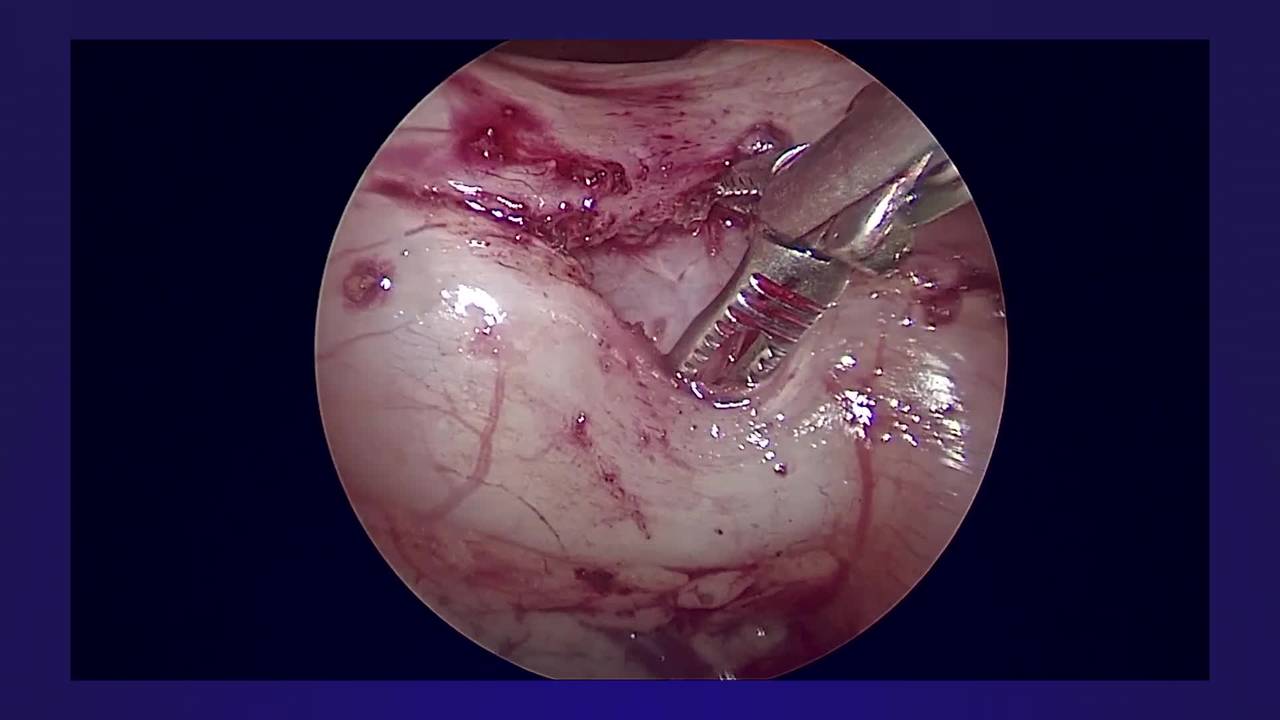
Laparoscopic Pyloromyotomy
7 min · Published Feb 2020
Video
RCT for Feeding after Pyloromyotomy
Published May 2020
Podcast
Case-Based Journal Review: Inguinal Hernia 2025
19 min · Published Apr 2025
Video
Peritoneal Access
Published Mar 2020
Video
Clinical & Research Update: Pediatric Liver Tumors - A Case-Based Discussion with Drs. Katherine Somers & Alex Bondoc
69 min · Published Apr 2026
Podcast
Hepatic Infections: Hepatitis, Abscess & Cysts with Dr. Alex Bondoc
15 min · Published Oct 2023
Podcast
Portal Hypertension with Dr. Alex Bondoc
11 min · Published Aug 2023
Video
Pediatric Vascular Access in Brief: Preoperative, Operative, and Postoperative Considerations
CCHMC Pediatric Surgery · 13 min · Published Sep 2022
Podcast
Choledochal Cyst Podcast
22 min · Published Nov 2020
Video
GYN #4 Management of Tubal Torsion: When to Consider Salpingectomy with Dr. Lesley Breech
CCHMC Pediatric Surgery · Published Oct 2024
Video
GYN #3 Management of an Adnexal Torsion with a Healthy Appearing Ovary with Dr. Lesley Breech
CCHMC Pediatric Surgery · Published May 2024
Video
GYN #2 Oophoropexy in Adnexal Torsion with Dr. Lesley Breech
CCHMC Pediatric Surgery · Published May 2024
Video
GYN #1 Importance of Documenting Reproductive Anatomy with Dr. Lesley Breech
CCHMC Pediatric Surgery · Published Feb 2024
Podcast
Esophageal Replacement with Dr. Dan von Allmen
13 min · Published Nov 2023
Podcast
Malrotation with Dr. Meera Kotagal
13 min · Published May 2023
What the experts said
Pyloric stenosis incidence is approximately 4 to 5 in 1000 live births with heavy male preponderance.
Atropine is traditional medical management but has fallen out of favor because pediatric anesthetists are skilled and there is low concordance between congenital anomalies creating high anesthetic risk.
The first pyloromyotomy was performed the year before Ramstedt, who popularized it using a coffee spoon, intending pyloroplasty but performing only myotomy when the baby became unstable.
Gastric suction in three positions (head down, right, left) while awake is performed before induction to prevent aspiration from the atonic stomach.
For laparoscopic pyloromyotomy, 3-millimeter instruments are used through three incisions: umbilicus, right upper quadrant, and left upper quadrant.
The 3-millimeter Maryland grasper when fully opened is 13 millimeters, so a 13mm myotomy on a 15-18mm channel will be incomplete.
Air can be insufflated down a suction catheter to look for bubbles indicating mucosal perforation.
Omentum is placed on top of the myotomy site.
Open pyloromyotomy can be performed through a periumbilical incision with tunneling up to the right upper quadrant, taking advantage of babies' stretchable skin.
Incisional hernias can occur because fascia is typically not closed on stab incisions in upper quadrants; omental hernias have been observed.
Complication rates after pyloromyotomy are equivalent or better with open approach because laparoscopic pyloromyotomy is an experience and feel operation.
Post-operative vomiting is very common and does not necessarily mean the operation did not work; the atonic stomach does not remodel immediately.
Complete intolerance of feeds lasting into days post-operatively raises concern for incomplete myotomy.
A 2017 Journal of Pediatric Surgery study of 584 patients found African American infants with pyloric stenosis presented with higher bicarbonate and lower chloride levels.
Uninsured families' babies had lower chloride and higher bicarbonate levels at presentation and longer times between diagnosis and OR.
A large-scale Denmark and Holland study found pyloric stenosis is 87% heritable.
Researchers have identified a molecular diagnostic marker and can trace specific genetic changes indicating risk for pyloric stenosis.
Ultrasound diagnostic criteria: muscle thickness greater than 4 millimeters and pyloric channel length greater than 15 millimeters suggest pyloric stenosis.
A 2008 and 2016 Journal of Pediatric Surgery study identified specific fluid resuscitation pathways that reduced blood draws and did not delay time to surgery.
Recommended fluid resuscitation: isotonic saline bolus followed by maintenance IV fluids (D5 half-normal saline with 20 mEq/L potassium chloride).
Nasogastric decompression should be avoided to prevent exacerbation of metabolic alkalosis.
A 2023 Journal of Pediatric Surgery study suggests antibiotic prophylaxis may be unnecessary for pyloromyotomy and may carry unnecessary long-term side effects.
To assess myotomy completeness, both ends of separated muscle should move independently; resistance or connected movement indicates incomplete myotomy.
A flexible feeding protocol (reducing volume if baby vomits 6 times but continuing smaller feeds and increasing as tolerated) decreases length of hospital stay.
Studies on adults who had pyloromyotomy as children show they do not have major issues like nausea, vomiting, reflux, or other GI problems later in life, and long-term follow-up is usually not necessary.