


From
Colorectal Channel
Colorectal Quiz Episode 16: Bowel Management in Spinal Patients - Need for a Urologist Part 2
With Dr. Jason Frischer & Dr. Marc Levitt · hosted by Dr. Amanda Jensen
Chapter 1 of 5 · Fundamentals
Introduction
Introduction and recap of part one
Expert statements on this page
No expert statements were drawn from this page.
Host summaries · secondary, not cited in answers
Educational content from recorded physician discussions — not medical advice. Talk to your (or your child's) care team about your situation.
Podcast
Colorectal Quiz Episode 15: Bowel Management in Spinal Patients - Need for a UrologistPart 1
17 min · Published Jun 2021
Video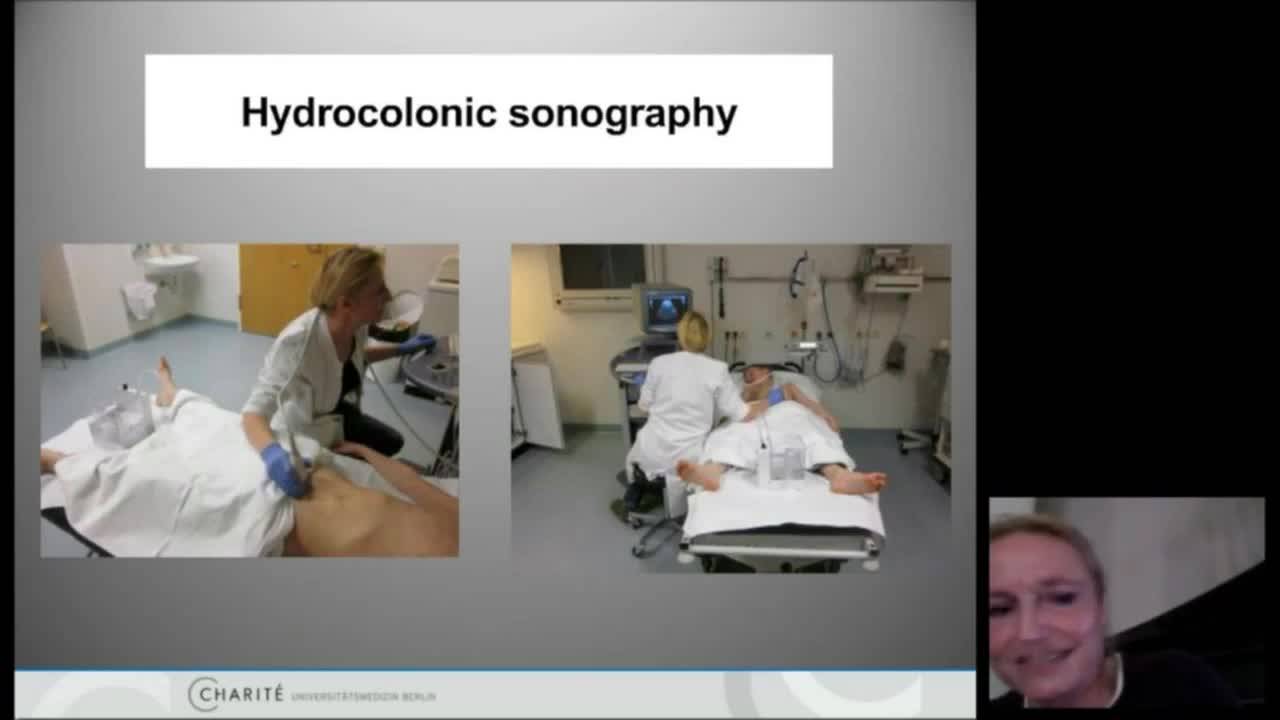
Use of hydrocolonic sonography to monitor the effects of an enema: Pediatric...
Dr. Todd Ponsky · 12 min · Published May 2013
Video
Bowel Management - Use Of Ultrasound To Monitor Effects Of Enema
12 min · Published Nov 2018
Video
Cloaca - Urologic Concerns
25 min · Published Nov 2018
Video
Update Course 2021: PEDS COLORECTAL CONSORTIUM CONCLUSIONS
36 min · Published May 2022
Video
ERN eUROGEN ARM Webinar Series: Management of Cloacal Malformations – what is new in 2021?
48 min · Published Dec 2022
Video
Validation of an anorectal malformation trainer - Can a high-fidelity model simulate real life?
1 min · Published Jun 2026
Video
Complications and Long-Term Outcomes of Patients With Cloacal Malformation After Bowel Neovagina...
1 min · Published Jun 2026
Video
Safety and utility of long-acting steroid injection for management of post-operative stricture...
1 min · Published Jun 2026
Video
Association Between Social Determinants of Health and Choice of Urinary Reconstruction in Children
1 min · Published Jun 2026
Video
The Perineal Body Preserving PSARP (PPP)
11 min · Published Jun 2026
Video
Update Course Rewind 2025: Hirschsprung + ARM: Rare but Real
1 min · Published May 2026
Podcast
Colorectal Quiz: Episode 47
Marc Levitt · 22 min · Published May 2025
Video
Colorectal Quiz: Episode 46 - Hirschsprung's Disease
Marc Levitt · 29 min · Published Apr 2025
Podcast
Colorectal Quiz: Episode 46
Marc Levitt · 29 min · Published Apr 2025
Video
Colorectal Quiz: Episode 44 - HD Frozen Section
Marc Levitt · 18 min · Published Feb 2025
Podcast
Colorectal Quiz: Episode 43
Marc Levitt · 23 min · Published Jan 2025
Video
Colorectal Quiz Episode 38: Transitional Care in Colorectal Surgery
25 min · Published Mar 2024
Podcast
Long-term obstetric and gynecologic care for patients with anorectal malformations
21 min · Published Sep 2026
Podcast
Post-pubertal gynecologic evaluation and management of patients with anorectal malformations
22 min · Published Sep 2026
Podcast
Pre-pubertal gynecologic evaluation and management of patients with anorectal malformations
23 min · Published Sep 2026
Podcast
Methods of gynecologic evaluation for patients with anorectal malformations
21 min · Published Sep 2026
Podcast
Gynecologic care in patients with anorectal malformations: A primer and call to action
18 min · Published Sep 2026
Podcast
Evaluation and Management of Postsurgical Patient With Hirschsprung Disease Neurogastroenterology & Motility Committee: Position Paper of North American Society of Pediatric Gastroenterology, Hepatology, and Nutrition (NASPGHAN)
17 min · Published Sep 2026
What the experts said
When a 7 cm appendix is shared between urology and colorectal surgery, the urologist typically takes 6.25 cm leaving only 0.75 cm for colorectal use
Urologists typically take a 70/30 split when sharing the appendix
The colorectal team benefits from using the appendix portion closer to the cecum which has a stronger blood supply
A short appendiceal stump can be extended by suturing or using a laparoscopic non-cutting linear stapler along the cecal wall to add 2-3 cm of length
One of the problems with Malone appendicostomy is leakage
The longer the Malone channel, the less likely it is to leak
Extending the Malone channel by 2-3 cm using suturing or stapling can be extremely helpful in preventing leakage
Children in rural locations or with behavioral issues who pull at tubes are good candidates for an unplicated Malone
Rectal irrigation using pressurized water systems made for patients with hand difficulties is an alternative to Malone and Mitrofanoff procedures
Coloplast makes a rectal irrigation device for self-administration of enemas
Spinal patients with absent coccyx have difficulty retaining rectal enema fluid even for the short time from standing to reaching the toilet
Cecostomy or Malone routes allow spinal patients with mobility compromise to use a small floor potty rather than transferring to a toilet
Most spinal patients prefer not to have a stoma bag and prefer transferring to a commode for antegrade flush
If the colon is very difficult to empty (requiring voluminous or concentrated enemas) and the urologist needs to do bladder augmentation, the sigmoid can be removed from colonic transit to make bowel management easier and used by the urologist for augmentation
If the patient has an easy to empty colon, the colon can stay in and the urologist can use small bowel for augmentation
A good bowel management plan can influence the urologic surgical plan
Once patients are emptying regularly for stool without impactions, their bladder may work better and reflux might resolve
Successful bowel management might save a patient from needing ureteral reimplantation
Urologists often request that bowel management work happen first before determining what bladder surgery is needed
In Kansas City, the Mitrofanoff goes at the umbilicus and the MACE or appendicostomy goes in the right lower quadrant
Anatomically, the bladder is a midline structure and access through the umbilicus makes sense, while the cecum is in the right lower quadrant
At Cincinnati Children's, 99% of Malones are placed in the umbilicus and almost all Mitrofanoffs are in the right lower quadrant with a tunnel channel through the rectus to prevent leakage
The primary determinant of orifice location is where the appendix reaches and its blood supply
Orifices should be properly separated and not matured until all teams have completed their work to avoid pulling on each other's mesentery
Laxity of the pelvic floor and anal canal is a huge issue in spinal patients, especially when doing retrograde enemas
Adding bisacodyl to the flush has shown good success in spinal patients
Spinal patients sometimes do better with smaller flush volumes because their colons empty at different rates
Putting additional water volume into the enema balloon helps hold it in place so fluid doesn't leak around it in patients who cannot hold the enema like other children
Careful assessment of existing bowel management including sit time, ingredients, and flush volume is necessary before the next surgical intervention
Fecal impaction can push on the bladder and change the angle of the ureter entering the bladder, causing reflux
The last steps of combined procedures should be maturing the Mitrofanoff, maturing the Malone, then closing the abdomen
Having families or patients stand up at the end of their flush, move around, then sit back down helps evacuate more stool because things move through their colon differently
In spinal patients with poor pelvic floor muscles, using additional water in the balloon, larger balloon size, or different shapes like a cone helps with enema administration