


From
StayCurrentMD
Wilms tumor management: comparing COG and SIOP treatment approaches
With Dr. Bargaba Mulaudi · hosted by Lizzy Lee, PA-C
Chapter 1 of 4
COG vs SIOP
Case presentation and international treatment variation
Expert statements on this page
No expert statements were drawn from this page.
Host summaries · secondary, not cited in answers
Educational content from recorded physician discussions — not medical advice. Talk to your (or your child's) care team about your situation.
Video
Impact of Pulmonary Tumor Burden in Favorable Histology Wilms Tumor Outcomes: A Report From the Children's Oncology Group Study AREN053
1 min · Published Mar 2026
Video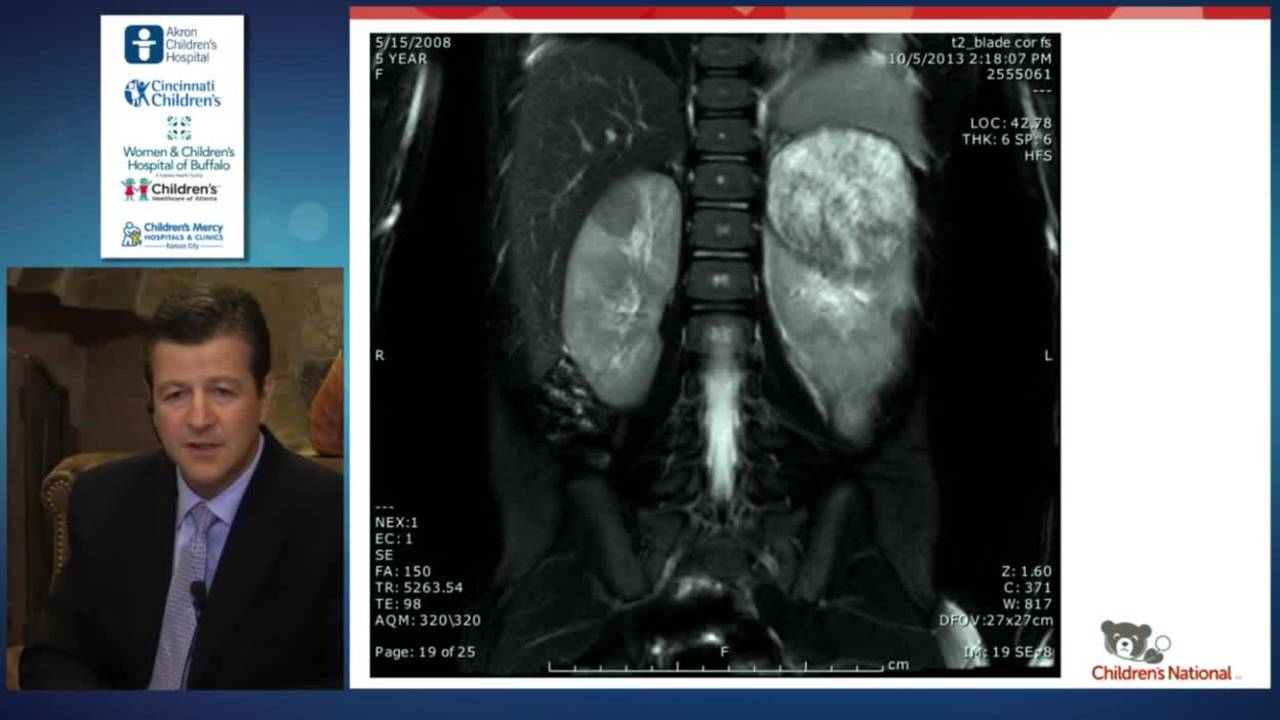
Wilms Tumor Rapid Fire: Update Course 2015
8 min · Published Nov 2015
Podcast
Neuroblastoma
56 min · Published Aug 2019
Podcast
Topics in 10: Wilms Tumor
12 min · Published Aug 2019
Video
Wilms Tumor
Published May 2020
Video
Clinical & Research Update: Neuroblastoma with Drs. Katherine Somers, Cara Morin, Juan Gurria, and Meera Kotagal
67 min · Published Sep 2026
Podcast
Routine Anal Dilations After PSARP: Questioning a Decades-Old Practice
2 min · Published Nov 2026
Podcast
Pediatric Surgery Literature Updates: Lymphatic Malformations, G-Tube Complications, and Cryptorchidism Timing
4 min · Published Nov 2026
Podcast
Botox injection during Hirschsprung pull-through: evidence and technique considerations
1 min · Published Nov 2026
Podcast
Central line troubleshooting and vascular access preservation in pediatric patients
2 min · Published Nov 2026
Podcast
Colorectal Quiz Episode 50: Key Takeaways from the 16th European Pediatric Colorectal Conference
24 min · Published Nov 2026
Podcast
Nerve monitoring and risk stratification in pediatric thyroid surgery
6 min · Published Nov 2026
What the experts said
European colleagues would offer chemotherapy without biopsy for Wilms tumor, while North American/COG sites would perform resection and diagnosis first.
Doxorubicin should be added when there is loss of heterozygosity at 1P and 16Q because that shows higher recurrence.
For surgeons, there will be more waiting for biology results before determining if chemotherapy is needed, affecting timing of port placement.
It is not accurate to tell families that children under 2 years of age with tumors under 550g will not need chemotherapy, because biology studies may require adding chemotherapy if loss of heterozygosity at 1P16Q is present.
Even in stage 1 favorable histology, if loss of heterozygosity is present, chemotherapy is still added.
The case tumor was stage 2 Wilms tumor because it involves the renal sinus and lymphovascular spaces, with overall favorable histology.
Loss of heterozygosity is the loss of genetic diversity in tumor cells and in Wilms tumor can indicate more aggressive disease.
Gain of 1Q refers to an extra copy of a section of chromosome 1, which is linked to worse outcomes in some cancers.
Children's Oncology Group updates state that adverse biologic factors are associated with worse prognosis in stage 2 patients, but not in stage 1 favorable histology Wilms tumor patients.
The North American Children's Oncology Group approach often involves immediate surgery for Wilms tumor.
The European Society of Pediatric Oncology approach typically starts with chemotherapy before surgery for Wilms tumor.
Genetic markers like loss of heterozygosity at specific chromosomes can indicate higher risk of cancer recurrence and guide decisions about adding chemotherapy.