

From
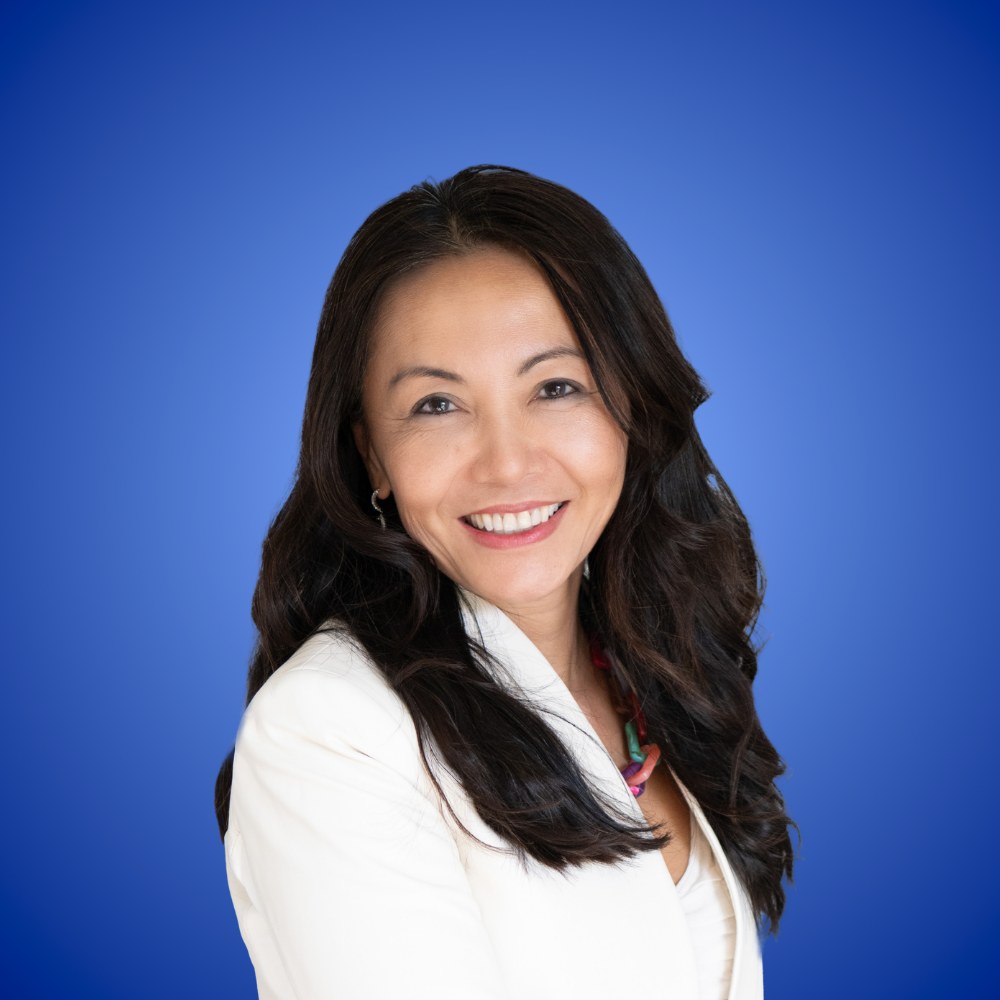
Dr. Diana Ponsky
Building a Rhinoplasty Practice: Lessons from Academic to Private Transition
With Dr. Diana Ponsky · hosted by Dr. Catherine Maley
Chapter 1 of 8
Career origins
Introduction and Career Path into Facial Plastic Surgery
Expert statements on this page
No expert statements were drawn from this page.
Host summaries · secondary, not cited in answers
Educational content from recorded physician discussions — not medical advice. Talk to your (or your child's) care team about your situation.
Podcast
Surgeon Diana Ponsky: Overcoming Labels and Achieving Success with Linda Kreter
Dr. Diana Ponsky · 34 min · Published Oct 2026
Video
UltraClear laser skin rejuvenation: technology overview and clinical applications
Dr. Diana Ponsky · 49 min · Published Sep 2026
Video
Pre-Wedding Aesthetic Treatment Planning with Dr. Diana Ponsky
Dr. Diana Ponsky · 1 min · Published Sep 2026
Video
Deep plane facelift with fat transfer for facial rejuvenation
Dr. Diana Ponsky · 1 min · Published Jul 2026
Video
A day well spent with Dr. Ponsky!
Dr. Diana Ponsky · 31 s · Published Jun 2026
Video
FACE FACTS: Plastic Surgeon Dissects Facial Aging & Tom Brady! Has he gone under the knife?
Dr. Diana Ponsky · 1 min · Published Jun 2026
What the experts said
Dr. Ponsky's path into medicine was influenced by working as a front office receptionist for a dermatologist who had a heart condition, which she helped with over 8 years.
Dr. Ponsky fell in love with ENT for the intricacies of head and neck cancer surgery during medical school rotations.
Working at the VA for 2 years while her husband did his fellowship led Dr. Ponsky to fall in love with rhinoplasty.
Dr. Ponsky left the university completely in August 2020 to focus on private practice after years of hybrid practice.
The university became difficult because they would have staff work with 10 different surgeons, creating scheduling conflicts.
Patients would get angry at Dr. Ponsky because the hospital billing system couldn't properly handle functional nasal surgery combined with cosmetic nasal surgery.
In Dr. Ponsky's current practice, about 80% of cases are cosmetic and 20% involve functional insurance issues.
The Department of Otolaryngology/facial plastics advertised Dr. Ponsky purely in the nasal arena at the university because plastic surgery took over everything else.
Dr. Ponsky trained in all facial plastic procedures with Bahman Guyuron during her fellowship.
About 75% of Dr. Ponsky's surgeries are rhinoplasties, with 15-20% facelifts and the rest blepharoplasties and brow lifts.
Dr. Ponsky splits her time evenly between non-surgical and surgical days.
The younger generation is more likely to try non-surgical treatments early on as an educational process for prevention.
More established plastic surgeons in the community will not do Botox or fillers and send patients to dermatology, focusing only on surgical cases.
Dr. Ponsky's chairman allowed her to rent space in the plastic surgery building for 2 days a week for 2 years as a transition step.
Dr. Ponsky's office is in a mixed-use business building on the same floor as gastroenterologists with a surgical suite and dental/oral surgery offices.
Dr. Ponsky had a 5-year lease which she just renewed on her boutique office space.
Dr. Ponsky stayed in the same geographic area where she worked previously, which provided referrals from internists, pediatric offices for broken noses, and dermatology practices.
Dr. Ponsky employs a social media manager who runs her own company, meeting weekly to discuss ideas and maintain consistent messaging.
Dr. Ponsky uses Elegant Brands (BSM) who connected her with a digital marketing expert who joins weekly social media meetings.
Dr. Ponsky's husband is a pediatric surgeon who does educational webinars on multiple platforms and has helped with marketing tips.
Dr. Ponsky's most valuable marketing resource is an employee with no formal marketing education who worked at the Museum of Art and serves as creative director.
Dr. Ponsky initially picked staff for experience but now picks for personality fit after learning that not every personality meshes well together.
HR is the toughest part of running Dr. Ponsky's practice, and she found managing people to be her biggest challenge.
Dr. Ponsky's current team includes someone who has been with her for 5 years, an RN training to be an NP for over 1 year, a creative director, and a front desk person.
Dr. Ponsky's biggest business mistake was going into business with a family member (her husband's cousin) who was at a different career level (resident when she was attending).
The partnership with the family member didn't work out, but both parties are better off now with latitude to do what they want.
Dr. Ponsky is considering hiring one or two more nurse practitioners while trying to keep the practice boutique.
Dr. Ponsky went into private practice because she loves helping people and operating, and feels she has a knack for recognizing what is natural and delivering it with integrity.
Dr. Ponsky wants to be around for her kids until they leave for college, which is part of why she went into private practice.
In Ohio, a nurse injector can inject with the physician in proximity, but it's harder to regulate if the physician leaves town, whereas an NP has more latitude to work independently.
Dr. Ponsky has trained her current nurse practitioner for over a year, including taking her into the OR to show anatomy, rather than sending her to courses taught by instructors who may never have seen deeper anatomy.
Dr. Ponsky relies on multiple discussions with rhinoplasty patients to get a sense of their motivation and personality, typically requiring two or three meetings.
Dr. Ponsky structures rhinoplasty consultations as: initial consultation, a discussion meeting, and a pre-op discussion with her nurse before she comes in for final questions.
Dr. Ponsky has turned away two rhinoplasty patients because they showed suspect signs between the 2nd and 3rd visit indicating she couldn't achieve all their goals.
The human nose is not an inanimate object like a car door that can be pounded out to perfection or given the right color.
Morphing software is the biggest leveling field for managing rhinoplasty expectations, a tool that earlier mentors didn't have when they would draw overlays.
Dr. Ponsky shows rhinoplasty patients examples of cases where she had to take someone back for insufficient reduction or cases with soft tissue polybeak requiring injection and follow-up.
Dr. Ponsky follows rhinoplasty patients for up to 1 year, seeing them at least 5 times during that journey, and offers more visits if patients need to ask questions.
One rhinoplasty patient didn't disclose she had a chin implant and wanted to enlarge it eventually, which would affect the rhinoplasty morph discussion.
Dr. Ponsky gets input from her staff about rhinoplasty patients because everybody has different interactions, which is very helpful.
One red flag patient made 8 morphs of what her nose would look like with very specific slope preferences.
Dr. Ponsky doesn't get celebrity photos from rhinoplasty patients as much anymore because she tells them she'll create a version of them based on their features, not someone else's.
Kim Kardashian's nose won't look good on someone with a round face.
Dr. Ponsky tells rhinoplasty patients they don't want to be like Michael Jackson pursuing surgery after surgery because they didn't narrow down the essence of what they're looking for.
Rhinoplasty patients are the happiest, most emotional patients who are always crying on Instagram because it's such a transformation.
Dr. Ponsky tells rhinoplasty patients that when the nose is balanced in the face, no one notices it anymore because it's no longer the leading feature.
Rhinoplasty patients always come back and say Dr. Ponsky was right that they spent so much time fixated on their nose, and now no one says anything about it.
Dr. Ponsky enjoyed learning about business and marketing more than expected, despite having no formal training.
Private practice is going to swing back as more physicians go out on their own due to restrictions and hospitals showing more acute care patients.
The AMA is starting a subsector of education on returning to private practice.
Multi-specialty groups are not as popular now because they are almost an institution.
The best surgeon on the planet will get trumped by the best marketer on the planet, at least in the short run.
Dr. Ponsky has three daughters: a 16-year-old who is 1 inch taller than her, a 12-year-old, and a 10-year-old.
Dr. Diana Ponsky is board-certified in facial and reconstructive surgery with a private practice in Beechwood, Ohio for 6 years and has performed more than 1,500 rhinoplasties.
Dr. Ponsky is an assistant professor for the Department of Otolaryngology at University Hospitals.