
Hirschsprung
With Dr. Mark Levitt · Marc Levitt
Educational content from recorded physician discussions — not medical advice. Talk to your (or your child's) care team about your situation.
More about Hirschsprung's disease
same diagnosisPodcast
Hirschsprung's Disease with Dr. Marc Levitt
Marc Levitt · 22 min · Published Jul 2026
Video
Surgical treatment for Hirschsprung’s Disease: An ERNICA animation for parents and families
3 min · Published Dec 2023
Podcast
The Colorectal Quiz Episode 20: Hirschsprung Disease Obstruction Part 2
21 min · Published Sep 2021
Podcast
The Colorectal Quiz Episode 22: Hirschsprung Disease - the Soiling Patient Part 1
19 min · Published Nov 2021
Video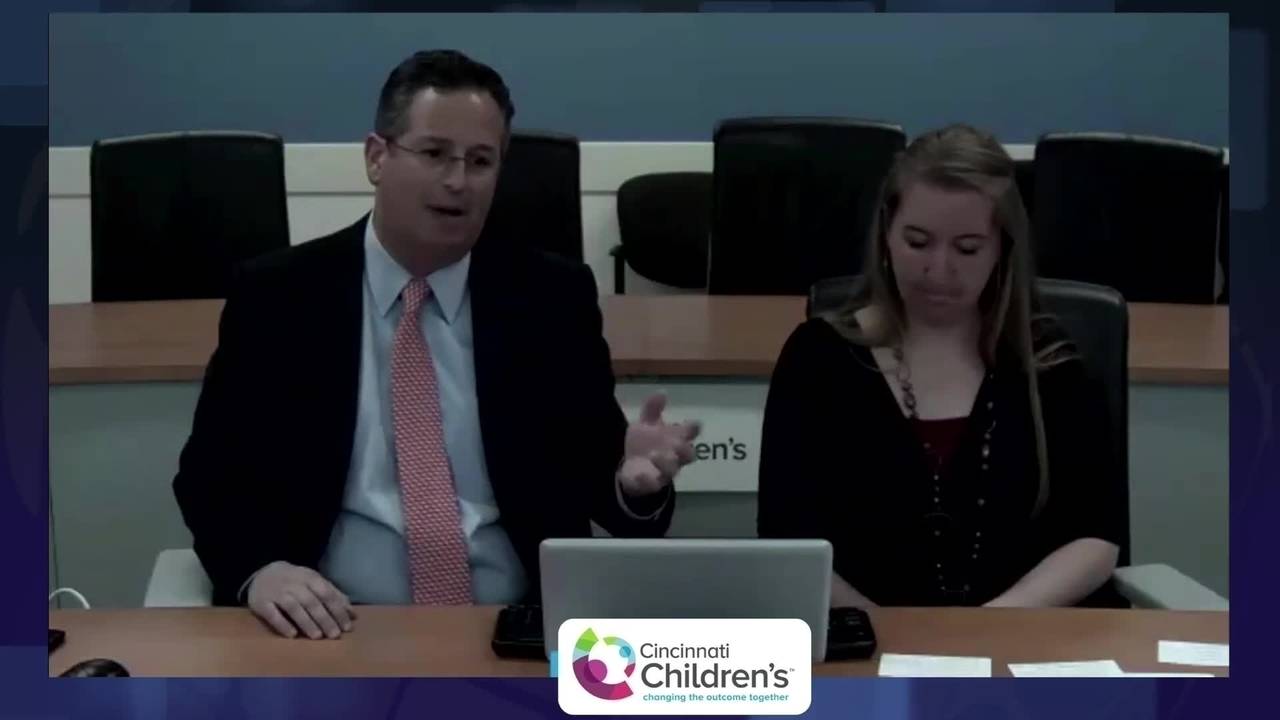
Bowel Management Updates & Innovations with Live Q&A: April 2018
CCHMC Pediatric Surgery · 61 min · Published Apr 2018
Podcast
The Colorectal Quiz Episode 23: Hirschsprung Disease - The Soiling Patient Part 2 -The Dentate Line and Motility
26 min · Published Dec 2021
Podcast
(500) Days of Summer (classic Movie Review: Zooey Deschanel, Joseph Gordon-Levitt, Marc Webb) by The Cory Baker Show
Marc Levitt · Published Aug 2026
Video
Meeting with Marc Levitt: Clinical Discussion with Ivon Martinez
Marc Levitt · Published Jul 2026
Video
Introducing Dr. Marc Levitt: Pediatric Colorectal Surgeon Profile
Marc Levitt · Published Jul 2026
Video
Integrated Care Concept in Pediatric Colorectal Surgery by Marc Levitt
Marc Levitt · Published Jul 2026
Video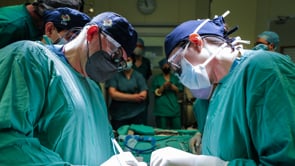
Patient Outreach and Communication in Pediatric Colorectal Surgery
Marc Levitt · Published Jul 2026
Video
Keynote Address on Pediatric Colorectal Surgery by Dr. Marc Levitt
Marc Levitt · Published Jul 2026
Podcast
Colorectal Quiz: Episode 49 - Collaborating for Kids: Colorectal & Pelvic Solutions (with a Little Help from AI)
Marc Levitt · 40 min · Published Jul 2025
Podcast
Colorectal Quiz: Episode 49 – Collaborating for Kids: Colorectal & Pelvic Solutions (with a Little Help from AI)
40 min · Published Jul 2025
Podcast
Colorectal Quiz: Episode 46
Marc Levitt · 29 min · Published Apr 2025
Podcast
Colorectal Quiz: Episode 46
Marc Levitt · 29 min · Published Apr 2025
Podcast
Colorectal Quiz: Episode 43
Marc Levitt · 23 min · Published Jan 2025
Podcast
Colorectal Quiz: Episode 43
Marc Levitt · 23 min · Published Jan 2025
Video
Dr. Marc Levitt on the CTO Mission in Pediatric Colorectal Surgery
Marc Levitt · Published Jul 2026
Video
Addressing Ministers of Health: Pediatric Colorectal Surgery Advocacy and Global Healthcare Priorities
Marc Levitt · Published Jul 2026
Video
Andrea Kesar Discusses Marc Levitt's Contributions to Pediatric Colorectal Surgery
Marc Levitt · Published Jul 2026
Video
Introduction to Dr. Marc Levitt's Pediatric Colorectal Surgery Practice
Marc Levitt · Published Jul 2026
Video
The History of International Colorectal Surgery Team Development
Marc Levitt · Published Jul 2026
Video
The value and weakness of Medical Mission Work in ARM
Marc Levitt · Published Jul 2026
What the experts said
Maternal magnesium sulfate or other tocolytic medications can cause significant ileus in the newborn that mimics Hirschsprung's disease.
Hypothyroidism and opiate exposure (maternal addiction or overdose transmitted to baby) can present with abdominal distension and delayed meconium passage mimicking Hirschsprung's disease.
Milk protein allergy in a fed baby can mimic Hirschsprung's disease on x-ray, and irrigations help even when it is not Hirschsprung's.
Ten percent of patients with meconium plug have Hirschsprung's disease, so suction rectal biopsy should be performed even after successful plug passage.
After meconium plug passage, the contrast study should be repeated because the initial study with plug present will show dilated rectosigmoid, but the repeat study will reveal the transition zone more clearly.
In total colonic Hirschsprung's disease, there is often no obvious transition zone on contrast study.
Suction rectal biopsy is the gold standard for diagnosing Hirschsprung's disease, and some centers proceed directly to biopsy without contrast study.
Contrast study serves as a surgical GPS map of the colon anatomy and is preferred before operating, even though biopsy alone can rule out Hirschsprung's.
The physiologic obstruction in Hirschsprung's disease leads to stasis, bacterial overgrowth, and bacterial translocation because mucosal integrity is abnormal.
A constipated baby without Hirschsprung's disease will not develop enterocolitis because their mucosal integrity and IgA levels are normal.
Down syndrome patients with Hirschsprung's disease have worse enterocolitis because they have a weaker immune barrier.
Irrigation protocol: use a 20 French soft silicone Foley catheter with warm saline in 10-20cc aliquots, washing the inside of the colon by injecting, allowing drip-back, advancing the catheter a few centimeters, and repeating for up to 30 minutes.
Irrigations should be performed two to three times per day and require a written protocol so nurses know exactly what is expected.
If irrigations are performed correctly but do not reach the transition zone, the baby will remain distended and irrigations will not be effective.
When irrigations fail despite correct technique, the surgeon must decide between a leveling colostomy (bringing dilated bowel to surface, ideally with frozen section confirmation) or an ileostomy with colonic biopsies.
Ileostomy does not require intraoperative pathology at 3 AM, the baby will thrive, and full colonic pathology data can be obtained later, but it requires three operations instead of two.
In regions where ileostomy management is difficult and babies can dehydrate quickly, ileostomy may not be appropriate.
A leveling colostomy is usually accurate when placed in dilated bowel to the surgeon's eye, but the risk is opening a colostomy still in the transition zone.
A loop ileostomy where both limbs are equal is inappropriate because stool will jump across and fill the aganglionic segment, causing continued distension and potential enterocolitis despite diversion.
A Turnbull ileostomy (cutting the bowel completely on one side of the loop, intussuscepting it over a finger to create an end-stoma appearance with flat distal opening) or a divided ileostomy with proximal end brought up and distal limb tacked to it are both appropriate diversion techniques.
Post-pull-through patients present with two distinct problems: obstruction (chronic distension, enterocolitis episodes, failure to thrive) or soiling (no distension, no enterocolitis, uncontrolled stooling).
Anatomic causes of post-pull-through obstruction include inadequate Soave cuff (not cut enough, rolled up, or refused), twisted pull-through (180 or 360 degrees), Duhamel spur (two lumens not successfully joined), large Duhamel pouch reaching into pelvis, stricture, and transition zone pull-through.
A Soave cuff feels like a rubbery circumferential ring outside the pull-through on digital exam.
A twisted pull-through prevents the examining finger from entering the pelvis; on abdominal palpation you feel like you are hitting a wall.
Contrast study may show a cuff by revealing extra presacral space on lateral view; the pull-through should hug the sacrum, and a cuff pushes it forward.
In Duhamel patients, biopsy must be taken from the posterior wall because the anterior wall is the original aganglionic rectum.
If anatomic causes and pathology are normal in an obstructed post-pull-through patient, the problem is non-relaxing sphincters, and empiric Botox is appropriate.
Every child born with Hirschsprung's disease has 100% potential for bowel control because the continence mechanism is normal and the sphincters are strong, not weak.
This is very different from anorectal malformation, where associated spinal problems, poor sacrum, or poor muscles can prevent continence despite a perfect operation.
Overstretching of sphincters or starting transanal dissection too low (removing the dentate line) will cause iatrogenic fecal incontinence.
Patients with damaged sphincters or removed dentate line need mechanical bowel management with enemas from below (Peristeen) or antegrade (Malone) because they lack continence potential.
If the anus appears closed when the patient is awake, that usually indicates good sphincters.
Anorectal manometry can objectively determine whether sphincters are intact.
The vast majority of Hirschsprung's patients are constipated and need stimulant laxatives (senna or bisacodyl), not stool softeners.
Adding water-soluble fiber to stimulant laxatives provides bulk to prevent watery stool, which is difficult to control, while maintaining propulsion effect.
The goal of medical management is one to two well-formed stools per day, which usually translates into successful continence.
Soiling patients who are withholding or have not learned to overcome their non-relaxing internal sphincter often need Botox to achieve successful potty training.
Some Hirschsprung's patients have hypermotility and stool too frequently; stopping stimulant laxatives in these patients can achieve continence within two days.
X-ray showing no stool accumulation in a child stooling five times per day indicates fast-moving colon (hypermotility).
Contrast study distinguishes constipated (dilated colon) from hypermotile (non-dilated colon) patients.
Hypermotile patients need constipating diet, water-soluble fiber, and occasionally loperamide to slow transit and achieve one to two formed stools per day.
Nighttime soiling is typical because patients are totally dependent on voluntary external sphincter control, which they lose awareness of during sleep.
Behavioral interventions for nighttime soiling include ensuring the child stools before bed and giving a small enema before bed to keep the rectum empty for eight hours.
Malone appendicostomy is appropriate when rectal enemas are not tolerated, Peristeen is ineffective, or the family prefers not to use the rectal route.
Malone is typically performed between ages 3.5 and 8-9 years, around the time of potty training when it becomes clear that antegrade flushes will be required.
Most children should be in normal underwear (out of diapers) by age 3-4 years.