

Update course rewind: 2024 top ten key takeaways in pediatric surgery
With Dr. Ramy Shaaban
Chapter 1 of 10
Hybrid OR collaboration
Collaboration of Surgery and Interventional Radiology in the OR
Expert statements on this page
No expert statements were drawn from this page.
Host summaries · secondary, not cited in answers
Educational content from recorded physician discussions — not medical advice. Talk to your (or your child's) care team about your situation.
Video
Update Course Rewind: When & How to Operate CDH Patients on ECMO 2024
4 min · Published Aug 2025
Video
Update Course Rewind: When & How to Operate CDH Patients on ECMO 2024 Part 2
4 min · Published Aug 2025
Video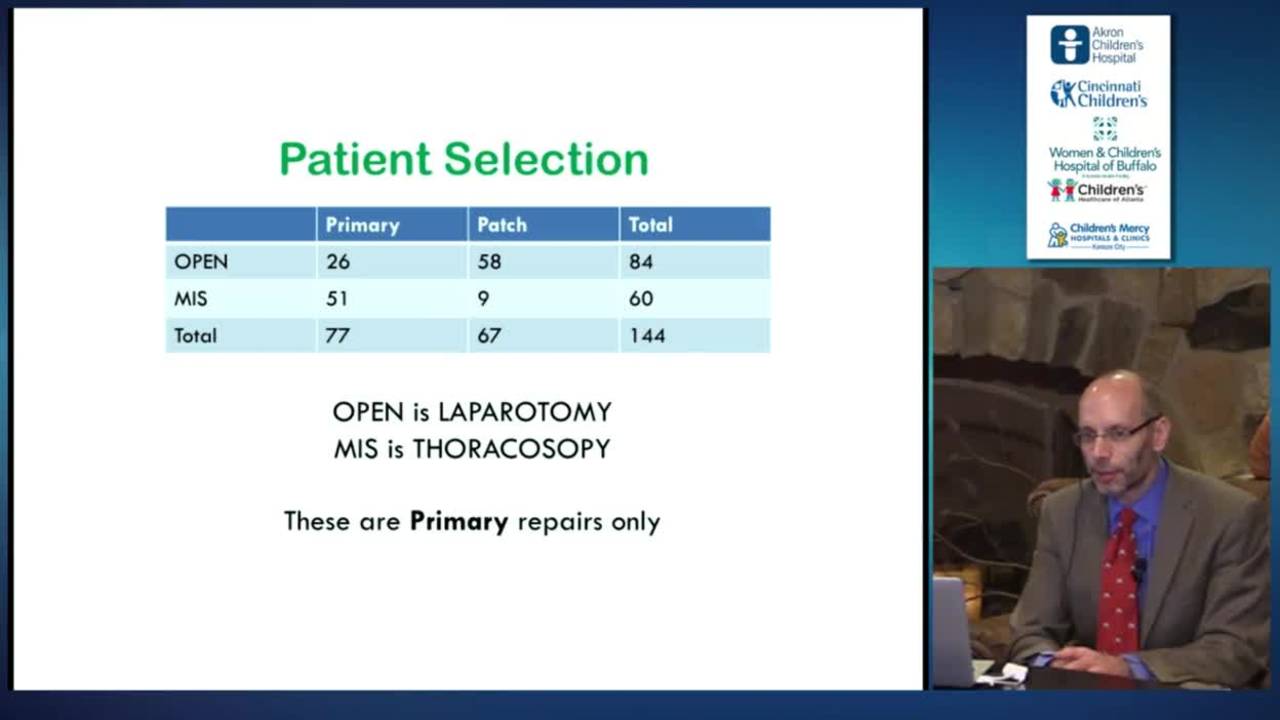
CDH - MIS vs. Open: Update Course 2015
5 min · Published Nov 2015
Video
Controversies in Congenital Diaphragmatic Hernia: Update Course 2018
41 min · Published Aug 2018
Video
BOB Ped Surg 2023 - Shelby Sferra, AAP - Presentation
5 min · Published Feb 2023
Video
BOB in Ped Surg 2023 - AAP Winner - Shelby Sferra, MD
11 min · Published Feb 2023
Video
2025 Pediatric Surgery Update Course: Top 10 Key Takeaways #9
Ramy Shaaban · 2 min · Published Jul 2025
Podcast
Update Course Rewind: 2024 Top Ten Key Takeaways
Ramy Shaaban · 18 min · Published Jun 2025
Podcast
Update Course 2024 - AI: TOP 10 websites & tools for everyday usage
Ramy Shaaban · 23 min · Published May 2025
Podcast
Practical applications of generative AI in medical research and education
Ramy Shaaban · 23 min · Published May 2025
Podcast
Top 10 AI Websites and Tools for Medical Research and Education
Ramy Shaaban · 23 min · Published May 2025
Podcast
Update Course Rewind: Top Disruptive Technologies 2022
Ramy Shaaban · 12 min · Published Feb 2023
What the experts said
Switching to early repair in low-volume institutions (one or two children on ECMO per year for CDH) is a challenge requiring whole team buy-in.
ERCP causes pancreatitis 10% of the time regardless of operator skill.
Cross training occurs at Cincinnati Children's with interventional radiologists teaching pediatric surgery fellows how to use ultrasound guidance for vascular access.
You don't have to have a hybrid OR to do image-guided surgery collaboration; it can occur in a regular OR by bringing in an ultrasound machine.
Cone beam CT is a CT scan performed on a C-arm fluoroscopy unit that rotates around the patient collecting multiple images which are stacked together to create a CT.
ChatGPT can screen thousands of articles in systematic reviews by analyzing Excel sheets based on title and abstract, with explanatory columns for decision rationale.
In cryoanalgesia for pectus, a double lumen endotracheal tube deflates the lung on the side of cryoablation and the surgeon uses a thoracoscope to guide the cryoprobe through axillary incisions from T3 to T8.
After cryoablation, subpleural injection with 0.25% marcaine with epinephrine works immediately as opposed to the 8 to 10 hour delay with the cryo nerve block.
Cryoanalgesia blocks that don't work are invariably from surgeons using a single lumen tube and doing the block too far anteriorly.
The SEER protocol from Michigan used prenatal criteria to guide decisions on offering ECMO versus comfort care for severe unilateral CDH, and outcomes showed survival was equivalent between groups.
For every unilateral isolated CDH with good prenatal counseling, ECMO should be pursued.
With bivalirudin, you can operate after 8 hours of ECMO as long as levels are stable, and it's a much easier surgical repair.
Early repair while on ECMO is safe with optimal window between 8 to 24 hours.
CO2 laser operates in the spectrum of 920 to 1400 nanometers which is well absorbed by water.
In 56 circumcision cases using CO2 laser with sleeve technique, dorsal slit and cyanoacrylate adhesive, the complication rate was only 3%.
CO2 laser was used for frenulectomy in 47 patients with low pain profile and no suture required.
A randomized controlled trial from France demonstrated that autofluorescence reduces rates of hypoparathyroidism and hypocalcemia following thyroidectomy.
Hypocalcemia rates were about 50% lower with autofluorescence versus not using it.
A surgery-first pathway for pediatric biliary stones reduces resource utilization including MRCP.
With a surgery-first mindset, stone clearance rate reflected by negative intraoperative cholangiogram was 86%, and with simple interventions like flushing or reaming the sphincter, success rate was in the 90s.
MMP-7 was identified about 10 years ago by Georgia Bizarro's lab as a diagnostic biomarker for biliary atresia.
Data from a recent Midwest study shows that every 10 day delay in Kasai treatment worsens outcomes by 20%.
MMP-7 is not a validated biomarker for biliary atresia and the sensitivity is pretty good but cutoffs vary because the assay is still evolving.
Cincinnati Children's commitment is to perform Kasai procedure within 7 days of patient presentation if they have biliary atresia.
REBOA can be used in children but is rarely done in pediatric hospitals.
REBOA takes longer than opening the abdomen or chest if you're just needing to cross clamp the aorta.
Most surgeons favor laparotomy over REBOA for quickly treating shock in a controlled environment.
Patients presenting with wounds as their initial presentation for pilonidal disease tend to not always reach full healing with a minimally invasive approach.
John Armstrong's US Army clinic with captive patient population implemented weekly shaving protocol and observed dramatic improvement, significantly reducing need for surgical intervention in pilonidal disease.
If you're not pushing hair removal and meticulous hygiene in pilonidal disease, you're probably going to end up operating on some people that might not need an operation.
For pilonidal disease, if there's a parent or active caregiver involved, clipping is probably the easiest and simplest approach, with once weekly recommended frequency.