
ERNICA Research Collaboration Webinar on Quality of Life
With Dr. Andre Rietman & Dr. Mikaela Delemark · hosted by Dr. Jens Sterman · EUPSA/ERNICA
Part of
Esophageal Atresia 52 items
Cued at 33:20 · stops at 34:05 · press play
Educational content from recorded physician discussions — not medical advice. Talk to your (or your child's) care team about your situation.
Podcast
Journal of Pediatric Surgery Article Review: 2nd Quarter (Apr-Jun) 2024
17 min · Published Sep 2024
Video
Quick Literature Updates Ep 22
4 min · Published Oct 2025
Podcast
Journal of Pediatric Surgery Article Review: January 2022 APSA Issue
13 min · Published Feb 2022
Video
Cuidado de transición en malformación anorrectal y enfermedad de Hirschsprung
1 min · Published Jul 2024
Video
Finnish Pediatric Surgery Hub - From Centralization to Collective Learning and Sharing of Expertise
48 s · Published Feb 2025
Podcast
Cloacal Exstrophy with Dr. Alberto Peña
53 min · Published Apr 2017
Only a few other public items share this expert — go deeper there →
Video
What is Gastroschisis? An ERNICA animation for parents and families
2 min · Published Dec 2023
Video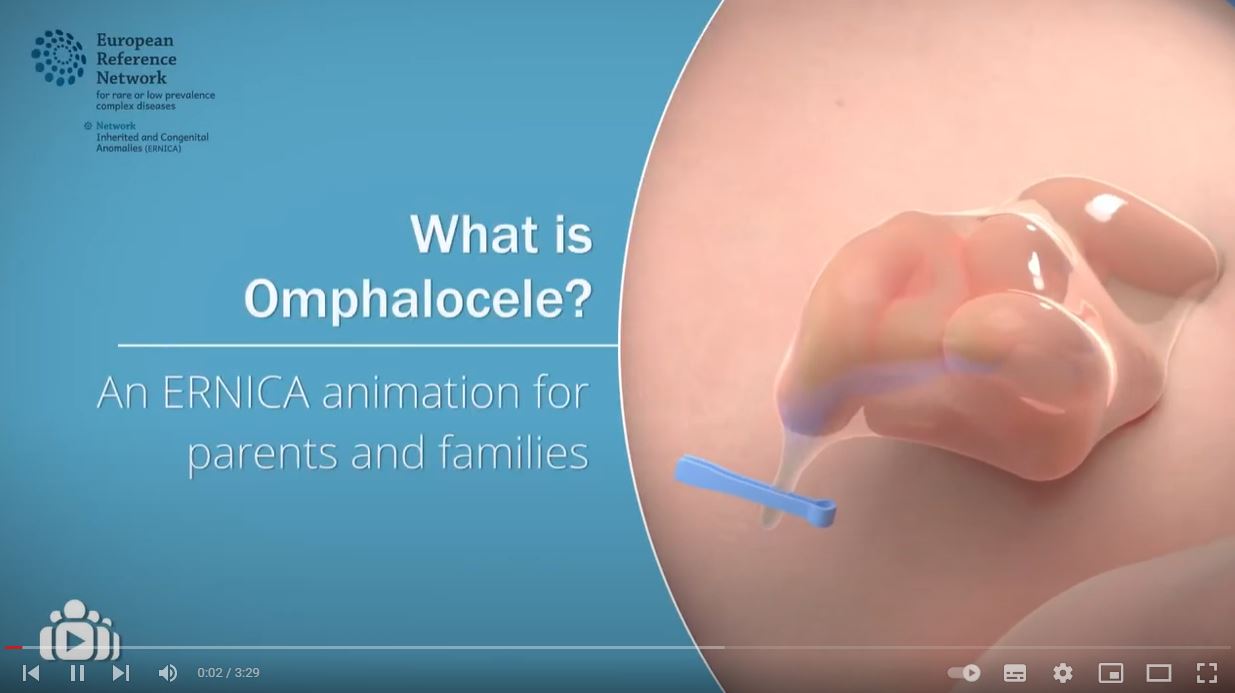
What is Omphalocele? An ERNICA animation for parents and families
3 min · Published Dec 2023
Video
What is Congenital Diaphragmatic Hernia (CDH)? An ERNICA animation for parents and families
3 min · Published Dec 2023
Video
What is small bowel atresia?: An ERNICA animation for parents and families
4 min · Published Dec 2023
Video
Hirschsprung-associated enterocolitis in children: An ERNICA animation for parents and families
3 min · Published Dec 2023
Video
Surgical treatment for Hirschsprung’s Disease: An ERNICA animation for parents and families
3 min · Published Dec 2023
What the experts said
Health-related quality of life (HRQoL) is a narrower concept than general QoL, relating specifically to the individual's perception of the impact of disease and treatment on physical, social, and psychological functioning and well-being.
Generic HRQoL assessments allow comparison between healthy people and patients; condition-specific assessments are more sensitive to treatment response but do not permit external comparison.
Most development of QoL and HRQoL concepts has occurred in the last few decades, with WHO defining three dimensions of health in 1948 and HRQoL entering clinical research in the late 1980s–early 1990s.
PROM development follows six steps: literature review, qualitative elicitation (interviews/focus groups), item drafting, cognitive debriefing/pilot testing, item revision, and psychometric evaluation (validity, reliability, responsiveness).
Cross-cultural PROM validation requires linguistic/semantic equivalence (correct translation), conceptual equivalence (similar domain importance across cultures), and measurement equivalence (same construct measured, comparable scores).
Generic HRQoL instruments (PedsQL, CHQ, SF-36) typically cover physical, emotional/mental, and social functioning domains.
The DCGM-25 (DISABKIDS Chronic Generic Measure) uniquely focuses on the emotional process of satisfaction, a more subjective process, in addition to functional appraisal.
Proxy ratings (parent reports) and self-ratings correlate but not highly, indicating they represent two distinct perspectives on the patient's life satisfaction.
The Haquel (Hirschsprung disease and anorectal malformation quality of life questionnaire) was developed in the Netherlands over 20 years ago, has acceptable-to-good internal consistency (Cronbach's alpha), discriminates between disease-severity subgroups, and shows substantial but not excessive correlation with the generic SF-36.
The EA-QoL (esophageal atresia quality of life) questionnaires followed a rigorous development process: qualitative research, cross-cultural item generation, translation into 15 countries, and cognitive debriefing to ensure parallel cultural content.
The SCIA (adult esophageal atresia questionnaire) was developed because the SF-36 and existing gastrointestinal/respiratory symptom indexes did not capture the full range of health problems in adults with EA.
Benefits of PROM use include bringing daily life into the hospital, improving care by prompting patients to contemplate important issues at home, and enabling comparison of clinical groups or intervention outcomes in research.
Costs of PROM use include patient burden (adolescents often dislike questionnaires), some patients' belief that questionnaires cannot fully capture their lived experience, the time required for interpretation and motivation, and lack of visible benefit when clinicians do not discuss results in consultation.
The DCGM-25 uses five smiley-face response options (two sad, one neutral, two happy) instead of verbal labels, making it easier for children with language-processing difficulties, non-native speakers, or intellectual disabilities to complete.
In rare pediatric-surgery conditions, cultural validation is complicated because once you collect a population in one country, clinical characteristics may differ from another country's cohort, making it difficult to separate cultural from clinical influences on QoL perception.
A patient-reported outcome (PRO) is a report of the status of a patient's health condition that comes directly from the patient without interpretation by a clinician or anyone else.
Quality of life encompasses an individual's perception of their position in life, in the context of the culture and value system in which they live, and in relation to their goals, expectations, standards, and concerns (WHO definition).
A systematic review found that the majority of PROM studies in pediatric surgery originated in the Netherlands, followed by Sweden and the United States.
The systematic review identified 85 PROMs used in pediatric surgery, with most studies conducted in children and using a combination of generic and condition-specific instruments.
The most frequently studied conditions in pediatric-surgery PROM research are Hirschsprung disease, esophageal atresia, anorectal malformation, and congenital diaphragmatic hernia; gastroschisis, duodenal atresia, biliary atresia, short bowel syndrome, and sacrococcygeal teratoma are less frequently studied.
Fayed argued that the PedsQL is in fact a measurement of health status rather than quality of life, because it emphasizes functional appraisal (a cognitive process) over subjective satisfaction (an emotional process).
An Italian study (2010) translated the Haquel for anorectal malformation patients (parents and adults) without a formal cultural-validation step, and a French study later proposed a two-factor structure (physical and psychosocial) because some items did not cluster as in the Dutch original.
Large reviews show that children under age 8 give highly variable self-reports of health (asking the same question tomorrow yields a different answer), so most questionnaires start at age 8; the PedsQL includes a version for children as young as 5.