
QUAD #27 - Multidisciplinary - How Do Teams Enhance Outcomes by the CCHMC ADEC Team
With Dr. Claire Miller & Dr. Scott Pentik & Dr. Sherry Torres Silva · hosted by Dr. Lizzie Lee · StayCurrentMD
Cued at 1:28 · stops at 2:13 · press play
Educational content from recorded physician discussions — not medical advice. Talk to your (or your child's) care team about your situation.
Video
QUAD #1: Cervical Tracheopexy with Dr. Alessandro de Alarcon
Dr. Todd Ponsky · 5 min · Published Dec 2023
Video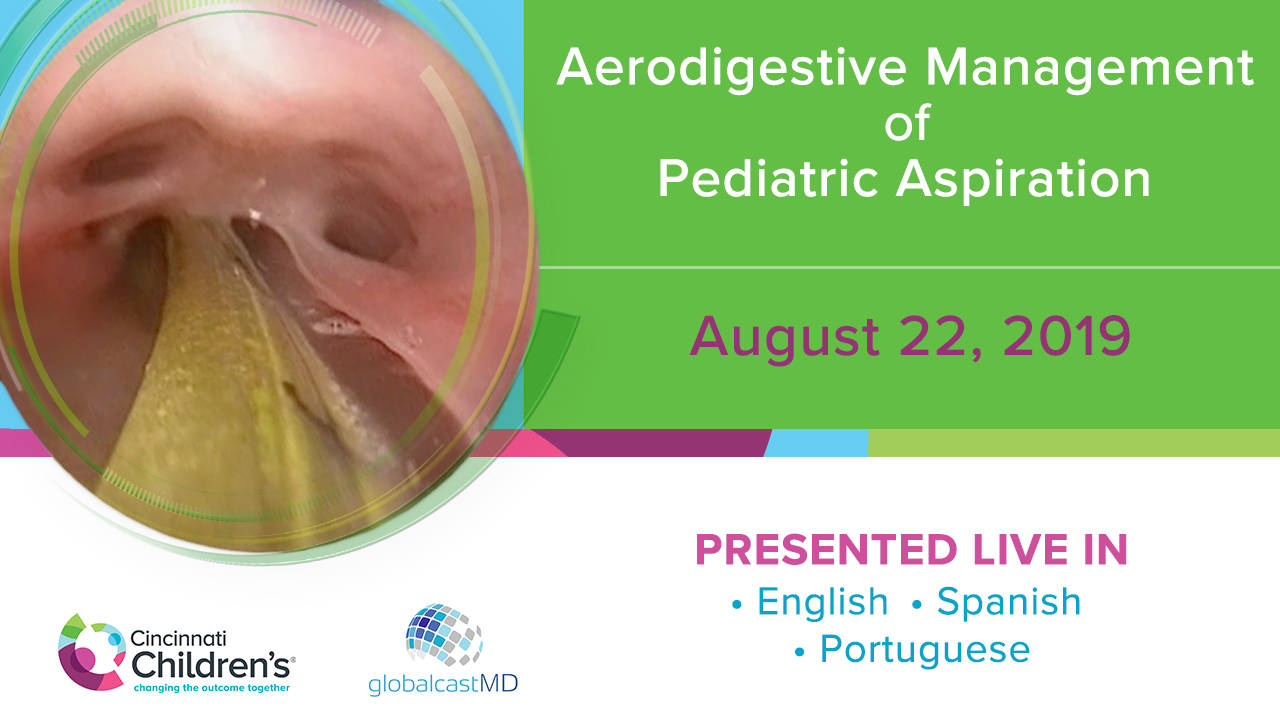
Aerodigestive Management of Pediatric Aspiration - FULL SHOW
CCHMC Pediatric Surgery · 157 min · Published Jul 2020
Podcast
Tracheoesophageal Fistula with Dr. Daniel von Allmen
45 min · Published Dec 2016
Video
Thoracoscopic TEF Repair, Is It Really Better Than Open? Update Course 2018
18 min · Published Aug 2018
Video
QUAD Conference Commercial
1 min · Published May 2022
Video
Top Themes From The Stay Current App
Published Sep 2020
Only a few other public items share this expert — go deeper there →
Video
Pediatric Surgical Oncology Research Collaborative (PSORC): Studying Rare Pediatric Tumors
56 s · Published May 2026
Video
Update Course Rewind 2025: Hirschsprung + ARM: Rare but Real
1 min · Published May 2026
Video
Update Course Rewind 2025: Hirschsprung + ARM: Rare but Real
1 min · Published May 2026
Video
Pooling Patients to Study Rare Pediatric Tumors: An Introduction to PSORC
56 s · Published May 2026
Video
The fetal frontier: A review of current and emerging fetal therapies for genetic diseases
44 s · Published May 2026
Video
Indocyanine green assists with sentinel lymph node mapping in pediatric and adolescent patients
1 min · Published May 2026
What the experts said
The vision of the Aerodigestive and Esophageal Center is to improve efficiency and communication between team members and the family.
The clinical assessment is a poor predictor when there are airway protection issues.
High-resolution pharyngeal manometry allows objective assessment of the pressures of the swallow to understand what is underlying a swallowing dysfunction.
Patients with TEF have a lot of other things other than incompetent lower esophageal sphincters, including motility problems, hernias, and delayed emptying.
Impedance is a tool used to measure reflux and distinguish between a swallow versus actual reflux.
Patients with eosinophilic esophagitis often have procedures performed on them even before their diagnosis.
The center now performs endoscopy as part of workup prior to even considering surgery.
Kids will have Nissans and then have hernias later.
Motility issues after TEF repairs include narrowing of the esophagus and the esophagus not squeezing, leading to more reflux, more dysphagia, and impactions.
Patients at risk for pulmonary insufficiency typically present with chronic symptoms including tachypnea, shortness of breath, retractions, non-apneic hypoxemia, and in older patients, exercise intolerance.
Patients at risk for chronic pulmonary aspiration include preemie babies, those with swallowing dysfunction, GI dysmotility, cardiothoracic esophageal and airway history, and syndromes including CHARGE syndrome, Mobius, Criducha, and trisomy.
Patients with airway obstruction, especially upper airway, will have symptoms with sleep and significant exertion or agitation, and noisy breathing might be one of the most significant symptoms reported.
Tracheomalacia is a very common comorbidity in patients with history of esophageal fistula or atresia.
High-resolution CT is the gold standard for diagnosis because it is highly sensitive and detects early changes of the small airways, and 3D reconstructions can be performed.
Flexible bronchoscopy is used starting in the nose and ending in the subsegmental bronchi, and bronchoalveolar lavage helps with identification of infections and markers of aspiration.
Pulmonologists perform medical management of aspiration including control of sialorrhea, optimization of airway clearance, and use of anti-inflammatory medications for chronic aspiration or inflammation.
Cincinnati Children's Hospital hosted the Quad Conference in October 2022, combining four conferences: International Organization for Esophageal Atresia, Aerodigestive Society Conference, Cincinnati Children's Airway Course, and Cincinnati Children's Pediatric Dysphagia Series.
Cincinnati Children's has one of the largest aerodigestive centers in the world.
The expert multidisciplinary team includes speech pathology, otolaryngology, gastroenterology, pulmonology, and pediatric general surgery.
The center provides coordinated multidisciplinary care to children with congenital or acquired complex digestive and airway disorders.
Video fluoroscopic swallowing study analyzes different phases of swallowing.
FEES (fiber optic endoscopic evaluation of swallowing study) allows visualization of pharyngeal and laryngeal structures and assessment of function, aspiration, and residual after each swallow.
ENT looks at swallowing study results and helps stratify the risk of proceeding with airway reconstruction and decannulation.
In aerodigestive patients, ENT performs esophageal and airway reconstruction, cleft repair, drool procedures, and manages vocal folds and mobility.
GERD pathophysiology includes an incompetent lower esophageal sphincter.
General signs and symptoms of GERD include regurgitation, vomiting, and heartburn.
Data shows an increase in airway surgery complications in patients who were later found to have eosinophilic esophagitis.
Anatomic issues in aerodigestive patients include strictures that need balloon dilations or stenting.
When 25 patients in the aerodigestive program were assessed, 76% of them had a feeding disorder.
Patients at risk for pulmonary insufficiency include preemies with chronic lung disease, patients with restrictive lung disease, congenital or acquired abnormalities, and heart disease like pulmonary hypertension.
Underlying pulmonary insufficiency should be suspected if patients have had complicated respiratory infections requiring positive pressure ventilation.
Risk factors for upper airway obstruction include airway abnormalities like mid-face hypoplasia, skeletal dysplasia, decreased muscle tone, and syndromes associated with airway obstruction.
Risk factors for lower airway obstruction include acquired or congenital thoracic deformities and those who had thoracotomies done in the past.
For patients with ventilatory insufficiency, the pulmonologist determines if the child still needs ventilatory support and whether they are ready for decannulation.
The pulmonologist assesses how ready the patient is for weaning from the vent and whether they can start or advance feeding.
In the NICU, general surgeons obtain feeding access, manage anorectal malformations, and perform surgical procedures such as tracheopexies and lung resections.