
 StayCurrentMD
Undescended Testicle
Everything in the library about undescended testicle — built automatically from the recorded discussions that name it
Educational content from recorded physician discussions — not medical advice. Always talk to your child's care team about your child's situation.
Content of this collection
Surgical Management
1 item
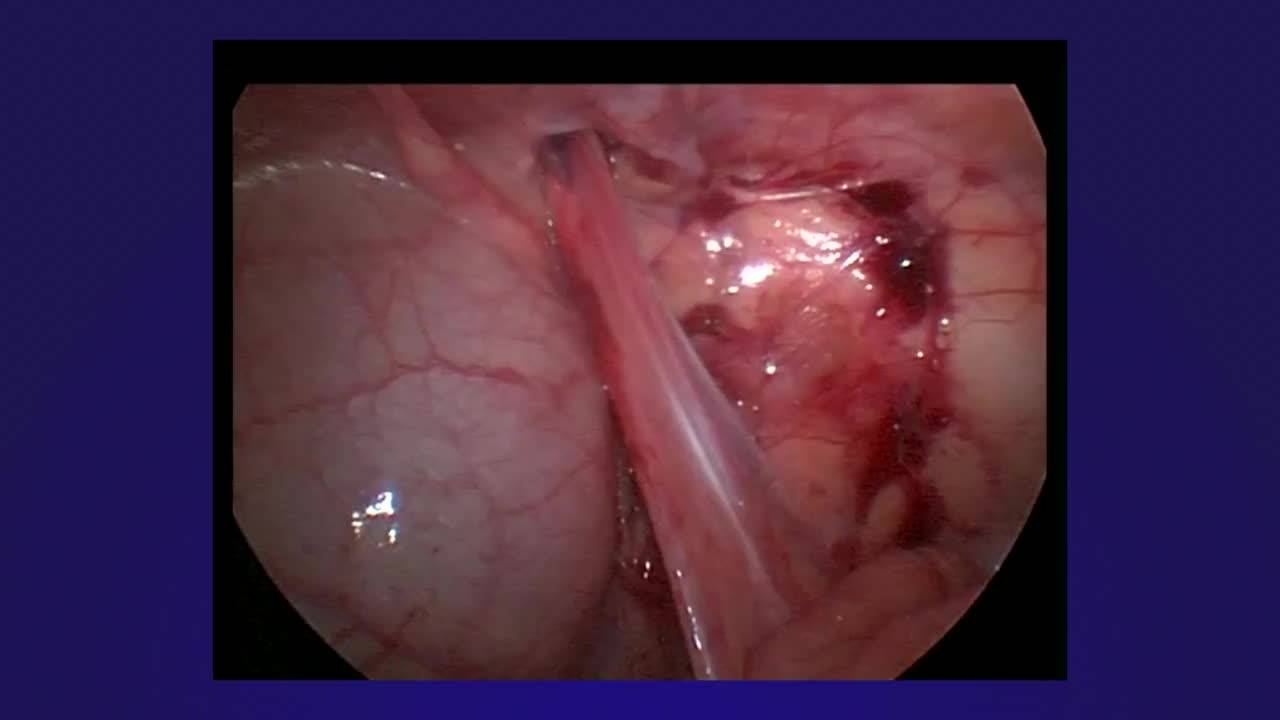
Laparoscopic Orchidopexy
Watch →
This video appears in a new pediatric surgery textbook, Clinical Pediatric Surgery: A Case-Based Interactive Approach," by Dr. Sherif Emil. The book is an innovative educational resource that focuses on judgment and decision-making in pedia
video5:48 · Feb 2020
Evidence & Research
1 item

Age at Orchiopexy JPS Review
Watch →
This video reviews an article from JPS that discusses optimal age for orchiopexy
video · Feb 2019
In-Depth Reviews
1 item

Cryptorchidism Rapid Fire Session: Update Course 2015
Watch →
During the 3rd Annual Stay Current in Pediatric Surgery Update Course in 2015, Dr. Louis Marmon, a Pediatric Surgeon at Children’s National Medical Center, gives a presentation on cryptorchidism. Discussion includes congenital and acquired
video6:03 · Jan 2019
Summaries and takeaways+ Show
The doctors in this collection+ Show
All expert statements+ Show
Every expert statement below comes from the recorded discussions, with its speaker and moment.
Cryptorchidism Rapid Fire Session: Update Course 2015
Cryptorchidism is one of the most common pediatric disorders of the male endocrine glands and the most common genital disorder identified at birth.
epidemiological0:00 ↗
There are two types of cryptorchidism: congenital (found at birth) and acquired (testicles previously descended but can no longer be brought down without discomfort).
clinical1:00 ↗
Treatment of cryptorchidism reduces risks including impaired fertility, testicular malignancy, risk of torsion, and treats associated inguinal hernia.
clinical2:00 ↗
The actual mechanism of action of hormonal therapy agents for cryptorchidism is unknown.
clinical3:00 ↗
Published studies on hormonal therapy included multiple treatment strategies with different doses and intervals, none showing good response rates or demonstrable long-term benefits.
clinical3:20 ↗
Hormonal therapy should not be used to induce testicular descent due to low response rates and lack of evidence for long-term efficacy.
guideline4:00 ↗
70% of undescended testicles are palpable, though they may not be palpable during examination while the child is awake but are usually palpable under anesthesia.
clinical4:20 ↗
Ultrasound has a sensitivity of only 45% and specificity of only 78% in determining testicle location and size.
clinical4:50 ↗
Ultrasound cannot identify intra-abdominal testicles.
clinical5:10 ↗
Other imaging modalities are expensive, require anesthesia, or irradiate tissues, and no radiologic test is 100% accurate to determine whether a testicle is absent.
clinical5:20 ↗
Surgical exploration (diagnostic laparoscopy or open exploration) must be performed on all non-palpable unilateral and many bilateral cryptorchid patients.
guideline5:50 ↗
Imaging should not be performed for cryptorchidism as it is not helpful and can actually delay treatment.
guideline6:20 ↗
There is no advantage for laparoscopic versus open exploration for intra-abdominal testicles.
clinical6:40 ↗
For salvageable intra-abdominal testicles, three surgical options exist: primary orchiopexy, one-stage Fowler-Stevens, or two-stage Fowler-Stevens.
clinical7:00 ↗
The decision tree for intra-abdominal testicles prioritizes sparing testicular vessels if possible.
clinical7:30 ↗
There is no apparent advantage of one-stage versus two-stage Fowler-Stevens procedure when testicular vessels cannot be spared.
clinical6:03 ↗
Orchiectomy may be prudent in the presence of a normal contralateral descended testicle.
opinion6:03 ↗
Most of the time the testes can be brought down without needing to divide the testicular vessels.
opinion4:58 ↗
For prepubertal patients (e.g., 10 years old), orchiopexy should be attempted; for pubertal patients (e.g., 14 years old), orchiectomy is preferred; 12 years old is a difficult decision point.
opinion5:15 ↗
The teaching is that if the patient is prepubertal, orchiopexy can be attempted, but if going through puberty, orchiectomy should be performed.
guideline5:17 ↗
Laparoscopic Orchidopexy
Laparoscopy is essential for the accurate diagnosis and optimal management of a non palpable undescended testicle.
clinical0:03 ↗
When non-palpable undescended testicle is diagnosed, one of 3 possibilities will be confirmed on laparoscopy: an abdominal testicle, a blind ending vas (confirming absence of testicle), or vas deferens and testicular vessels exiting the deep ring (warranting inguinal exploration).
clinical0:30 ↗
When an abdominal testicle is found, options include single-stage laparoscopic orchiopexy without vessel ligation, one or two-stage Fowler-Stevens procedure with vessel ligation, and the Shehata traction orchiopexy.
clinical1:30 ↗
The procedure is performed using a single 5 millimeter trocar at the umbilicus for the camera and two lateral stab incisions on the right and left sides at or just below the level of the umbilicus for 3 millimeter instruments.
clinical2:15 ↗
The mobilization of the testicle starts with stretching the gubernaculum and clearly visualizing the vas deferens, then the gubernaculum is divided as far away as possible from the vas to untether the testicle.
clinical2:35 ↗
The vas should be kept in view at all times during gubernaculum division, and the surgeon should keep in mind the possibility of a long looping vas.
clinical2:55 ↗
The vas is mobilized using blunt and sharp dissection with fine shears in a lateral to medial direction approaching the wall of the bladder.
clinical3:10 ↗
The testicular vessels are mobilized by dividing the retroperitoneal attachments, which is where most of the length will be gained.
clinical3:30 ↗
If the mobilized testicle is able to reach the contralateral ring, it is likely to reach the scrotum without further mobilization.
clinical3:45 ↗
The point of entry for the needle-sheath trocar should be between the epigastric vessels and bladder edge, just over the pubic tubercle.
clinical4:10 ↗
What's new+ Show