
Educational content from recorded physician discussions — not medical advice. Always talk to your child's care team about your child's situation.
Content of this collection
Resources
5 items


Pharmacology: Pediatric Obesity 2017
Watch →
Dr. Claudia Fox discusses various options for pharmacologic therapy for the management of pediatric obesity.
video45:08 · Sep 2018
Adolescent Bariatric Surgery: Pediatric Obesity 2017
Watch →
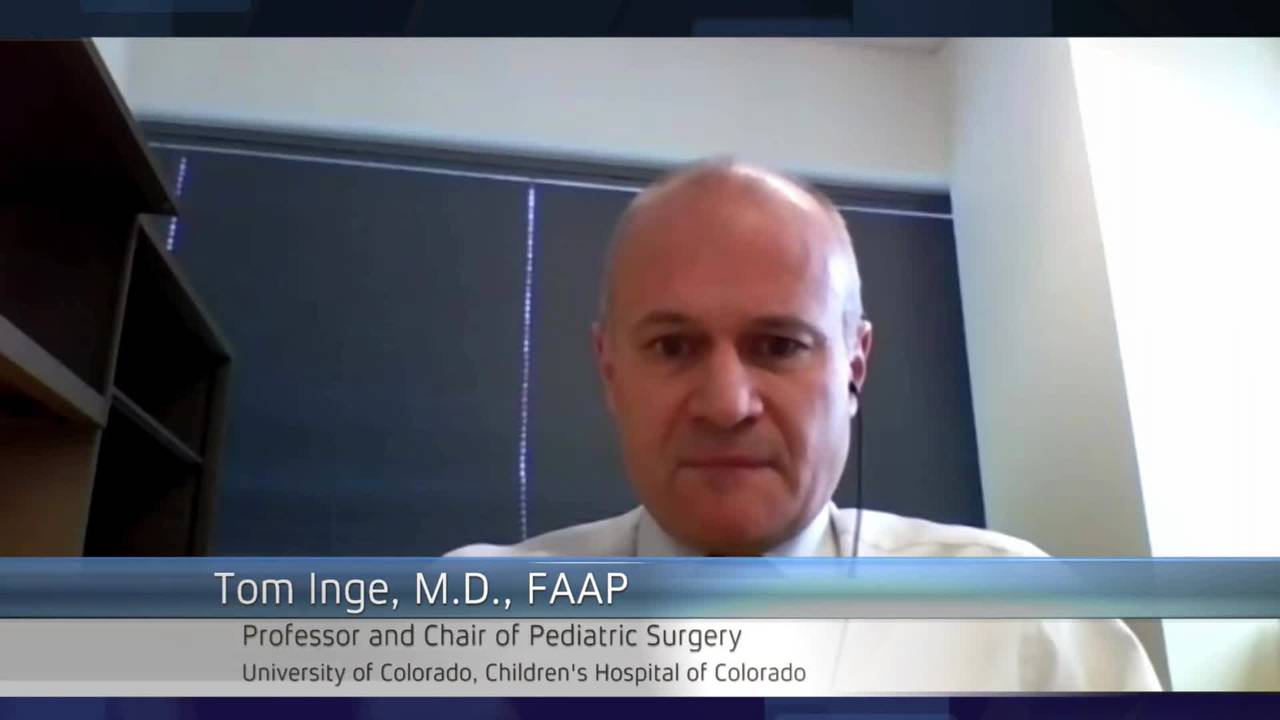
Dr. Tom Inge discusses the role of bariatric surgery in the adolescent patient population, including the recent evidence behind it. He also discusses the development of the Teen-Longitudinal Assessment of Bariatric Surgery.
video32:47 · Sep 2018
AAP Policy for Adolescent Bariatric Surgery: Pediatric Obesity 2017
Watch →
Dr. Marc Michalsky discusses the development of the AAP Policy Statement for adolescent bariatric surgery.
video27:22 · Sep 2018
The Right Tool for the Job: Child & Adolescent Obesity 2015
Watch →
The Child Adolescent Obesity-Prevention to Treatment Plans You Can Implement Today Course in 2015, led by directors Drs Stephanie Walsh, Mark Wulkan and Christopher Bolling, reviewed the latest in care and management of overweight and obese
video42:40 · Jan 2019
Obesity: Advanced Practice Providers
Watch →
Beverly B. Haynes, RN, MSN, Bariatric Coordinator at Children's of Alabama presents on how health care providers can improve the treatment of obesity in children.
video36:49 · Jan 2019
Summaries and takeaways+ Show
Summary of this collection+ Show
Key points, with the moment each was said+ Show
Featured picks for families are being prepared — the summaries above are written for you.
Takeaways+ Show
Severe obesity in adolescents—defined as BMI >1.2× the 95th percentile—carries profound metabolic and psychosocial burden . Longitudinal data demonstrate that 12-year-olds at the 99th percentile face an 88% probability of BMI >35 in adulthood and two-thirds will develop class 3 obesity . Lifestyle modification yields clinically significant BMI reduction in only 2% of severely obese teens, with no durable difference between intensive inpatient and outpatient approaches at two years [e366-c3, e366-c4]. Pharmacotherapy options remain limited: metformin produces ~1 BMI unit reduction, orlistat 0.8 units placebo-subtracted, and topiramate ~6% BMI decrease at six months, though RCT data are inconsistent [e366-c14, e366-c9, e366-c17, e366-c18]. GLP-1 agonists show promise, with liraglutide FDA-approved in adults and exenatide demonstrating 3% placebo-subtracted BMI reduction in pilot studies [e366-c15, e366-c16]. Bariatric surgery remains the most effective intervention: gastric bypass achieves 29% mean BMI decline at eight years with 88% diabetes remission, 75% hypertension resolution, and 64% dyslipidemia remission [e371-c3, e371-c5]. Sleeve gastrectomy data are emerging, with Teen-LABS expansion enabling head-to-head comparison . Nutritional sequelae—low iron, vitamin D, and elevated PTH—require lifelong monitoring . Residual BMI strongly predicts persistent metabolic risk, suggesting earlier intervention may optimize outcomes [e371-c7, e371-c17].
- Lifestyle modification fails in 98% of severely obese adolescents; inpatient vs. outpatient intensity shows no durable difference at two years.
- Gastric bypass produces 29% mean BMI reduction at 8 years with 88% diabetes remission and 75% hypertension resolution; nutritional deficiencies require monitoring.
- Pharmacotherapy yields modest results: metformin ~1 BMI unit, topiramate ~6% at 6 months, GLP-1 agonists 3% placebo-subtracted in pilots.
- Residual BMI post-surgery predicts persistent metabolic harm; earlier intervention may lower long-term BMI and improve cardiometabolic outcomes.
- Insurance denies 53% of adolescent bariatric requests initially; 80% succeed on appeal but 11% never obtain authorization, often citing age <18.
For patients & families
Severe obesity in children and teens is more than a weight issue—it's a complex medical condition involving genes, environment, and behavior [e1047-c5, e1047-c6]. Doctors define it as a BMI above a certain threshold for age, and studies show that children with severe obesity face a very high likelihood of carrying that weight into adulthood [e366-c1, e372-c2]. The condition affects every body system, and many young patients already have health problems usually seen in adults—such as high blood pressure, abnormal cholesterol, fatty liver disease, and even early signs of heart disease [e1047-c7, e1047-c9, e371-c1]. Lifestyle changes alone rarely lead to lasting weight loss in this group; only about 2% of teens with severe obesity achieve meaningful improvement through diet and exercise programs . Because of this, physicians now view severe obesity as a chronic disease that may require long-term medical treatment, including medications or, in some cases, surgery [e366-c21, e366-c8]. Recent research has shown that bariatric surgery can lead to significant health improvements—resolving diabetes, sleep apnea, and other conditions—and also dramatically improves quality of life and emotional well-being [e1047-c44, e1047-c45, e371-c5].
Severe obesity in children and teens is more than a weight issue—it's a complex medical condition involving genes, environment, and behavior [e1047-c5, e1047-c6]. Doctors define it as a BMI above a certain threshold for age, and studies show that children with severe obesity face a very high likelihood of carrying that weight into adulthood [e366-c1, e372-c2]. The condition affects every body system, and many young patients already have health problems usually seen in adults—such as high blood pressure, abnormal cholesterol, fatty liver disease, and even early signs of heart disease [e1047-c7, e1047-c9, e371-c1]. Lifestyle changes alone rarely lead to lasting weight loss in this group; only about 2% of teens with severe obesity achieve meaningful improvement through diet and exercise programs . Because of this, physicians now view severe obesity as a chronic disease that may require long-term medical treatment, including medications or, in some cases, surgery [e366-c21, e366-c8]. Recent research has shown that bariatric surgery can lead to significant health improvements—resolving diabetes, sleep apnea, and other conditions—and also dramatically improves quality of life and emotional well-being [e1047-c44, e1047-c45, e371-c5].
The doctors in this collection+ Show
All expert statements+ Show
Every expert statement below comes from the recorded discussions, with its speaker and moment.
Pharmacology: Pediatric Obesity 2017
Of 12-year-olds with BMI at 99th percentile, all will grow up to have BMIs greater than 30, 88% will have BMIs greater than 35, and 2/3 will have class 3 obesity, according to the Bogalusa Heart Study.
epidemiologicalClaudia Fox9:30 ↗
Severe obesity is defined as BMI greater than 1.2 times the 95th percentile.
guidelineClaudia Fox13:00 ↗
Only 2% of teenagers with severe obesity demonstrated clinically significant BMI reduction with lifestyle modification therapy.
clinicalClaudia Fox15:30 ↗
In a study comparing inpatient (6 months) versus outpatient lifestyle modification therapy followed for 2 years, there was no statistically significant difference in outcomes at 2 years despite better response during inpatient treatment.
clinicalClaudia Fox17:00 ↗
Mutations in the melanocortin 4 receptor (MC4R) account for the most common single gene mutation causing early onset severe obesity in pediatrics.
clinicalClaudia Fox21:00 ↗
Bupropion-naltrexone combination works by bupropion stimulating POMC cells to secrete alpha-MSH (which stimulates MC4 receptors to decrease hunger), while naltrexone blocks the auto-inhibitory feedback from beta-endorphin, allowing relatively more alpha-MSH activity.
clinicalClaudia Fox22:00 ↗
When people lose weight, they experience increased hunger, decreased satiety, increased preference for highly palatable foods, and increased metabolic efficiency—all promoting weight regain.
clinicalClaudia Fox28:00 ↗
Bariatric surgery is currently the most effective and durable treatment for severe obesity in adolescents.
clinicalClaudia Fox29:00 ↗
Orlistat is a lipase inhibitor that blocks absorption of about 30% of fat, is FDA approved for children 12 and older, and in the largest RCT of about 500 patients showed placebo-subtracted BMI difference of about 0.8 units at one year.
clinicalClaudia Fox30:00 ↗
Phentermine is FDA approved for age 16 and older (from 1950s approval), but there have been no RCTs in adolescents longer than 1 month duration.
clinicalClaudia Fox31:00 ↗
Among adults, phentermine produces mean weight loss of about 3.5 kg.
clinicalClaudia Fox31:30 ↗
In studies of adults on phentermine, there have been no withdrawal symptoms upon abruptly stopping and no reports of increased blood pressure, probably because patients are losing weight.
clinicalClaudia Fox32:00 ↗
In a chart review of 25 patients on phentermine only for 6 months plus lifestyle modification, compared to 274 receiving only lifestyle modification, there was about a 4% decrease in BMI favoring the phentermine group.
clinicalClaudia Fox33:00 ↗
After many studies of metformin, we can expect about a one unit decrease in BMI.
clinicalClaudia Fox34:10 ↗
Liraglutide, a GLP-1 agonist, has recently been FDA approved for obesity in adults.
clinicalClaudia Fox34:40 ↗
In a pilot study of exenatide (GLP-1 agonist) with about 25 patients, during the first 3 months double-blinded portion, there was a placebo-subtracted effect of about 3% in BMI favoring the exenatide group.
clinicalClaudia Fox35:20 ↗
In a chart review of patients taking topiramate only (no other medications) with lifestyle modification therapy, there was about a 6% decrease in BMI at 6 months.
clinicalClaudia Fox36:30 ↗
In an RCT of topiramate 75mg/day after meal replacement induction phase, there was no statistically significant effect between topiramate and placebo groups by study end.
clinicalClaudia Fox37:10 ↗
Topiramate at 75mg/day was safe in adolescents, with extensive neurocognitive testing showing no signal of cognitive deficits.
clinicalClaudia Fox39:00 ↗
Topiramate is FDA approved down to age 2 for seizures and has been used in pediatrics for decades.
clinicalClaudia Fox38:50 ↗
Obesity is a chronic disease requiring indefinite medication treatment; stopping the medication results in weight regain, similar to stopping antihypertensive medication causing blood pressure to rise.
opinionClaudia Fox40:50 ↗
Recently FDA-approved medications for adult obesity (age 18+) include topiramate-phentermine combination, liraglutide, naltrexone-bupropion combination, and lorcaserin, approved for BMI >30 or >27 with weight-related comorbidities.
clinicalClaudia Fox41:40 ↗
Early success in weight management predicts long-term weight loss success, according to adult literature.
clinicalClaudia Fox40:20 ↗
Bariatric surgery is seen as more acceptable than pharmacotherapy for pediatric obesity, despite being arguably riskier and irreversible.
opinionClaudia Fox41:40 ↗
Adolescent Bariatric Surgery: Pediatric Obesity 2017
Cardiovascular mortality begins to climb in the overweight range and increases definitively for adolescents at or above the 95th percentile BMI, leading to early cardiovascular death.
Host summaryThomas Inge summarizing a resource — not the host's own clinical position4:00 ↗
FAS-5 study achieved 81% participation (58 of 74 eligible) at 8-year follow-up, mostly with in-person research visits.
clinicalThomas Inge8:00 ↗
At 8-year mean follow-up, gastric bypass patients had a mean BMI decline of 29%.
clinicalThomas Inge13:00 ↗
Baseline BMI strongly correlates (R=0.75) with follow-up BMI: patients starting with BMI in the 60s end above 40, while those starting in the 40s reach near-normal BMI.
clinicalThomas Inge15:00 ↗
Remission rates at 8 years: 88% for diabetes, 64% for dyslipidemia, 75% for hypertension.
clinicalThomas Inge17:00 ↗
Among those without baseline comorbidities, incidence rates were 0% for diabetes, 50% for dyslipidemia (small denominator), and 3 of 29 developed hypertension.
clinicalThomas Inge18:00 ↗
What's new+ Show