
 StayCurrentMD
Achalasia
Everything in the library about achalasia — built automatically from the recorded discussions that name it
Educational content from recorded physician discussions — not medical advice. Always talk to your child's care team about your child's situation.
Content of this collection
Surgical Management
1 item
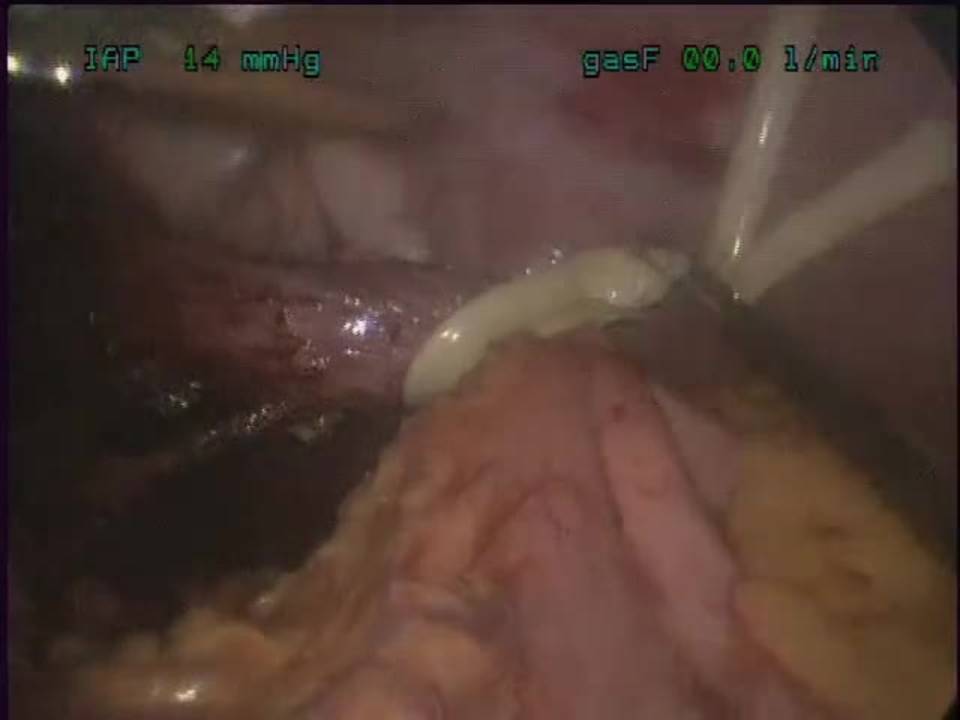
Laparoscopic Heller Myotomy
Watch →
This video appears in a new pediatric surgery textbook, Clinical Pediatric Surgery: A Case-Based Interactive Approach," by Dr. Sherif Emil. The book is an innovative educational resource that focuses on judgment and decision-making in pedia
video3:32 · Feb 2020
Evidence & Research
1 item

Update Course Rewind: 2023 Top Ten Key Takeaways
Watch →
The 11th annual Pediatric Surgery Update Course was held as a webinar on August 29, 2022. We had a lot of lively discussion and engaging presentations on the latest updates in pediatric surgery. In this video we are reviewing the top ten ke
video16:22 · Jun 2024
In-Depth Reviews
1 item
Update Course 2023 - Updates in Pediatric Achalasia Management
Watch →
This session is on Updates in Pediatric Achalasia Management with Drs. Timothy Kane & Mikael Petrosyan.
The 11th Annual Pediatric Surgery Update Course was held on August 29, 2023 in Cleveland, Ohio and was livestreamed to a global audi
video26:54 · Oct 2023
Summaries and takeaways+ Show
The doctors in this collection+ Show
All expert statements+ Show
Every expert statement below comes from the recorded discussions, with its speaker and moment.
Update Course Rewind: 2023 Top Ten Key Takeaways
The gold standard for achalasia treatment is laparoscopic Heller myotomy.
host_summary0:38 ↗
POEM (peroral endoscopic myotomy) provides 360 degrees of options to perform myotomy, whereas with Heller myotomy you have maybe 180 degrees and must worry about the vagus nerve.
clinical1:06 ↗
POEM can be performed after a failed Heller or previous POEM by choosing a different side for dissection, avoiding burned bridges.
clinical1:22 ↗
POEM does not require dissection of the hiatus, reducing concern for reflux.
clinical1:32 ↗
Blunt cerebrovascular injury (BCVI) occurs in 1.3% of all head trauma in the pediatric population.
host_summary2:02 ↗
Nearly one-third of pediatric patients with BCVI will have a stroke, increasing mortality up to 20%.
host_summary2:02 ↗
A patient with delayed diagnosis stroke from a missed BCVI prompted the institution to create a routine BCVI screening protocol requiring CTA head and neck for at-risk patients.
clinical2:24 ↗
The Memphis score is the most sensitive scoring system for BCVI screening in pediatric head trauma patients.
host_summary2:51 ↗
Patients under 37 weeks gestational age require overnight monitoring following anesthesia after pyloromyotomy, even if tolerating feeds shortly after surgery.
host_summary3:45 ↗
Full-term babies over 4 weeks old may be eligible for discharge from PACU after pyloromyotomy.
host_summary3:56 ↗
NSQIP data shows only 1.5% of pyloromyotomy patients were discharged on day of surgery, with no difference in odds of readmission or complications compared to overnight stay.
host_summary4:01 ↗
ICG (indocyanine green) has become increasingly integrated into biliary-related surgeries such as cholecystectomies due to its hepatic excretion.
host_summary4:46 ↗
Technetium-99 requires a special machine to detect and is difficult to control the injection timing.
host_summary5:08 ↗
ICG technique is real-time in the operating room with equipment that is standard or soon to be standard in all laparoscopic towers.
host_summary5:20 ↗
With ICG injection into the tumor, you can watch over 45-75 seconds as the ICG travels to the sentinel node with lights off under fluorescence.
host_summary5:52 ↗
Recent studies have revealed a lack of firm correlation between anal dilations and stricture development following PSARP.
host_summary6:39 ↗
Many PSARP patients have a colostomy and will undergo another procedure for colostomy closure, which is a perfect moment to perform strictureplasty if needed.
host_summary7:02 ↗
The surgeon sees PSARP patients 2-4 weeks postoperatively, sizes the anoplasty in office, and discusses whether dilations are needed based on the examination, informing families that strictureplasty may be needed later.
host_summary7:13 ↗
Every society emphasizes fertility preservation counseling even when surgery is not planned for children facing gonadotoxic therapy.
host_summary8:20 ↗
When a patient has a new cancer diagnosis or is approaching stem cell transplant, the fertility preservation counseling service is activated through an Epic order set, triggering consultation by advanced practice nurse, physician, or oncology team for risk assessment.
host_summary8:36 ↗
In a prepubertal child, the ovary is about 2 centimeters in size, approximately the size of a grape, and laparoscopic oophorectomy is the best recommendation for ovarian tissue preservation.
host_summary9:05 ↗
Laparoscopic oophorectomy is recommended to reduce the risk of hemorrhage and ensure remaining ovarian tissue is preserved for future fertility.
host_summary9:17 ↗
Massive transfusion protocol (MTP) is a multidisciplinary process for rapidly obtaining blood and blood products for severely bleeding patients.
host_summary9:49 ↗
If you are giving blood in the trauma bay, you need to activate MTP—giving blood equals MTP activation.
guideline10:15 ↗
For bad trauma with unstable or abnormal patients, whole blood would be the best option.
opinion10:39 ↗
The blood bank has not been able to provide whole blood for pediatric patients because it needs to be irradiated.
clinical10:48 ↗
The goal is 1:1:1 ratio of blood products (packed red blood cells:FFP:platelets), with FFP given after blood.
guideline10:53 ↗
Most hospital trauma coolers do not initially contain platelets, requiring separate call for platelets through MTP or direct request.
clinical10:58 ↗
Massive transfusion protocol should be activated after administering 20 mL/kg of blood in the trauma bay.
host_summary11:08 ↗
Ovarian torsion often presents with a cystic area visible on ultrasound that may be less visible in the operating room due to edema.
host_summary11:51 ↗
What's new+ Show