


Utility of the material community deprivation index as a metric to identify at-risk children for severe traumatic brain injury
pubmed.ncbi.nlm.nih.gov shows its articles on its own site.
Read the article on pubmed.ncbi.nlm.nih.gov ↗Article · Jan 2023 · 1 min read
In brief
In brief
This retrospective study examines how socioeconomic deprivation, measured by the material community deprivation index, correlates with severity and outcomes in pediatric traumatic brain injury patients at a level I trauma center. The research aims to identify vulnerable populations at higher risk for severe TBI through census-based socioeconomic metrics.
Written by the GCMD Library team from the article.
Objective: Pediatric traumatic brain injury (TBI) is a significant cause of morbidity and mortality with lasting effects including neurological deficits and psychological comorbidities. Recent studies have shown that social determinants of health are key factors that impact clinical outcomes in other pediatric traumatic injuries, suggesting that these health disparities may have a significant impact on patients sustaining TBI as well. The purpose of this study was to retrospectively review a cohort of pediatric patients diagnosed with TBI and elucidate the relationships among socioeconomic deprivation, patient-specific demographics, and morbidity and mortality. Methods: The authors conducted a retrospective cross-sectional analysis of pediatric patients (≤ 18 years of age) treated for TBI at a level I pediatric trauma center between 2016 and 2020. Patients with concussion-related injuries without intracranial findings and those with nonaccidental trauma were excluded from the study. In addition to evaluating basic patient demographics, the authors geocoded patient addresses to allow identification of the patient's home census tract using the material community deprivation index (MCDI). The MCDI is a unique composite index score created by the combination of six census variables and ranges from 0 to 1 in severity. Results: Of the 513 patients included in this study, 71 (13.8%) were diagnosed with severe TBI, 28 (5.5%) with moderate TBI, and 414 (80.7%) with mild TBI. Patients
Educational content from recorded physician discussions — not medical advice. Talk to your (or your child's) care team about your situation.
Only a few other public items share this field — go deeper there →
Article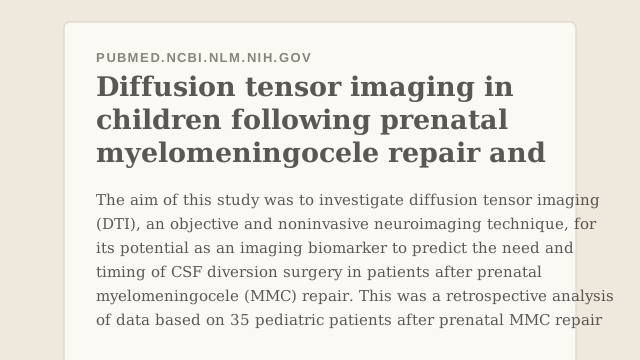
Diffusion tensor imaging in children following prenatal myelomeningocele repair and its predictive value for the need and timing of subsequent CSF diversion surgery for hydrocephalus.
Francesco T. Mangano · Published Nov 2026
Article
Empiric Antibiotic Prescription Patterns in Children With Cerebrospinal Fluid Shunt Infection.
Francesco T. Mangano · Published Nov 2026
Article
Pediatric Hydrocephalus and the Primary Care Provider.
Francesco T. Mangano · Published Nov 2026
Article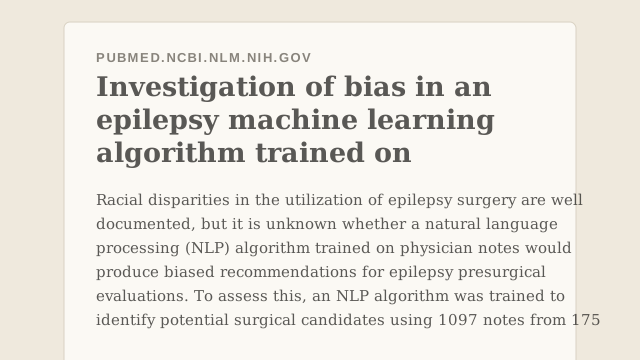
Investigation of bias in an epilepsy machine learning algorithm trained on physician notes.
Francesco T. Mangano · Published Nov 2026
Article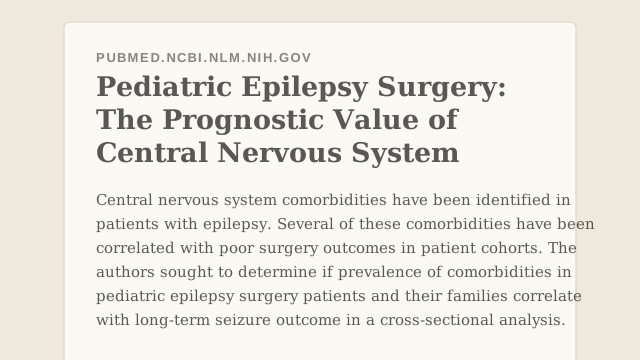
Pediatric Epilepsy Surgery: The Prognostic Value of Central Nervous System Comorbidities in Patients and their Families.
Francesco T. Mangano · Published Nov 2026
Article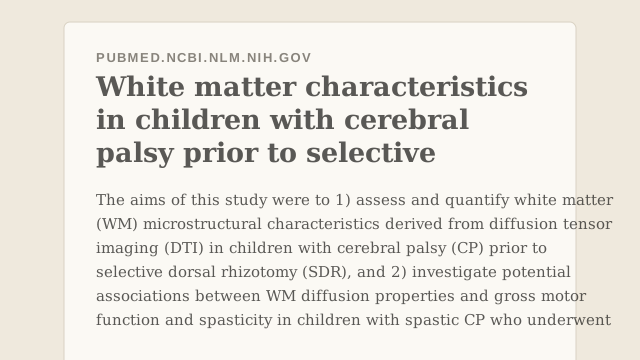
White matter characteristics in children with cerebral palsy prior to selective dorsal rhizotomy: a multicenter diffusion tensor imaging study.
Francesco T. Mangano · Published Nov 2026