


Treatment Options for Hydrocephalus Following Foramen Magnum Decompression for Chiari I Malformation: A Multicenter Study
pubmed.ncbi.nlm.nih.gov shows its articles on its own site.
Read the article on pubmed.ncbi.nlm.nih.gov ↗Article · Jan 2020 · 1 min read
In brief
In brief
This multicenter retrospective study examines 28 patients (5.1% incidence) who developed new-onset hydrocephalus following foramen magnum decompression for Chiari I malformation, occurring on average 2.2 months postoperatively. Most patients required CSF shunting, with headaches and vomiting as primary presenting symptoms.
Written by the GCMD Library team from the article.
Background: New-onset hydrocephalus following foramen magnum decompression (FMD) for Chiari I malformation (CM-I) is rare; its natural history and pathophysiology are poorly understood. Objective: To describe a series of patients who developed hydrocephalus following FMD for CM-I, provide possible explanations of this phenomenon, and outline treatment options. Methods: Out of patients undergoing FMD for CM-I from 6 different tertiary centers, we evaluated patients presenting with new-onset hydrocephalus following FMD. The retrospectively collected data included demographics, clinical, and radiological findings of the CM-I and hydrocephalus patients. Time from FMD and hydrocephalus onset, treatment, and surgical techniques were assessed. Results: Of 549 patients who underwent FMD for CM-I, 28 (5.1%) subsequently developed hydrocephalus (18 females, 10 males), with a mean age of 11.7 ± 11.9 yr (range 6 mo to 52 yr). Hydrocephalus occurred on average 2.2 ± 2.6 mo after FMD (range 1 wk to 8 mo). Four patients did not have a violation of the arachnoid during the FMD surgery. Main presenting symptoms of hydrocephalus were headaches (17, 41%), vomiting (10, 24.4%), and cerebrospinal fluid (CSF) leak or pseudomeningocele (7, 17%).Overall, 23 patients (82.1%) underwent CSF shunting, 1 patient (3.5%) had an endoscopic third ventriculostomy, 3 patients (10.7%) temporary CSF diversion only, and 1 patient (3.5%) was treated with acetazolamide. Conclusion: Hydrocephalus following FMD for C
Educational content from recorded physician discussions — not medical advice. Talk to your (or your child's) care team about your situation.
Article
Socioeconomic and demographic factors in the diagnosis and treatment of Chiari malformation type I and syringomyelia.
Francesco T. Mangano · Published Nov 2026
Article
Occipital-Cervical Fusion and Ventral Decompression in the Surgical Management of Chiari-1 Malformation and Syringomyelia: Analysis of Data From the Park-Reeves Syringomyelia Research Consortium.
Francesco T. Mangano · Published Nov 2026
Article
Decompression with or without Duraplasty for Chiari I and Syringomyelia
Francesco T. Mangano · Published Jan 2026
Article
The role of occipital condyle and atlas anomalies on occipital cervical fusion outcomes in Chiari malformation type I with syringomyelia: a study from the Park-Reeves Syringomyelia Research Consortium
Francesco T. Mangano · Published Apr 2024
Article
Complications and outcomes of posterior fossa decompression with duraplasty versus without duraplasty for pediatric patients with Chiari malformation type I and syringomyelia: a study from the Park-Reeves Syringomyelia Research Consortium
Francesco T. Mangano · Published Apr 2022
Article
Extradural decompression versus duraplasty in Chiari malformation type I with syrinx: outcomes on scoliosis from the Park-Reeves Syringomyelia Research Consortium
Francesco T. Mangano · Published Jun 2021
Article
Diffusion tensor imaging in children following prenatal myelomeningocele repair and its predictive value for the need and timing of subsequent CSF diversion surgery for hydrocephalus.
Francesco T. Mangano · Published Nov 2026
Article
Empiric Antibiotic Prescription Patterns in Children With Cerebrospinal Fluid Shunt Infection.
Francesco T. Mangano · Published Nov 2026
Article
Pediatric Hydrocephalus and the Primary Care Provider.
Francesco T. Mangano · Published Nov 2026
Article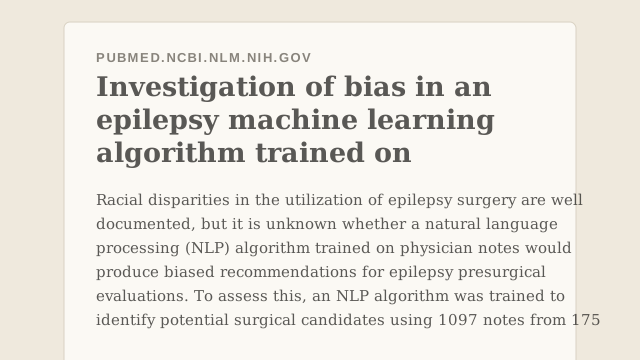
Investigation of bias in an epilepsy machine learning algorithm trained on physician notes.
Francesco T. Mangano · Published Nov 2026
Article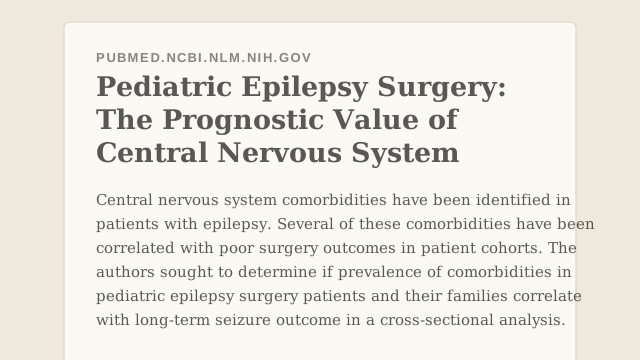
Pediatric Epilepsy Surgery: The Prognostic Value of Central Nervous System Comorbidities in Patients and their Families.
Francesco T. Mangano · Published Nov 2026
Article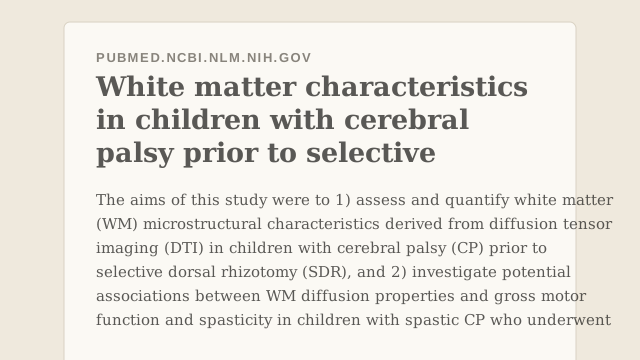
White matter characteristics in children with cerebral palsy prior to selective dorsal rhizotomy: a multicenter diffusion tensor imaging study.
Francesco T. Mangano · Published Nov 2026