


From
Dr. Alberto Tozzi
The awareness and acceptance of anti-COVID 19 vaccination in adolescence
pubmed.ncbi.nlm.nih.gov shows its articles on its own site.
Read the article on pubmed.ncbi.nlm.nih.gov ↗Article · Dec 2022 · 1 min read
In brief
In brief
Survey of 895 Italian adolescents (ages 10-17) reveals that parental vaccination status is the strongest predictor of adolescent COVID-19 immunization, with 87.3% of respondents vaccinated. Family physicians and schools were identified as preferred sources for vaccine information, highlighting the critical role of parental attitudes in pediatric vaccination decisions.
Written by the GCMD Library team from the article.
Background: COVID-19 had devastating effects on children's and adolescents' life, including neuropsychological impairment, discontinuation of social life and education. Since June 2021, antiCOVID19 vaccination has become available to adolescents in Italy up to 12 years and since December 2021 to children aged more than 5 years. The pediatric population represents a challenging target for vaccination. Aim of the study is to perform a survey among adolescents to explore factors associated with COVID 19 immunization and their perceptions about COVID-19 vaccines. Methods: Italian students aged 10-17 years were invited to participate in an anonymous online survey regarding their immunization against COVID-19 and their opinion on the immunization practice through a web link to the questionnaire. The study period was March-June 2022. Statistical analysis was performed with SPSS v 21. Results: In the study period, 895 students entered the survey. A total of 87.3% of respondents were immunized against SARS-CoV2. The most important predictors of being immunized against SARS-CoV2 were having both parents immunized (p < 0, 001) and being aged over 12 years. In the unvaccinated group, the decision was mostly influenced by the family (65.8%). Regardless the immunization status, respondents were willing to receive information about COVID 19 vaccination mostly by their family doctor (51.8%) and at school (28.9%). Conclusions: Parents' decisions and attitudes strongly affected the immunizatio
Educational content from recorded physician discussions — not medical advice. Talk to your (or your child's) care team about your situation.
Podcast
Le funzioni e gli usi dell'intelligenza artificiale per la salute
Alberto Tozzi · 14 min · Published Oct 2026
Podcast
Data to impact: connecting the future of European pediatrics with Alberto Tozzi
Alberto Tozzi · 20 min · Published Oct 2026
Article
[Obesity and cardiovascular risk in children].
Alberto Tozzi · Published Oct 2026
Article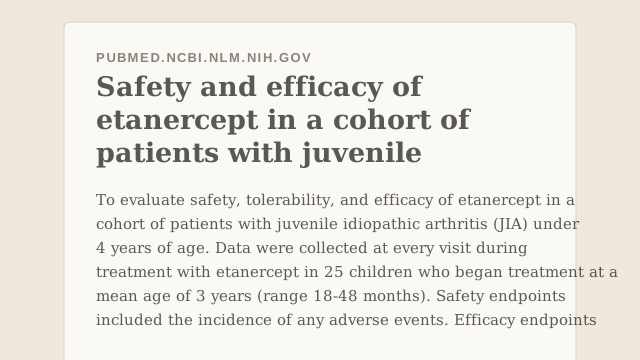
Safety and efficacy of etanercept in a cohort of patients with juvenile idiopathic arthritis under 4 years of age.
Alberto Tozzi · Published Oct 2026
Article
Towards learning healthcare systems in Italy: opportunities and challenges of AI at point-of-care.
Alberto Tozzi · Published Oct 2026
Article
Hepatitis B immune memory in children primed with hexavalent vaccines and given monovalent booster vaccines: an open-label, randomised, controlled, multicentre study.
Alberto Tozzi · Published Oct 2026