

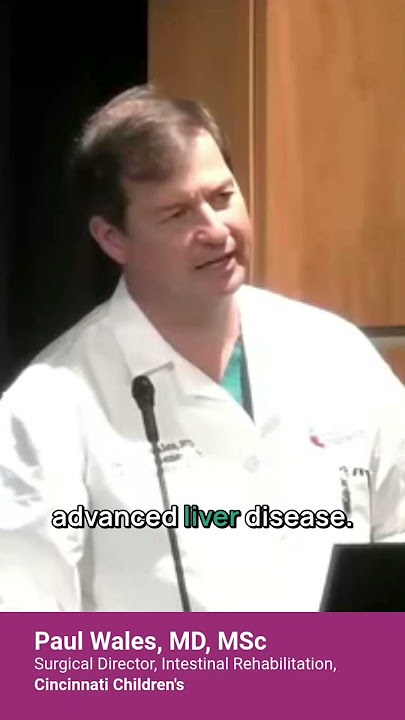
From
Dr. Paul Wales
Neonatal short bowel syndrome outcomes after the establishment of the first Canadian multidisciplinary intestinal rehabilitation program: preliminary experience
pubmed.ncbi.nlm.nih.gov shows its articles on its own site.
Read the article on pubmed.ncbi.nlm.nih.gov ↗Article · Jan 2007 · 1 min read
In brief
In brief
This retrospective study evaluates outcomes before and after implementing Canada's first multidisciplinary intestinal rehabilitation program (GIFT) for neonates with short bowel syndrome. While overall mortality remained unchanged, the coordinated approach reduced liver failure deaths through earlier transplant referral and improved survival to transplantation.
Written by the GCMD Library team from the article.
Background: A multidisciplinary intestinal rehabilitation team has been in place at our institution for 3 years. Our goal was to compare the preliminary outcomes of neonates with short bowel syndrome before with those after the establishment of our formalized intestinal failure program (Group for the Improvement of Intestinal Function and Treatment [GIFT]). Methods: We conducted a retrospective analysis of our intestinal failure registry comparing preGIFT (1997-1999) with GIFT (2003-2005) outcomes. Results: Fifty-four patients (mean gestational age = 33.5 weeks) were included in the GIFT cohort, and 40 patients (mean gestational age = 30.7 weeks) formed the preGIFT cohort. Overall mortality rates (33.3% vs 37.5%, P = .84) were equivalent in the 2 cohorts, although fewer patients died of liver failure after the establishment of the GIFT. Among those with liver failure, the mortality in the preGIFT group was 9/10 as compared with that of 6/13 in the GIFT group (P = .03). The decrease in liver-related deaths was partly attributable to earlier referral for and increased survival to transplant (4 for the GIFT group vs 0 for the preGIFT group). Conclusions: Analysis of the preliminary outcomes of the GIFT program suggests that the natural history of neonatal short bowel syndrome remains unaltered to date despite a coordinated approach to care. However, improved communication and integration with the transplant service have resulted in earlier assessment, increased rates of transpla
Educational content from recorded physician discussions — not medical advice. Talk to your (or your child's) care team about your situation.
Article
The impact of multi-disciplinary intestinal rehabilitation programs on the outcome of pediatric patients with intestinal failure: a systematic review and meta-analysis.
Paul Wales · Published Nov 2026
Article
Patient and Family Resources
Alessandro de Alarcon · Published Oct 2026
Article
Resources for Healthcare Professionals
Alessandro de Alarcon · Published Oct 2026
Article
Support Services | Cincinnati Children's Research Foundation
Alessandro de Alarcon · Published Oct 2026
Article
Researchers, Cincinnati Children's Hospital Medical Center
Alessandro de Alarcon · Published Oct 2026
Article
Newsroom
Alessandro de Alarcon · Published Oct 2026
Article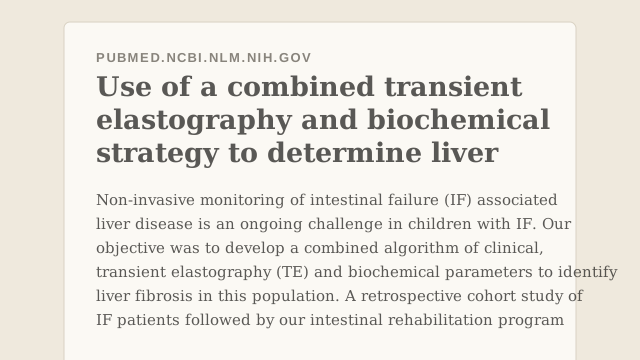
Use of a combined transient elastography and biochemical strategy to determine liver fibrosis in pediatric intestinal failure.
Paul Wales · Published Nov 2026
Podcast
Surgical Management and Intestinal Rehabilitation in Short Bowel Syndrome
Paul Wales · 71 min · Published Nov 2026
Article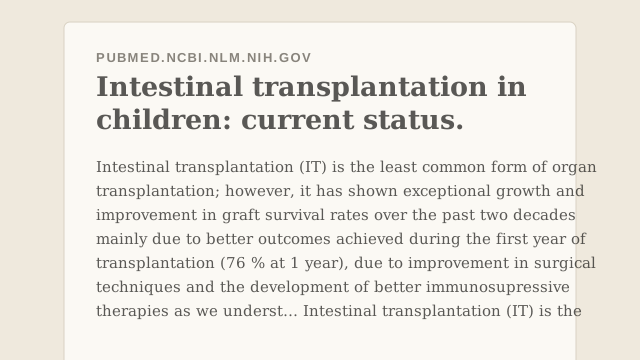
Intestinal transplantation in children: current status.
Paul Wales · Published Nov 2026
Article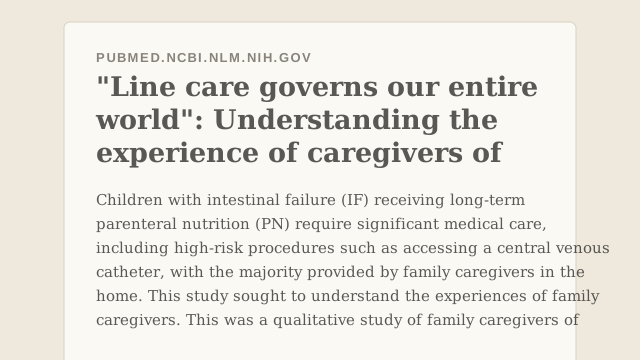
"Line care governs our entire world": Understanding the experience of caregivers of children with intestinal failure receiving long-term parenteral nutrition.
Paul Wales · Published Nov 2026
Article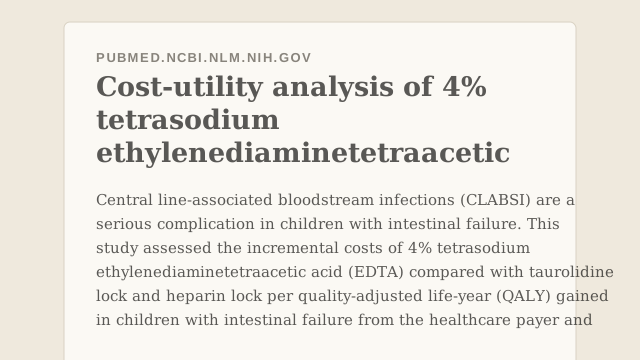
Cost-utility analysis of 4% tetrasodium ethylenediaminetetraacetic acid, taurolidine, and heparin lock to prevent central line-associated bloodstream infections in children with intestinal failure.
Paul Wales · Published Nov 2026
Article
Association between 4%-tetrasodium EDTA and sepsis in neonatal piglets: A retrospective cohort study.
Paul Wales · Published Nov 2026