

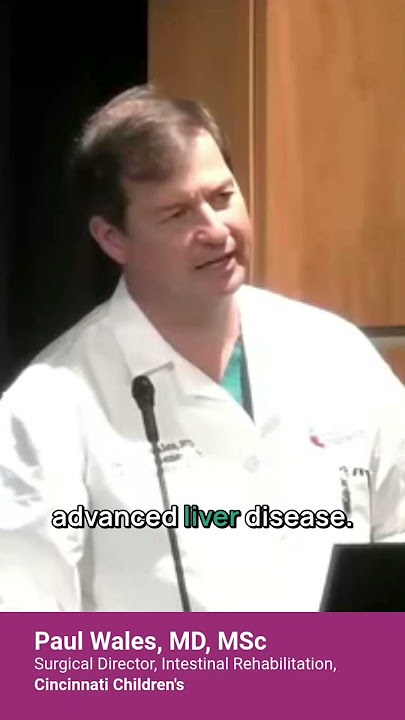
From
Dr. Paul Wales
Massive bowel resection for children with non-short bowel syndrome intestinal failure
pubmed.ncbi.nlm.nih.gov shows its articles on its own site.
Read the article on pubmed.ncbi.nlm.nih.gov ↗Article · Nov 2024 · 1 min read
In brief
In brief
This case series describes massive bowel resection as an alternative to intestinal transplantation for pediatric patients with non-short bowel syndrome intestinal failure, specifically CIPO and MVID. Two patients achieved improved symptom control, reduced parenteral nutrition requirements, and enhanced quality of life following extensive intestinal resection procedures.
Written by the GCMD Library team from the article.
Introduction: Pediatric patients with chronic intestinal pseudo-obstruction (CIPO) and congenital diarrheas and enteropathies (CODE) are unique intestinal failure (IF) patient populations. Intestinal transplantation is often considered due to complexity of medical management. Herein, we describe extensive intestinal resection as a treatment modality for symptom control in these two distinct categories of IF - CIPO and microvillus inclusion disease (MVID). Patients: Patient 1: A 2-year-old female with MVID (MYO5B mutation) with difficult to manage fluid and electrolyte requirements due to high volume diarrhea refractory to medical management including antisecretory medications. A resection of 178 cm of jejunoileum, ileocecal valve, and a subtotal colectomy was performed. The remaining 40 cm of jejunum was anastomosed to the sigmoid colon. Following this intervention, a significant reduction in parenteral nutrition (PN) electrolytes and volume needs was noted. In addition, improved quality of life and easier daily management at home were reported by the parents.Patient 2: A 15-year-old female diagnosed with CIPO, PN dependent, and with a terminal ileostomy performed at 3 years of age. Her surgical course was complicated by recurrent episodes of stoma prolapse and frequent episodes of mechanical bowel obstruction at the level of the stoma. A partial enterectomy with tapering was performed leaving the patient with 135 cm of small bowel to a jejunostomy. Four years after the proce
Educational content from recorded physician discussions — not medical advice. Talk to your (or your child's) care team about your situation.
Podcast
Surgical Management and Intestinal Rehabilitation in Short Bowel Syndrome
Paul Wales · 71 min · Published Nov 2026
Article
Contemporary challenges and outcomes in children with ultrashort bowel syndrome: A descriptive cohort study
Michael Helmrath · Published Feb 2026
Article
Characteristics and clinical outcomes of pediatric patients following massive bowel resection: A retrospective cohort study
Paul Wales · Published Jul 2024
Article
Small and large bowel anatomy is associated with enteral autonomy in infants with short bowel syndrome: A retrospective cohort study
Paul Wales · Published Jan 2024
Podcast
Intestinal Rehabilitation, Episode 4: Surgical Management, Part 2
12 min · Published Oct 2022
Podcast
Intestinal Rehabilitation, Episode 4: Surgical Management, Part 1
19 min · Published Oct 2022
Article
Use of a combined transient elastography and biochemical strategy to determine liver fibrosis in pediatric intestinal failure.
Paul Wales · Published Nov 2026
Article
Intestinal transplantation in children: current status.
Paul Wales · Published Nov 2026
Article
"Line care governs our entire world": Understanding the experience of caregivers of children with intestinal failure receiving long-term parenteral nutrition.
Paul Wales · Published Nov 2026
Article
Cost-utility analysis of 4% tetrasodium ethylenediaminetetraacetic acid, taurolidine, and heparin lock to prevent central line-associated bloodstream infections in children with intestinal failure.
Paul Wales · Published Nov 2026
Article
The impact of multi-disciplinary intestinal rehabilitation programs on the outcome of pediatric patients with intestinal failure: a systematic review and meta-analysis.
Paul Wales · Published Nov 2026
Article
Predictors of Social-Emotional Development and Adaptive Functioning in School-Age Children with Intestinal Failure.
Paul Wales · Published Nov 2026