


Impact of seizure onset zone and intracranial electroencephalography ictal characteristics on epilepsy surgery outcomes in tuberous sclerosis complex
pubmed.ncbi.nlm.nih.gov shows its articles on its own site.
Read the article on pubmed.ncbi.nlm.nih.gov ↗Article · Aug 2024 · 1 min read
In brief
In brief
This retrospective study of 44 TSC patients demonstrates that smaller seizure onset zones and single SOZ locations predict better surgical outcomes, with 59% achieving seizure freedom. SOZ size and number serve as prognostic biomarkers for epilepsy surgery success in pediatric TSC patients with drug-resistant epilepsy.
Written by the GCMD Library team from the article.
Ninety percent of tuberous sclerosis complex (TSC) patients have seizures, with ∼50 % developing drug refractory epilepsy. Surgical intervention aims to remove the seizure onset zone (SOZ). This retrospective study investigated the relationship of SOZ size, ictal pattern, and extent of resection with surgical outcomes. TSC patients undergoing resective/ablative surgery with >1-year follow-up and adequate imaging were included. Preoperative iEEG data were reviewed to determine ictal pattern and SOZ location. For outcomes, an ILAE score of 1-3 was defined as good and 4-6 as poor. Forty-four patients were included (age 117.4 ± 110.8 months). Of these, 59.1 % achieved a good outcome, while 40.9 % had a poor outcome. Size of SOZ was a significant factor (p = 0.009), with the poor outcome group having a larger SOZ (11.9 ± 6.7 electrode contacts) than the good outcome group (7.3 ± 7.2). SOZ number was significant (p = 0.020); >1 SOZ was associated with poor outcome. These results demonstrate extent of SOZ as a predictor of seizure freedom following epilepsy surgery in a mostly pediatric TSC cohort. We hypothesize that these features represent biomarkers of focality of the epileptogenic zone and can be used to sharpen prognosis for epilepsy surgery outcomes in this cohort.
Educational content from recorded physician discussions — not medical advice. Talk to your (or your child's) care team about your situation.
Article
Subdural grid and depth electrode monitoring in pediatric patients.
Francesco T. Mangano · Published Nov 2026
Article
Fosphenytoin pre-medication for pediatric extra-operative electrical stimulation brain mapping.
Francesco T. Mangano · Published Nov 2026
Article
Pediatric Epilepsy Surgery: The Prognostic Value of Central Nervous System Comorbidities in Patients and their Families.
Francesco T. Mangano · Published Nov 2026
Article
Investigation of bias in an epilepsy machine learning algorithm trained on physician notes.
Francesco T. Mangano · Published Nov 2026
Article
Neuronal Circuits Supporting Development of Visual Naming Revealed by Intracranial Coherence Modulations.
Francesco T. Mangano · Published Nov 2026
Article
Predictors of response to vagus nerve stimulation in childhood-onset medically refractory epilepsy.
Francesco T. Mangano · Published Nov 2026
Article
White matter characteristics in children with cerebral palsy prior to selective dorsal rhizotomy: a multicenter diffusion tensor imaging study.
Francesco T. Mangano · Published Nov 2026
Article
Empiric Antibiotic Prescription Patterns in Children With Cerebrospinal Fluid Shunt Infection.
Francesco T. Mangano · Published Nov 2026
Article
Diffusion tensor imaging in children following prenatal myelomeningocele repair and its predictive value for the need and timing of subsequent CSF diversion surgery for hydrocephalus.
Francesco T. Mangano · Published Nov 2026
Article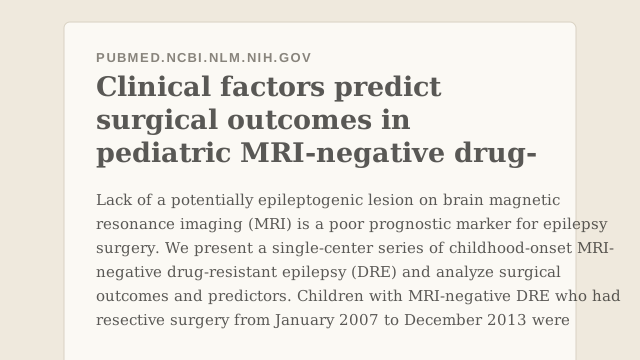
Clinical factors predict surgical outcomes in pediatric MRI-negative drug-resistant epilepsy.
Francesco T. Mangano · Published Nov 2026
Article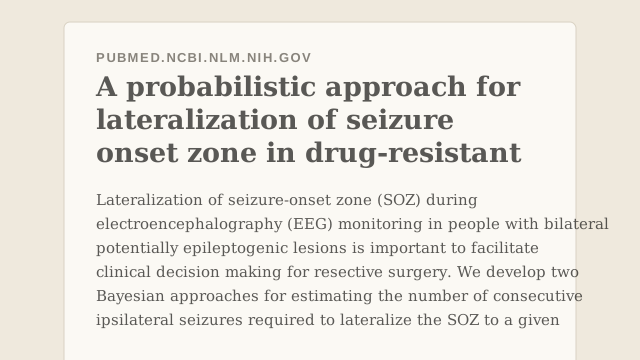
A probabilistic approach for lateralization of seizure onset zone in drug-resistant epilepsy with bilateral cerebral pathology.
Francesco T. Mangano · Published Nov 2026
Article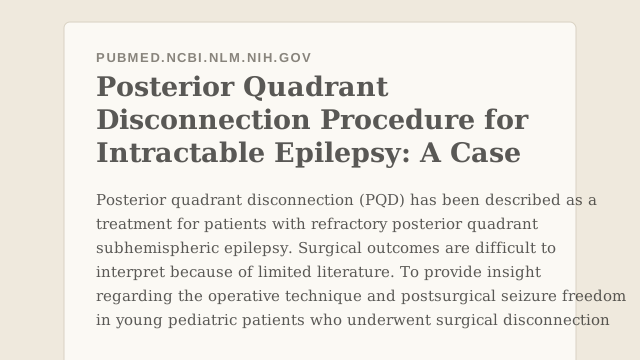
Posterior Quadrant Disconnection Procedure for Intractable Epilepsy: A Case Series of 5 Young Pediatric Patients.
Francesco T. Mangano · Published Nov 2026