


From
Dr. Ramy Shaaban
Effectiveness and Safety of Chloroquine or Hydroxychloroquine as a mono-therapy or in combination with Azithromycin in the treatment of COVID-19 patients: Systematic Review and Meta-Analysis
medrxiv.org shows its articles on its own site.
Read the article on medrxiv.org ↗Article · Jul 2020 · 1 min read
In brief
In brief
This systematic review and meta-analysis evaluates chloroquine and hydroxychloroquine, alone or combined with azithromycin, for COVID-19 treatment. Analysis of studies through June 2020 found no significant differences in virological cure rates, clinical outcomes, or need for mechanical ventilation compared to standard care.
Written by the GCMD Library team from the article.
Abstract Many recent studies have investigated the role of either Chloroquine (CQ) alone, Hydroxychloroquine (HCQ) alone, or CQ/HCQ in combination with azithromycin (AZM) in management of the emerging coronavirus. This systematic review and meta-analysis of either published or preprint observational or interventional studies were conducted to assess the cure rate, duration of hospital stay, radiological progression, clinical worsening, need for mechanical ventilation, the occurrence of side effects, and mortality. A search of the online database through June 2020 was performed and examined the reference lists of pertinent articles for in-vivo studies only. Pooled relative risks (RRs), standard mean, of 95 % confidence intervals (CIs) were calculated with the random-effects model. Results The duration of hospital stay was shorter in the standard care in comparison with HCQ group, the standard mean of hospital stay was 0.57, 95% CI, and 0.20-0.94. Overall virological cure, or more specifically at day 4, 10, and 14 among patients exposed to HCQ did not differ significantly from the standard care [(RR=0.92, 95% CI 0.78-1.15), (RR=1.11, 95% CI 0.74-1.65), (RR=1.21, 95%CI 0.70-2.01), and (RR=0.98, 95% CI, 0.76-1.27)] respectively. Radiological improvement or clinical worsening was not statistically different between HCQ and standard care [(RR=1.11, 95% CI 0.64-1.65) and (RR=1.28, 95% CI 0.33-4.99)]. The need for mechanical ventilation (MV) was not significant between the HCQ group
Educational content from recorded physician discussions — not medical advice. Talk to your (or your child's) care team about your situation.
Only a few other public items share this field — go deeper there →
Article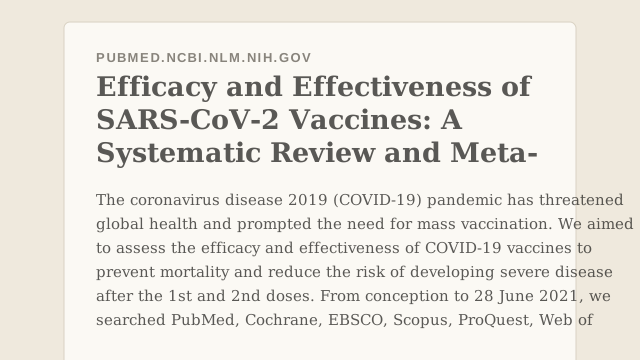
Efficacy and Effectiveness of SARS-CoV-2 Vaccines: A Systematic Review and Meta-Analysis.
Ramy Shaaban · Published Oct 2026
Article
Protocol for a global electronic Delphi on integrating artificial intelligence into solid organ transplantation
Ramy Shaaban · Published Jan 2026
Article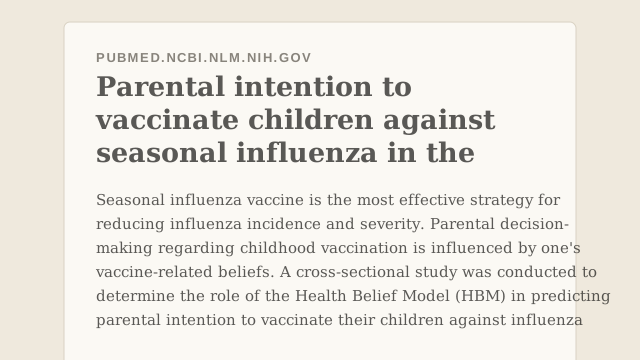
Parental intention to vaccinate children against seasonal influenza in the Eastern Mediterranean region: A cross-sectional study using the health belief model
Ramy Shaaban · Published Jan 2023
Article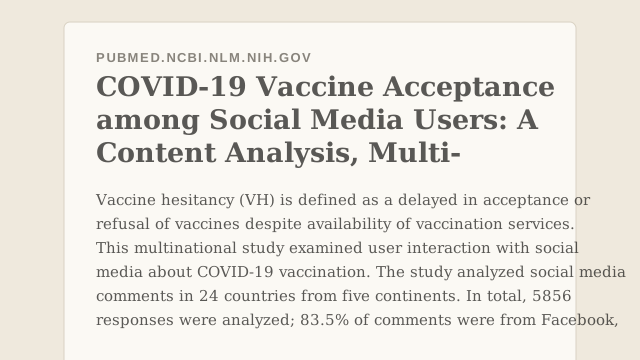
COVID-19 Vaccine Acceptance among Social Media Users: A Content Analysis, Multi-Continent Study
Ramy Shaaban · Published May 2022
Article
Healthcare Utilization with Drug Acquisition and Expenses at the National Health Insurance Fund in Sudan
Ramy Shaaban · Published Mar 2022
Article
Examining Audiology Students' Clinical Collaboration Skills When Using Virtual Audiology Cases Aided With No Collaboration, Live Collaboration, and Virtual Collaboration
Ramy Shaaban · Published Jan 2022