


From
Dr. Roshni Dasgupta
Critical elements of pediatric rhabdomyosarcoma surgery
Part of
Rhabdomyosarcoma 8 items
pubmed.ncbi.nlm.nih.gov shows its articles on its own site.
Read the article on pubmed.ncbi.nlm.nih.gov ↗Article · Nov 2023 · 1 min read
In brief
In brief
This article outlines surgical principles for pediatric rhabdomyosarcoma management within multimodal treatment protocols. Key topics include timing of resection (upfront vs delayed), the role of R1 resection in reducing radiation exposure, regional lymph node assessment strategies, and the importance of multidisciplinary collaboration for optimal outcomes.
Written by the GCMD Library team from the article.
Rhabdomyosarcoma (RMS), the most common soft tissue sarcoma in children, requires multimodal therapy which is determined by risk group stratification. Local control may be achieved by surgical resection, radiation, or both. Resection may occur upfront or following induction chemotherapy as a delayed primary excision. An R1 resection may allow a reduction in radiation exposure; however, debulking is not indicated nor is excision of residual masses at the end of therapy. Regional lymph node assessment is an important component of surgical care, as positive nodal basins require radiation. Depending on the tumor site and biology, sentinel lymph node biopsy vs biopsy of clinically or radiographically concerning nodes is indicated. Therapeutic lymph node dissection is never indicated. Familiarity with site-specific oncologic principles for RMS and participation in a multidisciplinary team including Pediatric Oncology and Radiation Oncology are necessary components of surgical care to ensure optimal outcomes.
Educational content from recorded physician discussions — not medical advice. Talk to your (or your child's) care team about your situation.
Article
Management of rhabdomyosarcoma in pediatric patients
Roshni Dasgupta · Published Oct 2026
Video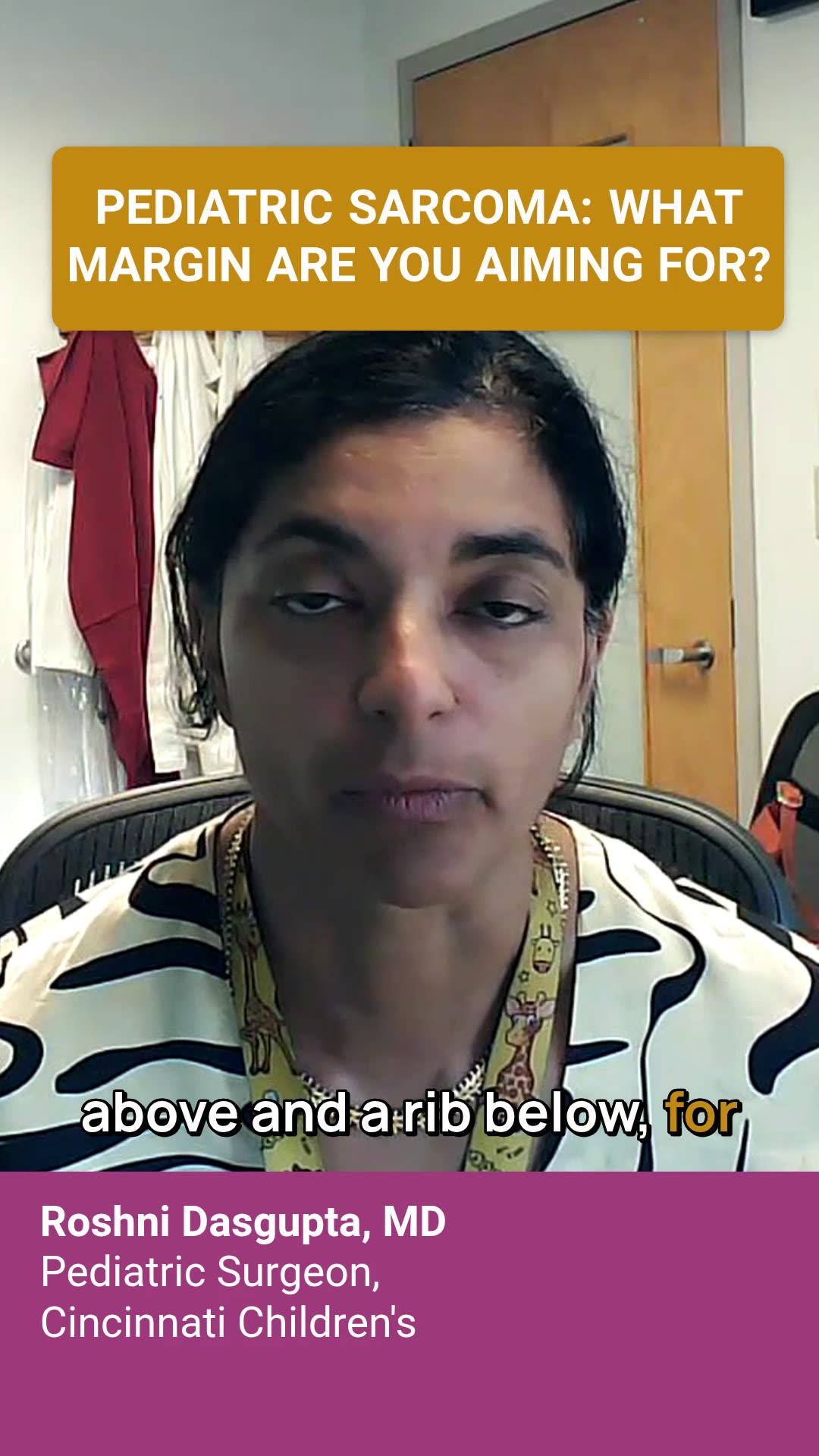
Pediatric Sarcoma Surgical Margins: Rhabdomyosarcoma Treatment Guidelines w/ Dr. Roshni Dasgupta
25 s · Published Oct 2026
Video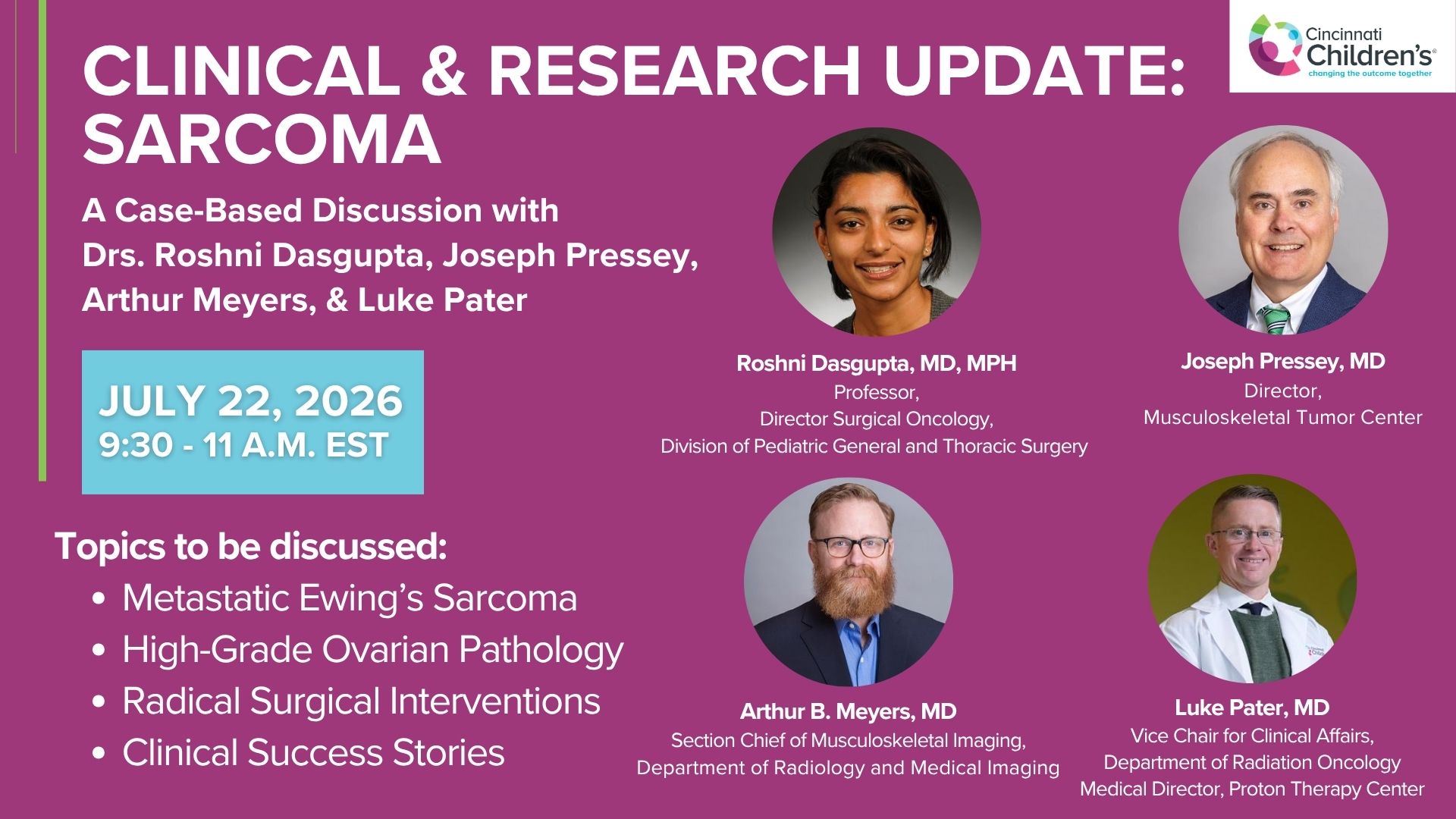
Clinical & Research Update: Sarcoma w/ Drs. Roshni Dasgupta, Joseph Pressey, Arthur Meyer, Luke Pater
66 min · Published Sep 2026
Article
Outcomes for patients with perineal and perianal rhabdomyosarcoma: A report from the Children's Oncology Group Soft Tissue Sarcoma Committee
Roshni Dasgupta · Published Sep 2024
Video
Technical approaches to rhabdomyosarcoma management: APSA Cancer Committee case series
Roshni Dasgupta · 17 min · Published Feb 2022
Article
Implications of Tumor Characteristics and Treatment Modality on Local Recurrence and Functional Outcomes in Children with Chest Wall Sarcoma: A Pediatric Surgical Oncology Research Collaborative Study
Published Jan 2021
Article
Pediatric Surgical Oncology
Roshni Dasgupta · Published Oct 2026
Article
An Introduction to Pediatric Surgical Oncology
Roshni Dasgupta · Published Oct 2026
Article
Contemporary Biology, Management, and Outcomes of Renal Medullary Carcinoma in Children and Adults: A Pediatric Surgical Oncology Research Collaborative Study
Roshni Dasgupta · Published Oct 2026
Article
Pediatric Cancer, An Issue of Surgical Oncology Clinics of North America, E-Book
Roshni Dasgupta · Published Oct 2026
Article
Histologic type predicts disparate outcomes in pediatric hepatocellular neoplasms: A Pediatric Surgical Oncology Research Collaborative study
Roshni Dasgupta · Published Oct 2026
Article
Pancreaticoduodenectomy for the treatment of pancreatic neoplasms in children: A Pediatric Surgical Oncology Research Collaborative study
Roshni Dasgupta · Published Oct 2026