


Advanced Neuroimaging Techniques in Pediatric Hydrocephalus
Part of
Pediatric Hydrocephalus 22 items
pubmed.ncbi.nlm.nih.gov shows its articles on its own site.
Read the article on pubmed.ncbi.nlm.nih.gov ↗Article · Jan 2017 · 1 min read
In brief
In brief
This review traces the evolution of neuroimaging in pediatric hydrocephalus from early pneumoencephalography to modern diffusion tensor imaging (DTI). DTI enables noninvasive assessment of white matter damage caused by ventricular enlargement, offering promise for improved diagnosis and long-term management of affected children.
Written by the GCMD Library team from the article.
From the early days of pneumoencephalography and ventriculography to the emerging technology of magnetic resonance diffusion tensor imaging (DTI) of the present day, neuroimaging has always been a critical tool in the diagnosis and treatment of pediatric hydrocephalus. There is accumulating evidence from both human and animal research suggesting that one of the major pathophysiological mechanisms underlying poor outcomes in these children is damage to vulnerable white matter (WM) structures in the brain as a result of ventricular enlargement and increased intracranial pressure. However, a clear understanding of these WM abnormalities and their implications on neurobehavioral outcomes in these patients is not well understood. To this end, DTI has recently been studied to allow noninvasive quantification of these abnormalities. Our review discusses the evolution of neuroimaging in pediatric hydrocephalus and focuses on the use of advanced imaging techniques, such as DTI, which is supported by a growing body of literature as a promising noninvasive imaging tool in the diagnosis and long-term management of this patient population. We conclude with a brief discussion on emerging techniques and experimental imaging.
Educational content from recorded physician discussions — not medical advice. Talk to your (or your child's) care team about your situation.
Article
Empiric Antibiotic Prescription Patterns in Children With Cerebrospinal Fluid Shunt Infection.
Francesco T. Mangano · Published Nov 2026
Article
Utilization trends in cerebrospinal fluid shunt infection prevention techniques in the United States from 2007 to 2015.
Francesco T. Mangano · Published Nov 2026
Article
Infection rates during eras of intrathecal antibiotic use followed by antibiotic-impregnated catheter use in prevention of cerebrospinal fluid shunt infection.
Francesco T. Mangano · Published Nov 2026
Article
Research priorities for non-invasive therapies to improve hydrocephalus outcomes.
Francesco T. Mangano · Published Nov 2026
Article
Pediatric Hydrocephalus and the Primary Care Provider.
Francesco T. Mangano · Published Nov 2026
Article
Antibiotic impregnated catheters and intrathecal antibiotics for CSF shunt infection prevention in children undergoing low-risk CSF shunt surgery
Francesco T. Mangano · Published May 2024
Article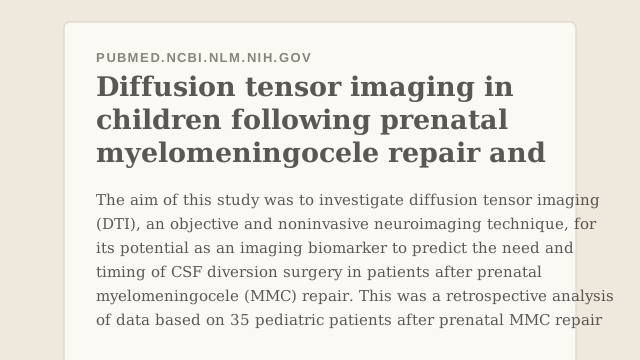
Diffusion tensor imaging in children following prenatal myelomeningocele repair and its predictive value for the need and timing of subsequent CSF diversion surgery for hydrocephalus.
Francesco T. Mangano · Published Nov 2026
Article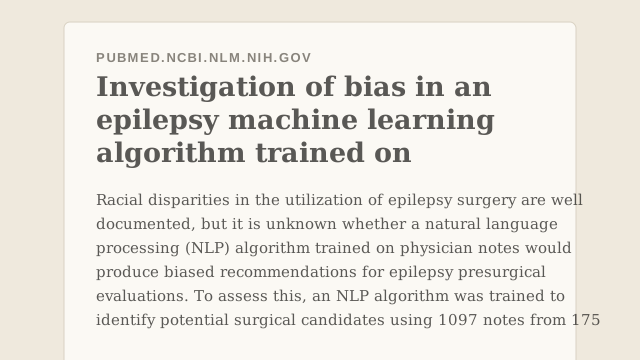
Investigation of bias in an epilepsy machine learning algorithm trained on physician notes.
Francesco T. Mangano · Published Nov 2026
Article
Pediatric Epilepsy Surgery: The Prognostic Value of Central Nervous System Comorbidities in Patients and their Families.
Francesco T. Mangano · Published Nov 2026
Article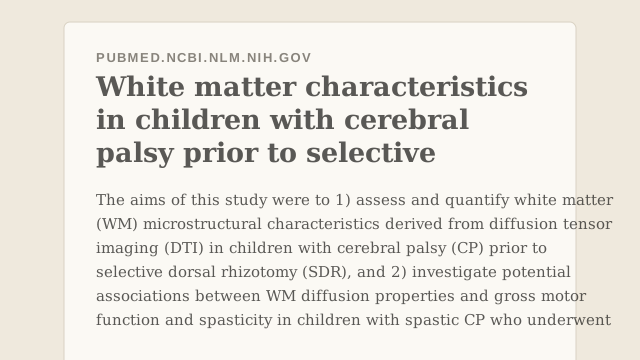
White matter characteristics in children with cerebral palsy prior to selective dorsal rhizotomy: a multicenter diffusion tensor imaging study.
Francesco T. Mangano · Published Nov 2026
Article
A probabilistic approach for lateralization of seizure onset zone in drug-resistant epilepsy with bilateral cerebral pathology.
Francesco T. Mangano · Published Nov 2026
Article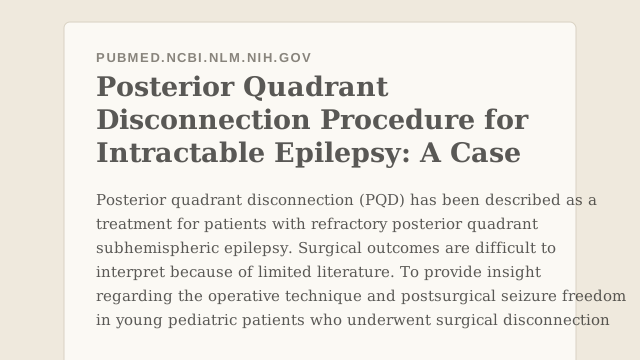
Posterior Quadrant Disconnection Procedure for Intractable Epilepsy: A Case Series of 5 Young Pediatric Patients.
Francesco T. Mangano · Published Nov 2026