


From
StayCurrentMD
The Irish Experience with Sacrococcygeal Teratomas: Are Type IV Lesions More Common than We Think?
Part of
Pediatric Oncology 696 items
dx.doi.org shows its articles on its own site.
Read the article on dx.doi.org ↗Article · Nov 2023 · 1 min read
In brief
In brief
This Irish cohort study of 29 SCT patients over 16 years found type IV (presacral, internal) lesions in 28% of cases—nearly triple the 10% rate from Altman's original 1974 classification. The authors suggest type IV SCTs may be significantly underreported in current literature, warranting increased clinical suspicion.
- Type IV sacrococcygeal teratomas (presacral, internal) occurred in 28% of cases, nearly 3× higher than the traditionally cited 10% rate.
- SCTs show strong female predominance (79%) with 55% diagnosed antenatally, emphasizing the value of prenatal ultrasound screening.
- Most SCTs (76%) are mature teratomas, but 17% are malignant, requiring alpha-fetoprotein monitoring and timely surgical excision.
- Type IV lesions may be underdiagnosed; clinicians should maintain high suspicion for presacral masses in pediatric patients with vague symptoms.
- Complete surgical resection including coccygectomy remains standard treatment, with long-term follow-up essential for recurrence detection.
Written by the GCMD Library team from the article.
Introduction Sacrococcygeal teratomas (SCTs) are rare tumors occurring in approximately 1 in 35,000 to 40,000 live births. The Altman classification is used to describe SCTs. There are four types, with type 1 predominantly external through to type IV which is a presacral, completely internal mass. As far as the authors are aware, this is the first study to focus on type IV SCT lesions. Materials and Methods Using ICD-10-AM (The International Statistical Classification of Diseases and Related Health Problems, Tenth Revision, Australian Modification) codes, we identified all patients in the Republic of Ireland with a diagnosis of SCT from 2004 to 2020. The following information was obtained for each patient: gender, time of diagnosis, clinical presentation, method of diagnosis, Altman classification, biomarkers, age at operation, surgical technique, pathology, recurrence, and age at most recent follow-up. Results There were 29 patients in total; 23 females (79%) and 6 males (21%). In total, 16 (55%) were diagnosed antenatally, 4 (14%) at less than 1 month, 4 (14%) less than 1 year, 3 (10%) age 2 to 4 years, and 2 (7%) were aged 5 to 12 years. In addition, 22 (76%) were mature teratomas, 2 (7%) immature teratomas, and 5 (17%) were malignant tumors. There were 6 (21%) type I lesions, 9 (30%) type II, 6 (21%) type III, and 8 (28%) type IV lesions. Conclusion In Altman's original 1974 study, type IV lesions were present in 10% of cases. As a result, this is the most frequently quoted figure. Type IV lesions were present in 28% of cases in our study. We propose that type IV lesions may be more common than the current literature suggests and consequently a higher index of suspicion of their presence should be entertained.
Educational content from recorded physician discussions — not medical advice. Talk to your (or your child's) care team about your situation.
Video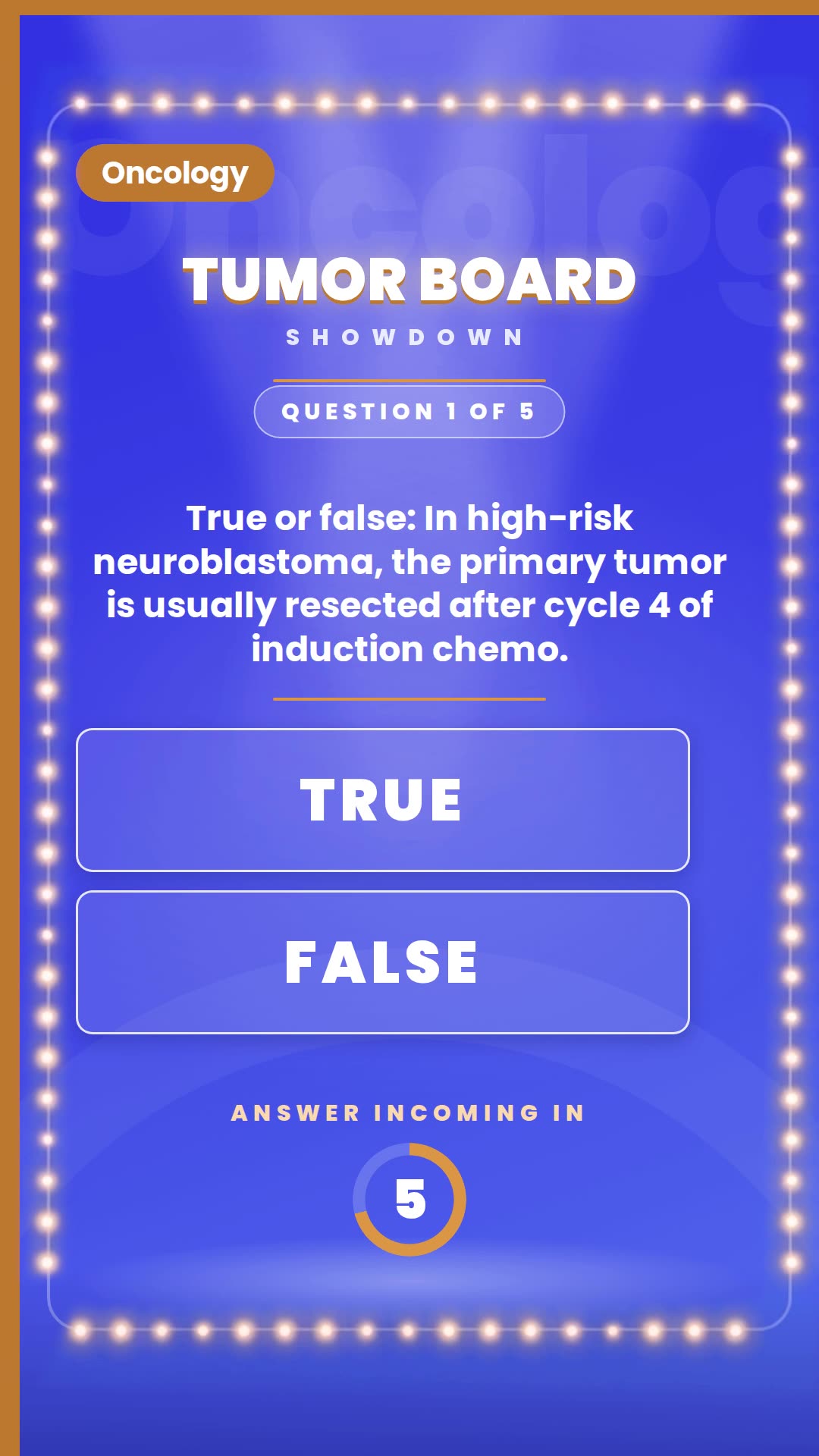
Oncology Tumor Board Showdown: Pediatric Oncology 5 Question Quiz
1 min · Published Oct 2026
Article
Minimally invasive surgery for abdominal and thoracic neuroblastic tumors: A systematic review by the APSA Cancer committee
Juan Pablo Gurria · Published Oct 2026
Video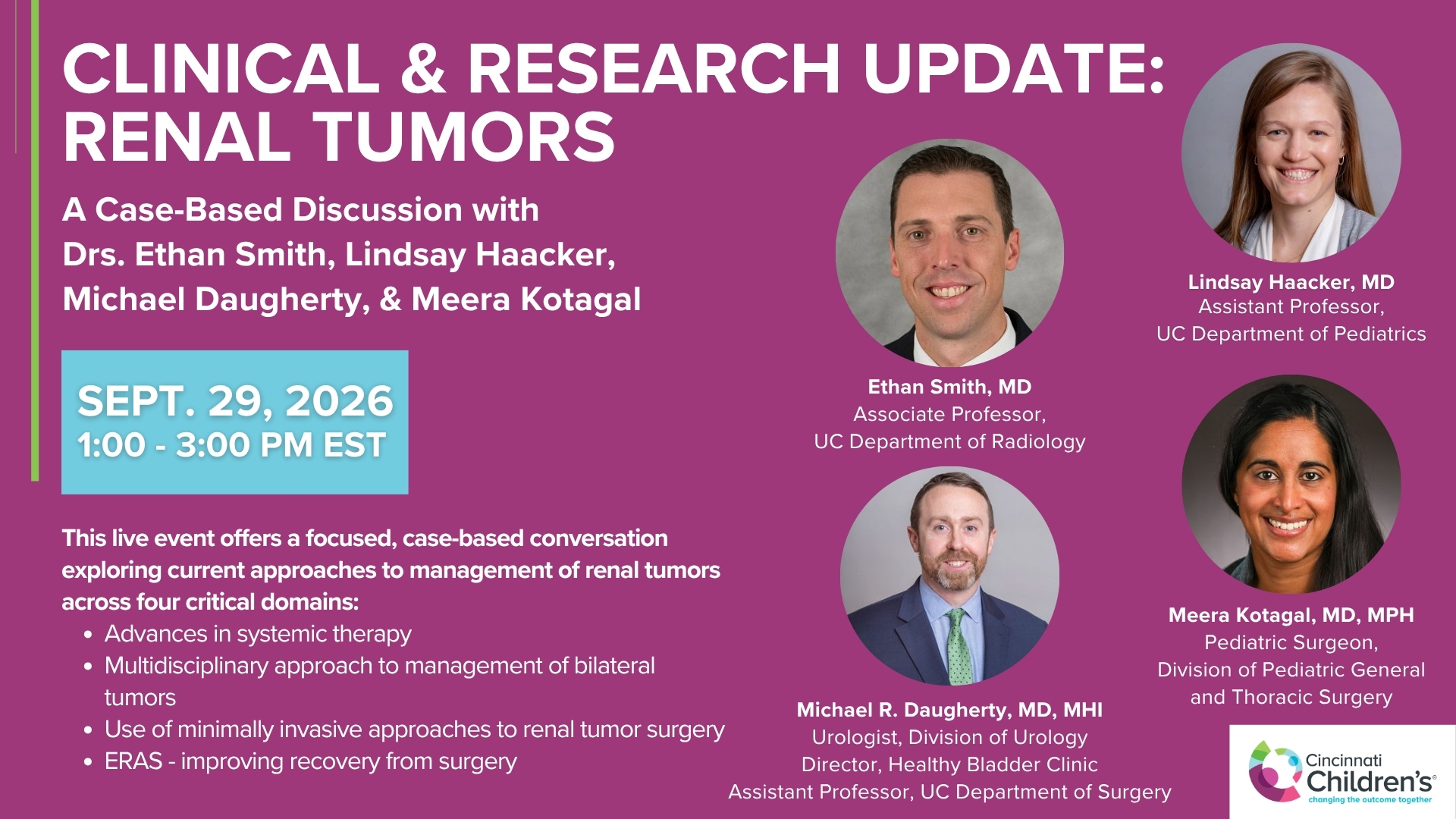
Clinical & Research Update: Renal Tumors with Drs. Ethan Smith, Lindsay Haacker, Michael Daugherty, and Meera Kotagal
71 min · Published Sep 2026
Video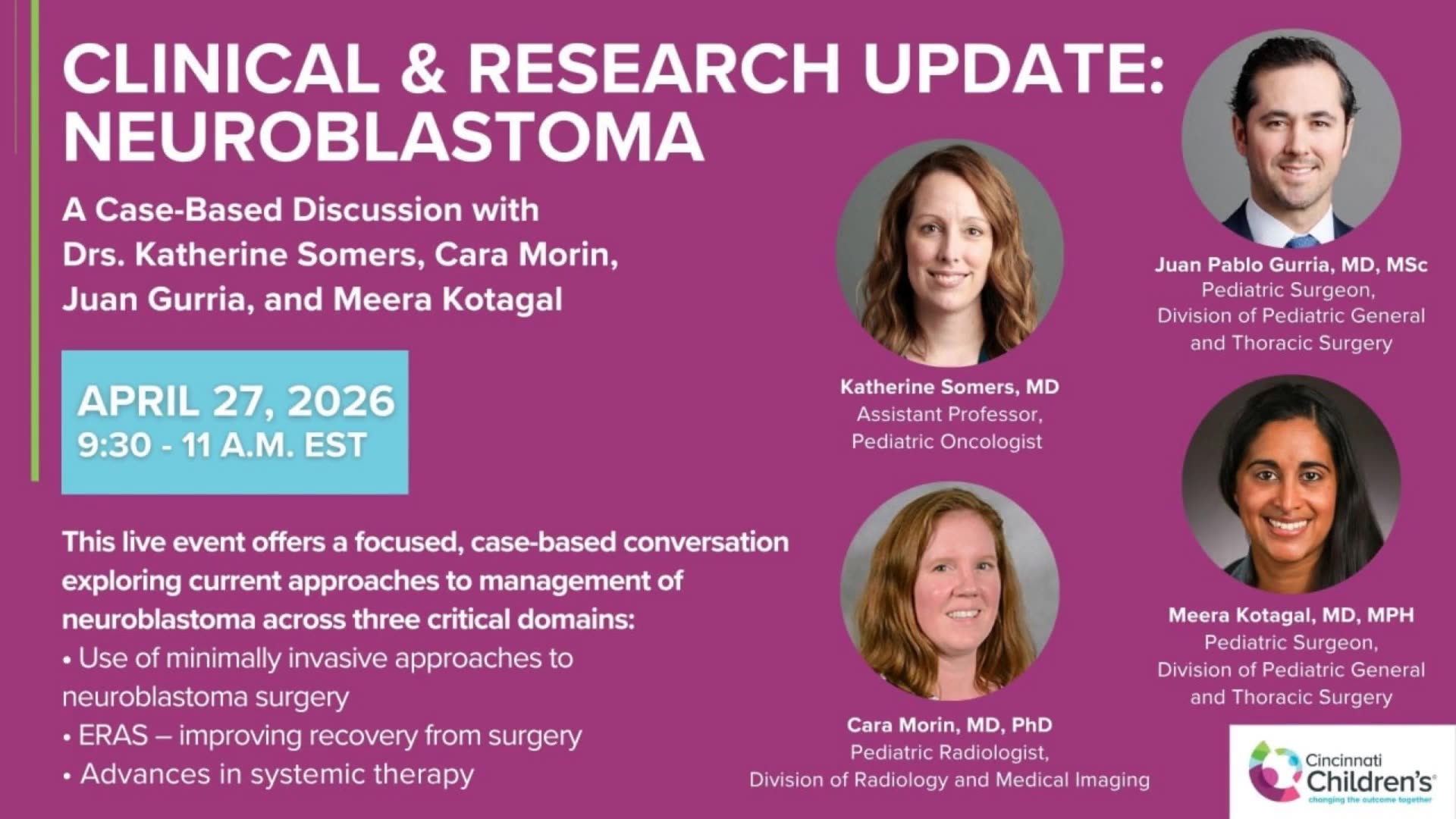
Clinical & Research Update: Neuroblastoma with Drs. Katherine Somers, Cara Morin, Juan Gurria, and Meera Kotagal
67 min · Published Sep 2026
Video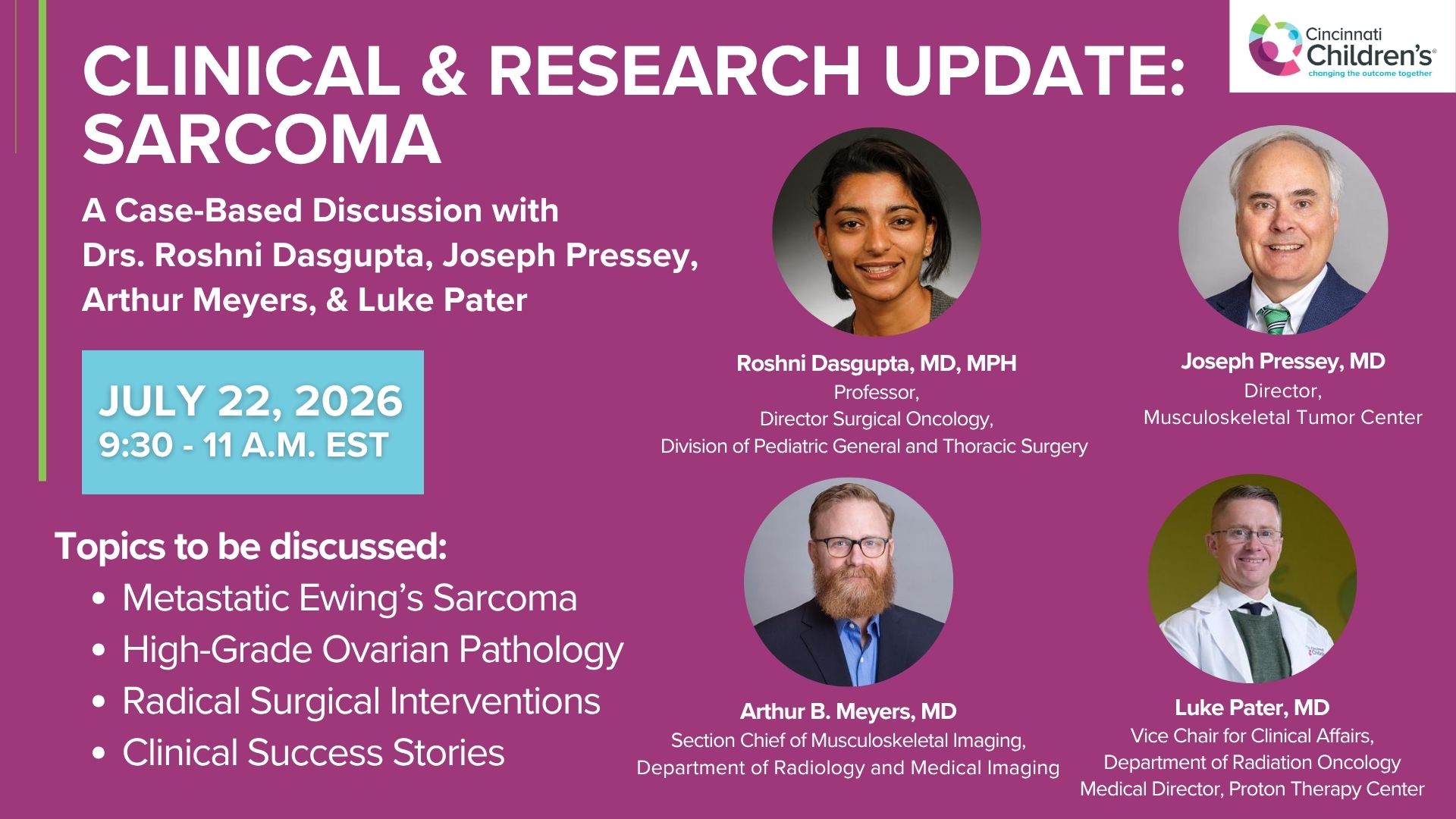
Clinical & Research Update: Sarcoma w/ Drs. Roshni Dasgupta, Joseph Pressey, Arthur Meyer, Luke Pater
66 min · Published Sep 2026
Video
Update Course Rewind 2025: Nerve Monitoring in Pediatric Thyroid Surgery
6 min · Published Jul 2026
Video
Intestinal Atresia Types Explained: Grossfeld Classification for Pediatric Surgery
1 min · Published Sep 2026
Video
Derivation and validation of the Pediatric Community-Acquired Pneumonia Severity (PedCAPS) score: A prospective cohort study
50 s · Published Sep 2026
Video
FETO for Late-Diagnosed Severe Congenital Diaphragmatic Hernia (CDH) at Cincinnati Children's with Dr. Beth Rymeski
4 min · Published Sep 2026
Video
Severe Congenital Diaphragmatic Hernia (CDH) Case: FETO Management & Unexpected Findings with Dr. Beth Rymeski
3 min · Published Sep 2026
Video
Fetoscopic Endoluminal Tracheal Occlusion (FETO) Procedure: Step-by-Step Guide with Dr. Beth Rymeski
4 min · Published Sep 2026
Video
Choledochal Cyst Types Explained: Pediatric Surgery Fundamentals
1 min · Published Sep 2026