


From
Dr. Roshni Dasgupta
Outcomes for patients with perineal and perianal rhabdomyosarcoma: A report from the Children's Oncology Group Soft Tissue Sarcoma Committee
Part of
Rhabdomyosarcoma 8 items
onlinelibrary.wiley.com shows its articles on its own site.
Read the article on onlinelibrary.wiley.com ↗Article · Sep 2024 · 1 min read
In brief
In brief
Multi-institutional study of 51 pediatric patients with perineal/perianal rhabdomyosarcoma showing poor outcomes with 5-year survival rates of 38-42%. Most patients presented with advanced disease features including large tumor size, invasive growth, and nodal involvement, contributing to high rates of treatment failure and mortality.
Written by the GCMD Library team from the article.
Abstract Purpose To describe clinical features, risk factors, and outcomes of patients with perineal and perianal rhabdomyosarcoma. Methods The records of 51 patients (38 perineal and 13 perianal) enrolled on Children's Oncology Group clinical trials between 1997 and 2012 were reviewed. Results At presentation, 53% were female, 65% were older than 10 years of age, 76% were alveolar histology, 76% were more than 5 cm, 84% were invasive, 65% were regional node positive by imaging, 49% were metastatic, only 16% were grossly resected upfront, and 25% of patients had a delayed excision. At a median follow‐up of 6.13 years, estimated 5‐year event‐free survival (EFS) was 38% [22.17%–53.38%], and overall survival (OS) was 42% [26.66%–58.21%]. The rates of local, regional, and distant failure were 15.6%, 13.7%, 43.1%, respectively; all failures ultimately died. By univariate analysis, only age more than 10 years negatively impacted 5‐year EFS ( p = .023) and OS ( p = .09), and IRS Group also impacted OS ( p = .043). In Cox proportional hazards model, neither of these variables were significant after adjusting for other factors. Conclusion Patients with perineal and perianal rhabdomyosarcoma have a poor overall prognosis, probably related to poor patient and disease characteristics at presentation.
Educational content from recorded physician discussions — not medical advice. Talk to your (or your child's) care team about your situation.
Article
Management of rhabdomyosarcoma in pediatric patients
Roshni Dasgupta · Published Oct 2026
Video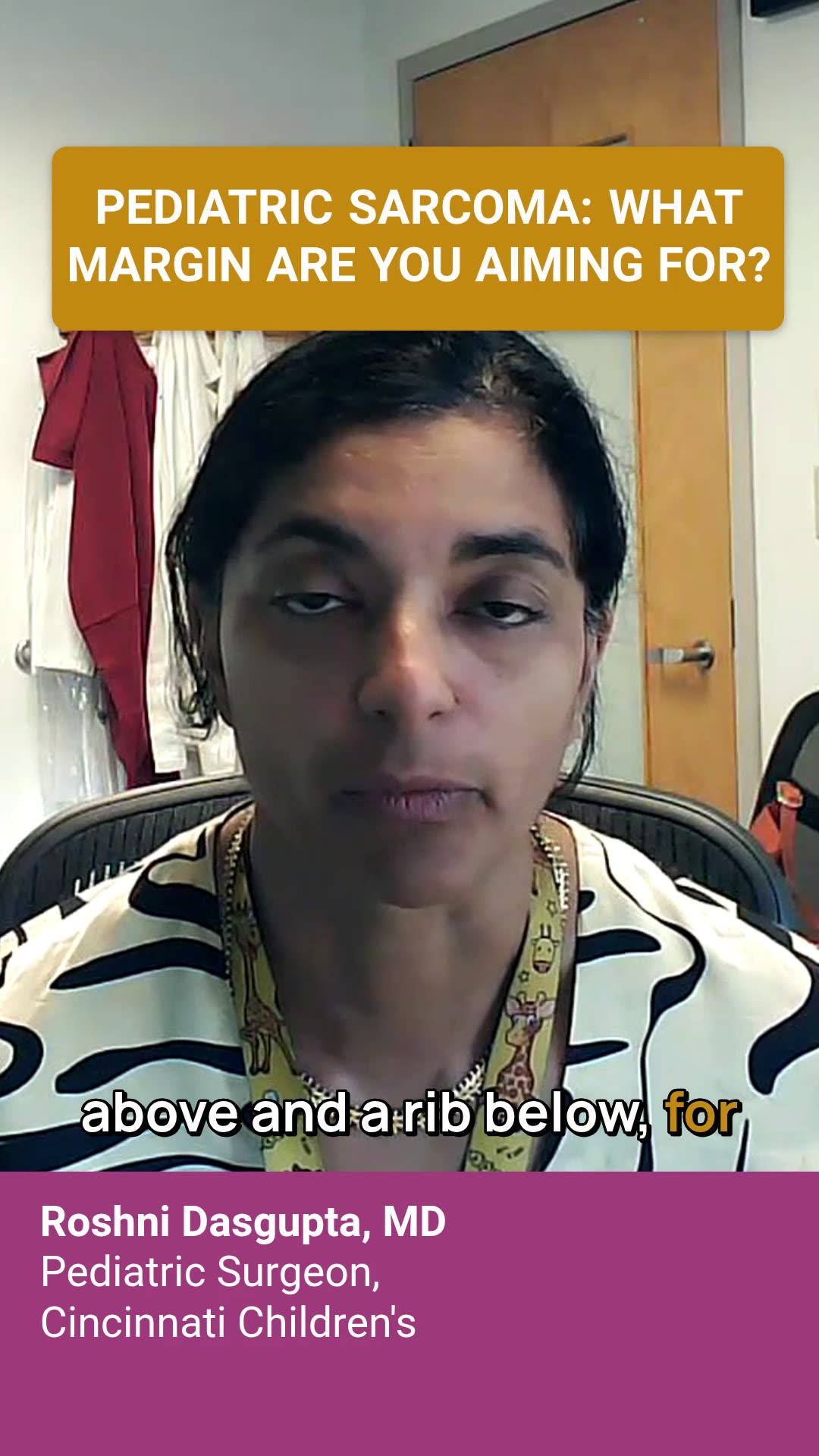
Pediatric Sarcoma Surgical Margins: Rhabdomyosarcoma Treatment Guidelines w/ Dr. Roshni Dasgupta
25 s · Published Oct 2026
Video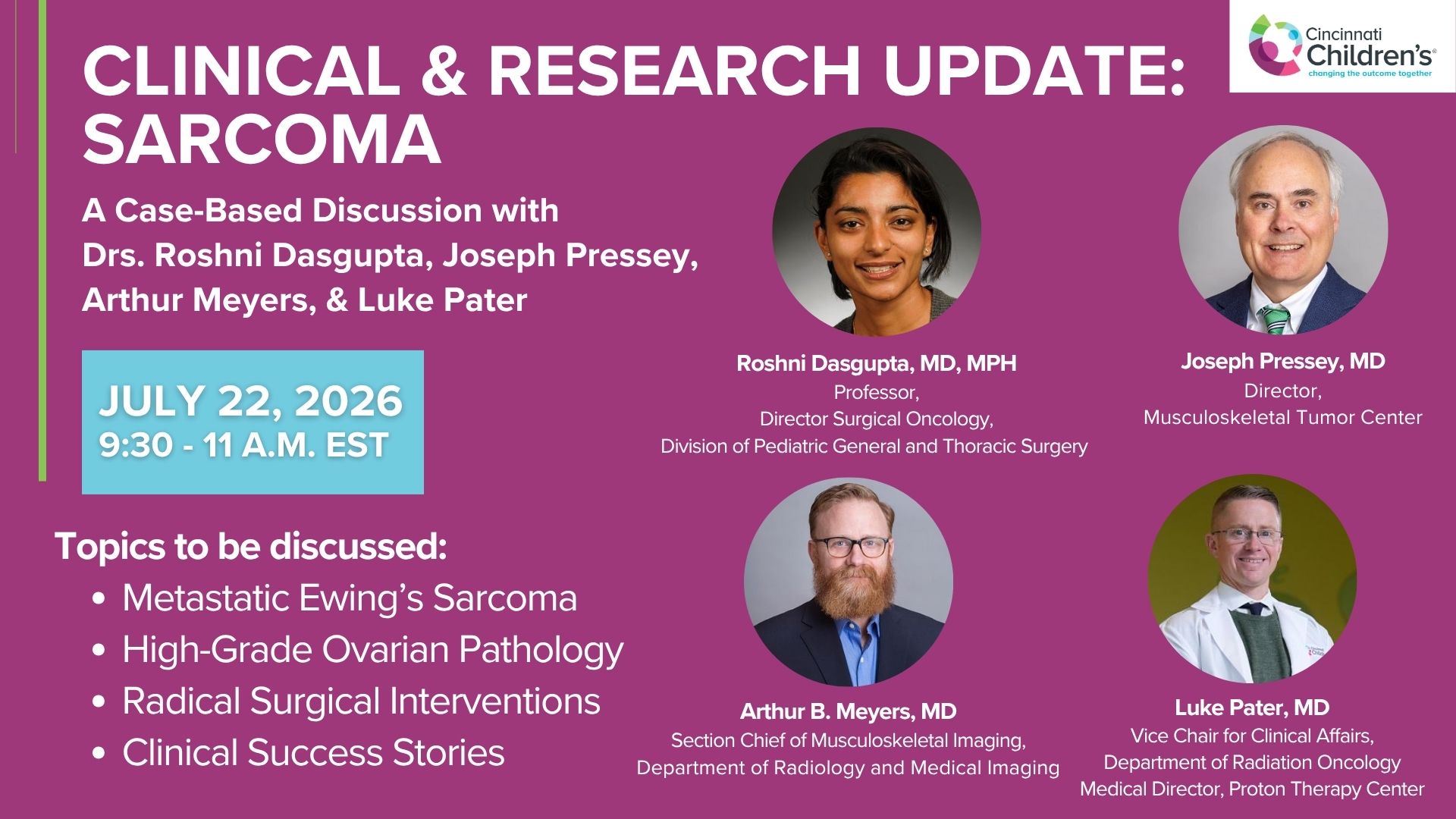
Clinical & Research Update: Sarcoma w/ Drs. Roshni Dasgupta, Joseph Pressey, Arthur Meyer, Luke Pater
66 min · Published Sep 2026
Article
Critical elements of pediatric rhabdomyosarcoma surgery
Roshni Dasgupta · Published Nov 2023
Video
Technical approaches to rhabdomyosarcoma management: APSA Cancer Committee case series
Roshni Dasgupta · 17 min · Published Feb 2022
Article
Implications of Tumor Characteristics and Treatment Modality on Local Recurrence and Functional Outcomes in Children with Chest Wall Sarcoma: A Pediatric Surgical Oncology Research Collaborative Study
Published Jan 2021
Article
Pediatric Surgical Oncology
Roshni Dasgupta · Published Oct 2026
Article
An Introduction to Pediatric Surgical Oncology
Roshni Dasgupta · Published Oct 2026
Article
Contemporary Biology, Management, and Outcomes of Renal Medullary Carcinoma in Children and Adults: A Pediatric Surgical Oncology Research Collaborative Study
Roshni Dasgupta · Published Oct 2026
Article
Pediatric Cancer, An Issue of Surgical Oncology Clinics of North America, E-Book
Roshni Dasgupta · Published Oct 2026
Article
Histologic type predicts disparate outcomes in pediatric hepatocellular neoplasms: A Pediatric Surgical Oncology Research Collaborative study
Roshni Dasgupta · Published Oct 2026
Article
Pancreaticoduodenectomy for the treatment of pancreatic neoplasms in children: A Pediatric Surgical Oncology Research Collaborative study
Roshni Dasgupta · Published Oct 2026